Brock Hudson Is the Parent Coach Bay Area Families of Neurodivergent Kids Have Been Searching For
Interview by Heather Anderson
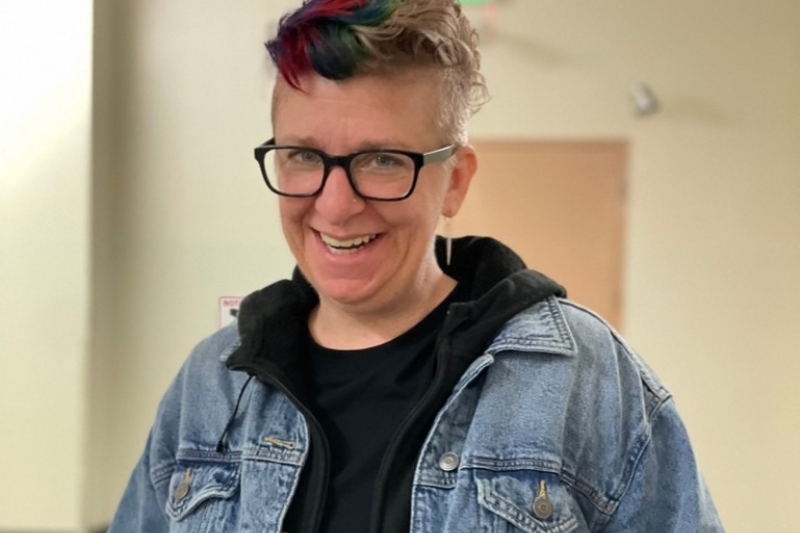
Brock Hudson (they/she) is the founder of Brock Hudson Coaching, an East Bay practice supporting parents of neurodivergent children, including autistic, ADHD, and PDA kids. A queer, non-binary mama with more than 20 years in youth development and adult learning, Brock built their coaching business after living through the exact seasons their clients are in now. We talked about the grief of parenting, what PDA actually is, and why belonging is the thing so many families are missing.
You came to parent coaching through your own lived experience, including divorce, a major career pivot, and raising a neurodivergent child, often all at once. What was the moment you realized you needed to create the kind of support you could not find anywhere else?
I have a background in working with youth, which led to trainings, facilitation, and adult learning. For a while I wanted to go back to school to become a therapist. I did a real cost-benefit analysis and realized the investment wasn't worth it for that quote-unquote piece of paper. So I started asking, how can I do something similar and still help people?
What I noticed about my parenting peers, the ones I was drawn to, is that they were the parents willing to talk about the grief of parenting. There's grief in any parenting. We don't have the village we expected. Our own parents aren't here, or aren't showing up the way we wanted them to. Then if you add in neurodivergence or any kind of unexpected difference, you have grief on top of that. Your kid isn't meeting the expectations of society, and I'm so queer I don't believe in those expectations anyway. So I really want to sit with people in that question. Is this what I've projected onto my kid, or is this what my kid actually wants?
I was already the person everybody came to. All my friends would say, Brock, what do I do with my kid? At the same time, I wanted to spend more time with my own kid and be the parent I wanted to be, which meant working from home and being available during middle school. That was the career pivot. I found Connected Parenting through a friend who was a parenting coach, got certified, and brought all those years of working with families and kids together. And honestly, I didn't want to be alone in this. It sucks to be alone.
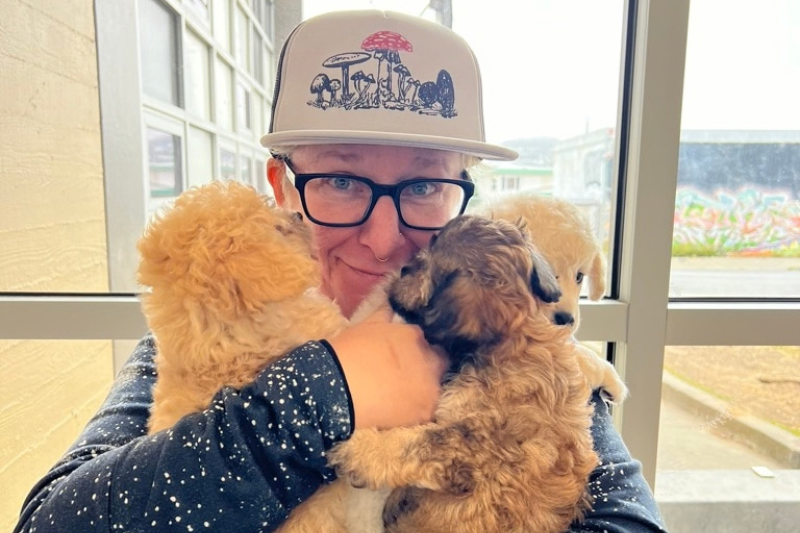
Before coaching, you spent more than 20 years in youth development, after-school programming, and adult learning in San Francisco, including running a program that became the go-to placement for the Golden Gate Regional Center. How does that background shape the way you show up for parents now?
I've seen a lot of things. You can read the books and have the theory, but I've actually sat with young people in their hardest moments. Here's what those years taught me. The crisis of a young person is their true crisis, and the crisis of a parent is their true crisis. It would be easy to say, well, you broke up with the girlfriend you held hands with for two hours, get over it. Instead, I learned to sit with those young people and say, this is your biggest moment right now, and I know you're going to get through it, and I'm not going to rush you through it.
I bring that exact same thing to parents. I can say, this is the worst moment of your life, and it might get a little worse before it gets better, and I'm here with you in it. I've been through the really, really hard crisis moments, including sitting with parents whose kids were experiencing suicidal ideation. Those moments don't throw me. I'm like, yep, we're here, we're in it, I'm not going to judge you in it. And I carry a real belief, backed by experience, that it gets better.
“You might not have all the resources and all the information yet, but you have the capacity, and you can believe in yourself to be the best parent your kid needs.”
You work specifically with parents of neurodivergent children, autistic kids, ADHD kids, kids with PDA profiles. For a parent who just got a diagnosis and has no idea where to start, what does working with you actually look like?
A lot of it is sitting with the reality of what's happening for them, and working on parent nervous system regulation so they can help their kids regulate. So much gets thrown at us when we're getting information about our kid. What I really want is for the whole system of the family to be supported. Sometimes that's practical, like figuring out regional centers, understanding what resources are available, or learning what respite care actually looks like. And it's always about looking at the goals of the family through a neuro-affirming lens.
What I often see is that a family comes in with a diagnosis and everyone has their own feelings about it. Sometimes there's a family member, even an auntie or an uncle, with a similar diagnosis or similar struggles as the kid, and there's a lot of grief in that. There's also expertise in it. That family member knows what it takes to get through it. So there's this arc I watch happen, where self-acceptance grows right alongside kid acceptance. The core of my work is getting families to connection rather than compliance or behavior management.
You also work with parents of gender-expansive and gender-creative kiddos. What does that look like?
There are so many parents, especially parents raising kids in the Bay Area right now, who genuinely want to be affirming of their kid's differences and don't know how. Maybe their kid just got an autism diagnosis and also wears skirts, and the parent is asking, what's my first step? How do I handle family members? There's real desire there, and a lot to work through. I want to give parents a place where they can work through it without judgment. We might say some asshole things while we're processing, and not mean them, because we're working through our own stuff. That's allowed with me.
You run a PDA Parenting Discussion Club, and I want to make sure we explain PDA, because a lot of parents have never heard the term. What is Pathological Demand Avoidance, or as you prefer, Persistent Drive for Autonomy?
What I'm learning about PDA is that it's a nervous system sensitivity. These young people, and adults too, have a nervous system that is wired to look for danger, so demands get perceived as attack. You say go take a shower, and they take the shower but leave their clothes on the floor. You ask them to put their dishes away and the answer is no, or the dishes simply never move. What I'm understanding is that PDA is about equalization. These kids need to feel equal to the other person, which is tricky in parenting, because in our society young people genuinely do have less power.
I watch this play out in my own home. My kid just turned 12, and for their birthday I blew up all these balloons, the whole social media production. They came home from the first day of camp upset about something, walked in the house, and popped every single balloon. That's equalizing behavior. They were feeling low, so they brought the situation down to meet them. I happened to be running my teen and tween parent group at that exact moment, and I told everybody, I have a perfect example happening in my house right now.
Here's what understanding PDA has changed for me. In that moment I could think, oh, I know what's happening. This is not personal. I don't need to teach them a lesson right now, and correcting the behavior isn't actually going to do anything. What I felt was compassion. Oh, you're really feeling low right now. I didn't say a word about the balloons in the moment.
The club itself came from a friend who said, we can't afford you, how can we work with you? And I needed to figure this out too. I consume so much social media content about PDA that it took over my whole algorithm, and I was asking, what do I actually do with all of this? So it works kind of like a book club. We take the content, ask whether we agree with it, pick it apart together, and actually try it out with our kids. We talk about our wins. It's donation-based, five to ten dollars or sliding scale, so cost is never the reason someone can't come.
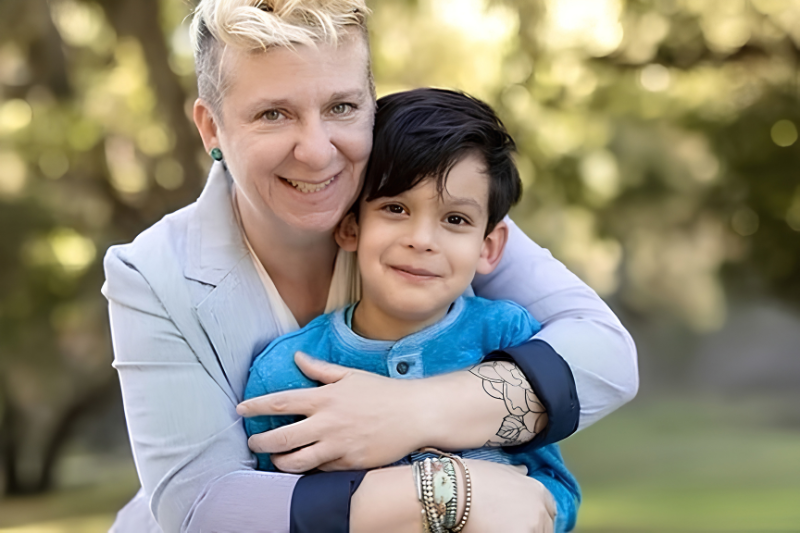
You are also queer, non-binary, polyamorous, and a parent yourself, and you bring all of that lived experience into your work explicitly. Why does that matter?
When I work with people who share one of those identities, there's a shared lived experience, and they don't have to fully explain themselves to me. As a polyamorous person, I don't make clients clear the hurdles of somebody else's judgment or discomfort. I'm just out about it. I'm polyamorous, and you're safe here. It's a way of letting people know that identity matters to me and that they're going to be seen, heard, and included here. Belonging. Hopefully you'll feel belonging with me.
I'm also a different thinker. All of those identities live outside typical US expectations, so there's probably nothing you can surprise me with. And it shows people that I understand challenge, because I've lived it.
You also run groups for parents, which means several families can access your expertise at a fraction of the one-to-one cost. Who tends to show up, and what do they walk away with?
Folks who want community with a shared experience. People who feel isolated, or whose friends aren't living the same reality, the ones whose kids are sitting cutely at the picnic while yours is running two directions at once. Someone recently joined the PDA group from a queer family, and the email they sent me said, I am so grateful to be in a queer group, I'm not the only one in this room. That felt really sweet. Parenting is expensive in the Bay Area, and groups make this work accessible for folks who can't necessarily afford one-on-one coaching. Ultimately, the safety and community we're all missing is often found there.
Beyond individual families, you partner with schools, nonprofits, and organizations for parent education, staff training, and leadership development. What does it look like when a school gets this right?
When I work with staff, the shift you see is in burnout. Staff build more connected relationships with young people, and behaviors change because needs are being met rather than through compliance. On the parent side, you get parents who are regulated, and therefore young people who are more regulated. When a school does both parent education and teacher education together, a real cultural shift happens. There's synergy among the teachers, the parents, and the kids, young people start leading themselves, and everybody's needs get met. That's magic. What I most want to land in a school is that all young people feel welcome and feel belonging there, and I mean all of them.
You are a queer, non-binary mama who came through some genuinely hard seasons to build something that did not exist before you built it. What do you want parents, especially the ones who feel like nothing was built for them, to know about what is possible?
You can do it. You might not have all the resources and all the information yet, but you have the capacity, and you can believe in yourself to be the best parent your kid needs. My deepest work is sitting with parents in their grief so they can get out of their own way and become the parent their kid actually needs, which is often different from the parent they expected to be, and different from the parent they themselves needed as a kid. So many of us are out here becoming the parent we needed, and then we realize the kid in front of us needs something else entirely. Maybe more structure than we ever had. Maybe autonomy in a totally different way. Their values might be different from ours, and our job is supporting them to grow into their own values.
The other thing I hold onto, and I've felt this since before I was raising a kid, is that I'm raising a healthy adult who contributes to society and belongs to a culture. A happy kid in every single moment was never the goal. That helps me remember, in the hard moments, you might not be happy right now, and I want you to learn the things that will help you be a decent, good human in the world when you grow up.
If a parent is reading this and recognizing themselves, whether they have a newly diagnosed kid, a teenager who is struggling in ways no one can explain, or they just feel like they have been doing this alone for too long, what is the best first step to reach you?
Schedule a free discovery call. It's a 15-minute conversation, no pressure, and we'll figure out together what kind of support fits your family.
Ready to stop doing this alone?
Book a free 15-minute discovery call with Brock right here
Join the PDA Parenting Discussion Club, donation-based at $5 to $10 or sliding scale
Explore one-on-one parent coaching and parent groups
Schools, nonprofits, and organizations can inquire about parent education, staff training, and leadership development
Learn more at brockohudson.com
Connect with Brock Hudson on Facebook, LinkedIn, or Instagram.
You can also find Brock on The M List, The Mamahood's searchable database of mom-recommended resources, or connect and collaborate with Brock inside of The Club membership for women Founders.