Building a Better Way: Dr. Cheruba Prabakar on Personalized Gynecology
Interview by Heather Anderson
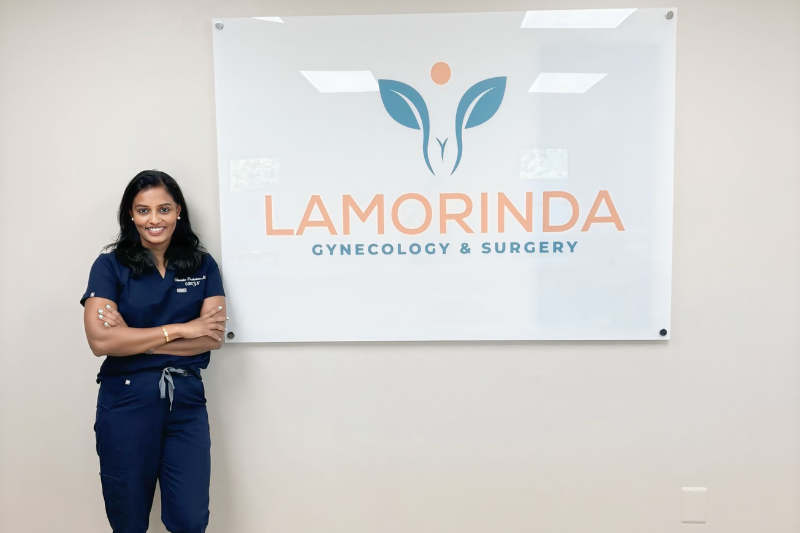
When Dr. Cheruba Prabakar left a large health system to start her own practice, she wasn’t just changing jobs—she was redefining how women experience gynecology. At Lamorinda Gynecology & Surgery, she’s created a space where patients aren’t rushed, concerns aren’t dismissed, and women finally get the personalized care they deserve. From minimally invasive surgery to menopause medicine, Dr. Prabakar is proving that modern gynecology can be both cutting-edge and deeply personal.
You left a large health system behind to create something more personal. Was there a moment that made you say, I need to build this myself?
During COVID, everything shifted. Several of my colleagues retired or left, and it became increasingly hard to work within the system. I was frustrated with the bureaucracy and the pace—it wasn’t the kind of care I wanted to give.
I grew up seeing private practices on the East Coast and always dreamed of starting one. When I moved to California, most of those practices were being bought up by corporate medicine. But I decided to go for it anyway. Three years later, I don’t look back. I’m able to provide the kind of thoughtful, thorough care that women deserve.
What was the hardest part of walking away—and what’s been the most rewarding?
In the hospital system, the business side was handled for me. I didn’t worry about patient acquisition, finances, or marketing. When I opened Lamorinda Gynecology, I had to learn all of that while also practicing medicine. That was daunting.
But the reward is huge: I spend 45 minutes to an hour with each patient, I can implement new treatments quickly, and I get to practice medicine on my own terms.
One patient story that sticks with me is a young woman with fibroids who wanted a hysterectomy. Every doctor turned her away because she didn’t “fit the mold”—she was young and childless. At my practice, I was able to really hear her, evaluate her thoroughly, and ultimately give her the surgery that restored her quality of life. In a big system, she probably would have kept waiting and suffering.
“Our bodies change, and how we care for them has to change too. With the right support, your body can still serve you beautifully at every stage.”
You describe your practice as “modern gynecology with a deeply personal touch.” What does that mean in practice?
Most doctor’s visits today are 5–10 minutes long. Patients are told, Pick one question for today. Come back for the rest. That’s not holistic care.
At our office, patients sit with me for up to an hour. They can ask everything on their mind, and together we piece the whole picture together.
It also means embracing new, evidence-based technology without the red tape. For example, we now offer self-swab Pap testing for HPV. For women with trauma histories or those who avoid GYN exams because of speculum discomfort, this can be life-changing. If the HPV test is negative, they’re clear. If it’s positive, we follow up with a traditional Pap. It takes 15 seconds, and for many patients, it’s the first time they’ve felt safe doing this critical screening.
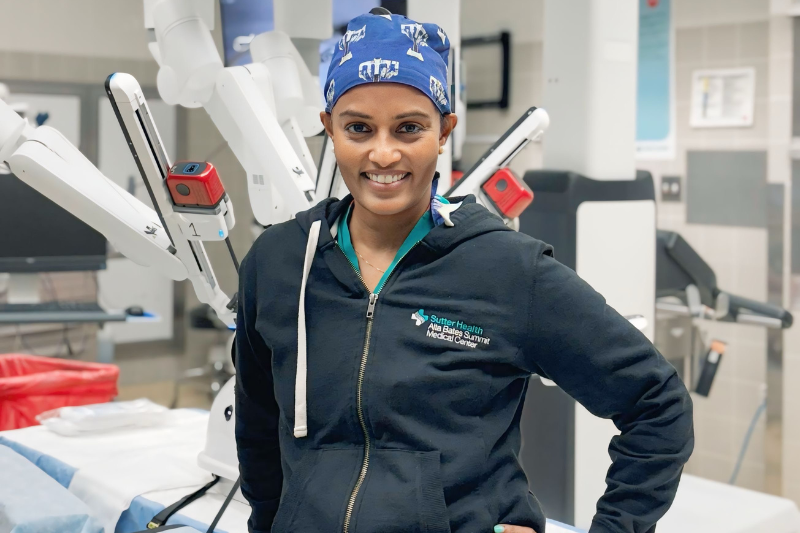
You specialize in minimally invasive surgery. What do you wish more women knew about their surgical options?
So many women don’t realize they have choices. I often hear: My doctor told me hysterectomy was my only option. But fertility-sparing surgeries like myomectomy can be the right choice for many women with fibroids.
I also see patients across the Bay who are still scheduled for open surgeries—large incisions, multiple days in the hospital, long recovery times. With robotic minimally invasive surgery, we can do the same procedures through tiny incisions. Women go home the same day, with less pain, less blood loss, and faster recovery.
If your doctor isn’t offering these options, it’s worth getting a second opinion.
Many women feel brushed off when they bring up heavy periods, pelvic pain, or perimenopause. Why do these symptoms get ignored?
For decades, menopause and perimenopause were barely studied. Even in my training, we had minimal education on them.
It takes time to sit with a woman, understand her goals, and know the full toolkit of treatments—and many doctors simply weren’t trained for that. I decided to change that for myself: I became certified by the North American Menopause Society, attend conferences regularly, and keep up with the latest research.
Now about half my practice is menopause and sexual medicine. We’re helping women reduce brain fog, improve intimacy, stop urinary leakage, sleep better—all things that dramatically improve quality of life.
Can you share a story of a patient who found relief after feeling dismissed?
A woman in her mid-50s came to me after years of hot flashes, painful sex, brain fog, and exhaustion. She’d been told repeatedly that hormone therapy was unsafe, despite not having any risk factors.
When I finally treated her with evidence-based hormone therapy, her symptoms improved dramatically. Her relationship improved, she was able to work without feeling awful every day, and she looked at me and said, Where have you been for the past four years?
I hear that a lot—and it reminds me why this work matters so much.
You’re also a mom. How has motherhood shaped the way you practice medicine?
Motherhood makes me relate to my patients in a deeper way—whether it’s postpartum hormone shifts, juggling teens while entering perimenopause, or simply being exhausted.
It’s also why I built my practice to be sustainable. So many doctors burn out. I see no more than 10–12 patients a day, I exercise daily, I see my own doctors, and I’ve created a workplace where my team also has balance. When doctors and staff are healthy and happy, patients feel it too.
Many women—especially BIPOC women and trauma survivors—have complicated histories with the medical system. What do you want them to know about your practice?
You are safe here. We meet women where they are. If you’re not ready for a pelvic exam, that’s okay—we’ll start with conversation and build trust.
I’ve had patients walk in shaking from past experiences, and walk out saying, That was the best Pap smear I’ve ever had—if I can even call a Pap “the best.” That’s what time, sensitivity, and trauma-informed care can do.
Menopause is surrounded by myths and confusion. What do you want women to know?
Three things:
Hormones are safe for most women—and they’re the most effective treatment for menopause symptoms.
You don’t have to wait until your periods stop to get help. Women in their 30s and 40s can benefit from treatment during perimenopause.
Birth control pills are not safer than hormone therapy. In fact, birth control contains much higher doses of estrogen.
The bottom line: the right treatment can help you thrive through this stage of life, not just survive it.
What’s one thing you wish every woman knew about her body?
That it isn’t failing you. What worked in your 20s may not work in your 40s or 50s—and that’s normal. Our bodies change, and how we care for them has to change too. With the right support, your body can still serve you beautifully at every stage.
What’s one thing you hope readers take away from your story?
That the care you want is out there. If you’ve been dismissed or told to just deal with it, don’t give up. You matter, your health matters, and you deserve to feel well—for yourself and for the people who rely on you.
Curious about what personalized gynecology really looks like—and whether Dr. Prabakar might be the right fit for you?
Here’s how to learn more or take the next step:
Explore services, join her email list, or book a consultation.
Read patient stories and learn more on Instagram.
You can also find her on The M List, The Mamahood’s searchable database of mom-recommended resources, or connect and collaborate with Dr. Prabakar inside of The Club membership for women Founders.