Meet Ashley Ward: She Was Working at the Mall in College When Autism Changed Everything
Interview by Heather Anderson
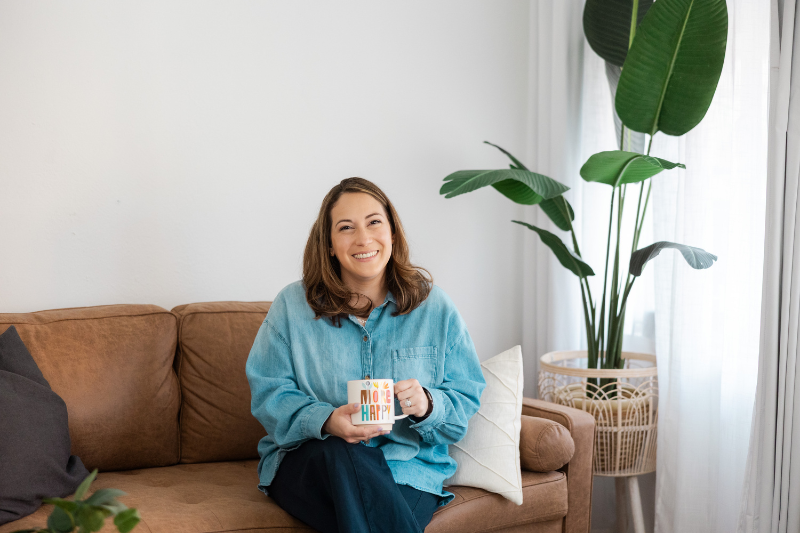
Ashley Ward did not plan to become a Board Certified Behavior Analyst. She was nineteen and working a cash register at a mall when a mom walked in with two kids and quietly apologized for her son's behavior. By the time that mom left thirty minutes later, she had offered Ashley a babysitting job -- and without knowing it, handed her a career. Ashley is now back in the Bay Area running Brushy Creek Behavior, a boutique in-home ABA practice serving families across the East Bay and Contra Costa County. She works with children ages zero to twelve and beyond -- including teenagers that most providers will not touch -- and she wants Bay Area families to understand exactly what good ABA looks like, and exactly what it does not.
You were working at the mall in college when someone walked in and changed the entire direction of your life. What happened, and how did it lead you to becoming a Board Certified Behavior Analyst?
I was a cashier, and a woman came in with a toddler-age daughter and a pre-teenage son who was engaging in some self-stimulatory behavior. She kept apologizing, but I told her no worries at all. She ended up in the store for about thirty minutes, and before she left she asked if I would be interested in doing babysitting. I said yes, and I ended up doing respite care for their family for years. Her son was receiving ABA therapy at the time, and that is how I first learned what Applied Behavior Analysis even was. I eventually got supervised by his BCBA, worked as a para educator while in grad school at Texas State, kept accruing my hours doing in-home therapy, and passed my board certification exam in 2017. It has been full steam ahead ever since.
“Children need school, social lives, family time. Small children still nap. I am not willing to sacrifice any of that for a billable metric.”
ABA has a complicated reputation -- some families swear by it, others have real concerns. How do you describe what you do, and how is your approach different from what some families may have experienced or heard about?
I think tackling concerns head-on is the right thing to do. ABA is not for every family, nor for every child. When families meet with me, they often expect me to say their kid needs twenty or thirty or forty hours a week. That is not how I operate. Children need school, social lives, family time. Small children still nap. I am not willing to sacrifice any of that for a billable metric.
One of the biggest issues in the field is what I call forced normalization -- the idea, rooted in a decades-old study, that the goal of ABA is to make an autistic child indistinguishable from their neurotypical peers. That framing is deeply problematic to me. What if that is not your goal? What if you just want your kid to be happy, to communicate, to self-advocate, to live their life? There is also a power dynamic inherent in the clinician-family relationship that not enough practitioners acknowledge -- especially when wait lists are what they are in the Bay Area and families come in with a brand-new diagnosis not knowing what to do. That is a huge responsibility. I take it seriously.
I also want to clear up the idea that ABA does not want families using other services. That is simply not true. The best teams I have ever been on have had representation from every kind of expert. Speech therapists, OTs, play therapists, music therapists -- all of it. If you are interviewing a provider and they are discouraging you from using other services, that is a red flag.
You talk about teaching life skills and meaningful goals rather than focusing on behavior change for its own sake. What does that actually look like in practice?
When I sit down with a new family, I ask: what do you want to see in six months that is not happening now? The answers are almost never about stopping a behavior. They are about life. Toilet training. Communication. Safety skills -- being able to identify body parts so a child can tell someone if they are hurt or in pain. Teaching consent and appropriate boundaries: what is okay with mom is not necessarily okay with a teacher.
Self-stimulatory behavior, or stimming, I largely leave alone unless it poses a genuine safety concern. If it happens, it happens. That is not the priority. Communication is the cornerstone of every good treatment plan I write. Every single learner I have worked with has had a robust communication and language program, whether that is using vocals, a device, or a gesture -- whatever allows them to express what they need and advocate for themselves.
You work in the home with families, which is getting gradually phased out in favor of clinic-based or remote services. Why is the home environment so important to the work you do?
The amount of family involvement when I am in the home is exponentially higher than what you get in a clinic. Transitions are hard for many of the kids I work with -- loading up and driving to an appointment is one more stressor before the session even begins. Working in the home removes that barrier entirely.
Being in the home also means grandparents can observe. Siblings can be part of it. If there is a family member who really wants to connect with their grandchild but does not quite know how, I can help build that relationship in a way that respects the child's needs. The pace of life in the Bay Area is already so fast, and most families I work with are two working parents trying to flex their schedules around everything. If I can come to them and reduce some of that stress, that is part of the work too.
You often work alongside occupational therapists, speech-language pathologists, and other specialists. Why do you believe wraparound care produces better outcomes?
Everyone brings expertise that I do not have, and I bring expertise they do not have. The magic happens when we are all saying the same thing. I once worked with a child who was seeking deep pressure in ways that were not appropriate -- he would launch himself at people's bodies. If I was redirecting that behavior in my sessions but speech was allowing it, we would cancel each other out. When everyone agreed on the same replacement behavior and the same expectation across all settings, the behavior went away. Progress compounds when you are on the same page. It also reduces confusion for families who are already stretched thin trying to sort through everything.
Early intervention is something you are particularly passionate about. What do you wish parents of toddlers and preschoolers knew about the window they are in right now?
Do not wait and see. That is across the board the most harmful thing you can do -- for ABA, for speech, for OT, any provider will tell you the same thing.
There is something important families often do not know: a school district assessment and a private medical assessment are not the same thing. I watched it happen with my own brother. He showed signs around eighteen months old and I flagged it. The school assessed him and said he did not meet their criteria. A neurologist assessed him privately and identified him very quickly. The school is looking at whether the child can access the curriculum. A medical diagnosis covers the child's whole life -- accommodations, protections, everything. Those are completely different lenses.
So if something feels off, get on a wait list now. By the time you decide you are ready to pursue an assessment, that wait list may already be six months to a year out. And if your pediatrician tells you to wait and see, you do not have to accept that. Ask for a referral to the appropriate specialist and let the expert make the assessment.
You offer free consultations where families can ask you anything -- including about red flags to watch out for when evaluating ABA providers. Why do you do that?
If I had a dollar for every family that came to me with what I would call a horror story from a previous provider, I would never have to work another day in my life. I take what I do seriously, and I take the integrity of this field seriously. Families have the power to interview their providers. They do not have to accept whatever is offered to them. I want them to know that -- and I want to be the person they can call when they are not sure what questions to even ask.
What kinds of families come to you, and what are they usually experiencing before they find you?
There tend to be two groups. The first are families who just received a diagnosis and are terrified of being pushed into a rigid high-hour program where they feel like they have no say. I do not operate that way. If something is not clinically appropriate for a child, we have a conversation about why. Questions do not offend me. I have no ego about this.
The second group are families with older kids -- preteens and teenagers who have aged out of early intervention programs and been told that no one serves their child's age anymore. A lot of clinicians are not getting trained to work with teens and adults, so they say it is outside their scope. It is within mine. Puberty, hormones, teenagers who play hard to get -- none of that scares me. I have worked with kids who needed to learn to get out of bed, leave the house, do one productive thing on a Saturday. I lovingly call myself the mosquito. I just annoy them until they get there.
You are also a mom to three children under three, including twin girls, and you are raising your kids connected to their Guatemalan roots. How does being a parent yourself shape the way you show up for families?
It has changed everything. I am acutely aware now of what it actually feels like to be a working parent in this area in this moment. Sometimes a child is just being a toddler. It is not autism, it is not anything other than being three and a half, and that is okay. Knowing that from the inside makes me a different kind of clinician.
It has also made me more comfortable having conversations I never would have broached before -- like gently suggesting to a family that they look into a mother's helper a few days a week so a parent has more bandwidth to be present. I would not have felt right saying that before I lived it myself. Being a parent is something you genuinely do not get until you get it.
What is one thing you wish every Bay Area parent knew about behavioral support?
When ABA is done well, it makes life better for everyone in the household -- not just the child. It reduces parental stress. It creates systems that last and generalize across different parts of life. That is what good behavioral support looks like. And families deserve to know it is possible.
If a family is reading this and wondering whether their child might benefit from working with you -- what is the best first step?
Send me an email directly. I offer a free consultation to every family, no matter where they are in the process. If they have questions about ABA, about other services, about what to say to their pediatrician to get the ball rolling -- I am happy to talk through all of it. Sometimes just knowing what words to use with your doctor is the hardest part, and I can help with that too.
Find Brushy Creek Behavior Consulting on Facebook or Instagram or book a free consultation directly through her website.
You can also find Ashley Ward on The M List, The Mamahood's searchable database of mom-recommended resources, or connect and collaborate with Ashley inside of The Club membership for women Founders.