Mindful Motherhood's Karyna Blake Wants To Ignite a Remembrance Of Feminine Empowerment- Starting with Menstruation
Interview by Heather Anderson
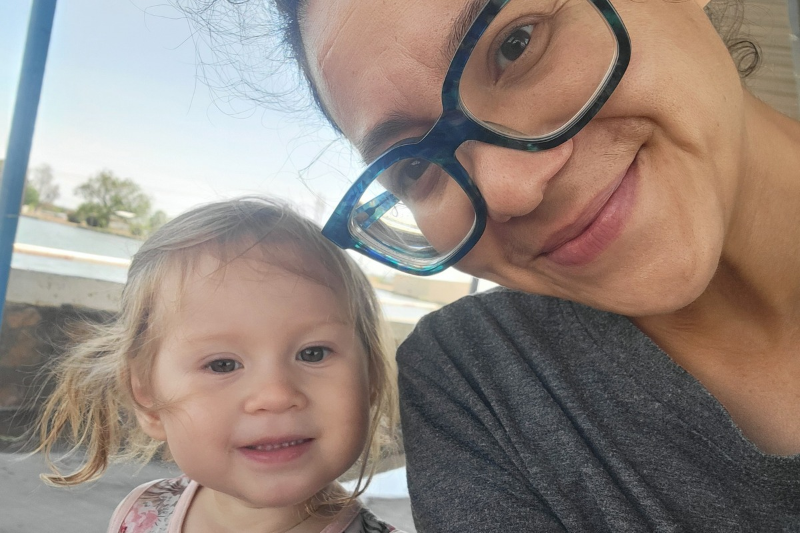
Karyna Blake is the founder of Mindful Motherhood and the Red Tent Center for Feminine Empowerment in El Paso, Texas, where she leads free Menarche Workshops and First Moon Circle ceremonies for girls and their mothers. Before birth work, she spent two decades in veterinary medicine, including hospice care, and trained in myofascial release. A home water birth led her to become a La Matrona Quantum Doula, and today the Bay Area native and El Paso Mom contributor works what she calls the whole arc of a woman's life, womb to tomb, starting with a girl's first bleed.
You open every Menarche Workshop with a talking uterus pillow. Put us in that circle. Who's there, and what happens once the stories start?
It starts with my fluffy uterus pillow, the one with ovarian follicles for each phase. I set it to the menstrual phase and tell my own first bleed story. Mine happened at nine, so it's a good one. Usually by the time I finish, one mom is ready to tell hers, and then another.
It's a circle of mothers and daughters, and a lot of the time the daughters feel uncomfortable asking their moms about this, and the moms feel uncomfortable answering. So the circle becomes a level playing field. We learn the cycle together, the changes that happen each month, and how to move with our bodies instead of against them. That's a lesson I'm still learning at 40. We live on a 24-hour sun cycle, our bodies run on a 29.5-day lunar cycle, and we spend our lives trying to keep up.
I believe so much of what we feel physically each month carries the emotions of our first bleed, and whether we were supported or not. The moment I know I'm exactly where I'm supposed to be is when a mom tells her story and her daughter looks at her differently, like she's seeing her mom at her own age. Everyone in the room is sharing something uncomfortable, and suddenly nobody feels so alone.
Most of us remember our own first period, and a lot of those memories are not great. What was yours like?
It happened in the morning before school. I had just watched My Girl, where Vada thinks she's hemorrhaging, so I figured that's what was happening to me. My nine-year-old logic was: if I'm hemorrhaging, I'll find out eventually, but I can still go to school. So I went to school with an oversized scarf stuffed in my pants, and I bled through.
My mom had to leave work to pick me up, and she was frustrated. At nine, it was also a big thing for the other kids to laugh at, and the teasing kept going. Nothing about it felt celebrated or special.
Years later, retelling these stories with my cousin, she reminded me that her mom, my aunt, who mothered me in so many ways, actually did celebrate that moment with me. I had completely forgotten. My perspective was so heavy on the negative that I couldn't even hold on to the celebration. It's all about perspective. I can appreciate it now.
You spent twenty years in veterinary medicine before you ever stepped into a birth room. What does caring for animals have to do with a girl's first period?
I'm only now realizing I've been a pelvic floor specialist my entire career. My mentor was a pelvic floor specialist, and releasing the pelvic floor of a four-legged animal can do amazing things, so so much of my training centered right there.
Then I went through a womb health summit, and a myofascial release specialist in womb health reminded me that the womb is held entirely by fascia. It all came full circle. What I spent years specializing in is exactly what I'm bringing to women now, and after a fascia masterclass on womb health, I feel more confident than ever in what I can offer with my myofascial skills.
For anyone who has never heard the term, what is myofascial release, and how does it end up in the same conversation as a first period or a birth?
Fascia is the web-like matrix that connects every cell and every vessel to everything else in the body. It links the brain with the heart and with the womb, which we now understand has its own kind of intelligence. That's why it's been called our quantum computer. You know when someone's looking at you from behind and the hair on the back of your neck stands up? That's your fascia reading your environment. It can tense up to protect us before we're even aware we need protecting.
We were each an egg inside our mothers, who were inside our grandmothers. The traumas held in that lineage can be remembered at our first bleed if we aren't celebrated and supported, and remembered again during birth if those wounds were never healed. Our fascia is what cradles the womb. When we learn to release it and understand our bodies, we can create balance and heal our past through what we do today. We all bleed. Every goddess story, every queen, every woman bleeds.
Your own home water birth is what pulled you into birth work, and you became a certified La Matrona Quantum Doula. For readers who know the word doula but have never heard Matrona, what is it, and what did it teach you about what a woman's body and mind can do?
Whapio, who founded La Matrona, speaks about the mystical intelligence of birth. When a birth is physiological and undisturbed, we move into altered brain states, much like the way our babies make their own series of movements to come through us. I wouldn't have known any of that without the Matrona program.
It goes far beyond birth work. It's moving into death work and end of life too, and Whapio, who is an elder, is walking us through her own end-of-life process. That's so near and dear to my heart after my years in hospice. It all circles back to the rites of passage, the blood rites as they call them: the one at menstruation and the one we experience at birth.
Now I'm weaving in rebozo work, the traditional Mexican textile often used during labor to ease discomfort. I use it for menstrual cramps too. It's something a mother can give her daughter, the daughter can use at her own birth, and then she can gift it to her own daughter. Everything just seems to be weaving together.
“I truly believe that if girls heard their blood pools inside them as celestial dew and releases as heavenly waters, they wouldn’t feel so ashamed. If it bled through, or showed on top of a trash can, maybe they’d even smile. That’s my heavenly waters right there.”
At some point you realized birth wasn't the beginning of a woman's relationship with her body. What did you see in the birth room that sent you back to the start?
I'd watch even the most dedicated mother, someone who started her natural birth journey the day she found out she was pregnant, get into the throes of labor and hand her power over to the authority in the room. Then I'd sit in groups of birth workers and hear everyone say the same thing: if only she'd trusted her body.
I'd wanted to bring menstrual education into my work from the very start, and after hearing those stories the answer felt obvious. Women need to step into this rite of passage the way it has always been known and celebrated. In so many ways we've lost that. Our girls hear about periods at school or on social media, not from wisdom passed hand to hand in small circles of mothers and aunts and grandmothers.
Now I get to watch girls actually get excited about their first bleed. And the mothers are healing a part of themselves they may have thought was too deep to even understand, just by sitting there and watching their daughters be excited for this moment.
So what actually happens at a Menstruation Celebration? Walk us through it for a mom who's picturing either an awkward health class or a Pinterest party and isn't sure she wants either.
We start by sharing our own stories, and then we learn the cycle itself: the 29.5-day cycle, how it relates to the moon and to the seasons, with menstruation as our winter. I always want the girls to understand that it's a general pattern, and their own bodies still need to be listened to individually. We spend a lot of time on the fact that a first cycle can look so many different ways, that it takes time to become regular, and that our bodies start developing before the first period ever comes.
A lot of girls already feel self-conscious about those changes, so they need a peer environment. We do crafts together. The girls make bracelets to wear during their bleed, a reminder of being a proud feminine being instead of feeling shame about something so natural. It's the only blood that doesn't come from violence, and yet it's the blood we feel the most uneasy about.
There's real education in it too: our anatomy, our cycle, indigenous celebrations, and lost sacred feminine archetypes. We also go over most of the menstrual products on the market and the toxic nature of the ones that are most commonly used.
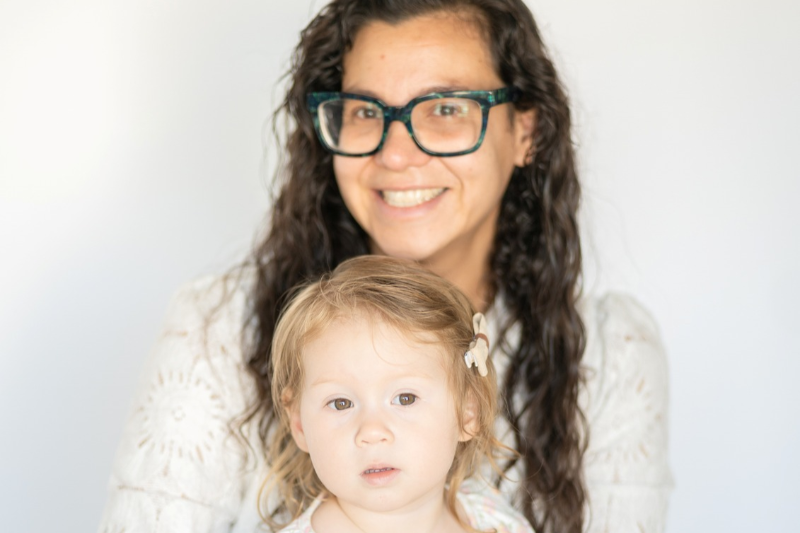
You're also training to bring the First Moon Circle program to your community. For those not yet familiar, what is it, who is it for, and how does it fit with the workshops?
It's based in Australia, and it's an internationally awarded, accredited, and insured program. Parents can look at the template and the information ahead of time and make sure they feel comfortable with it. The training prepares me for the moments in these circles that can become uncomfortable for a daughter or a mother: what to do when a mom doesn't want sexuality discussed, and how to support neurodivergent children, transgender children, and gender fluid children. Their world is so much bigger than ours was growing up, and I want everyone with a womb to feel supported.
The education happens as a series through my Mindful Maidenhood Journey, which has three paths: Girl Mom, Young Maiden, and Mature Maiden. Young Maiden is just for the girls in their peer environment, with parents able to see the structure and everything that will be shared. What I've seen is that girls still shrink back into girlhood next to their mothers and don't fully embrace the depth of it. Mature Maiden can be girls only, or mother and daughter together.
The First Moon Ceremony itself happens between mothers and daughters, usually in a group, but it can also be private, one on one.
For a mom whose daughter is nine, ten, eleven and hasn't started yet, what's the best thing she can do right now? And how should we be talking about our bodies with our girls?
Before her daughter ever bleeds is the perfect time for a mom to learn her own cycle and follow its rhythm, so she can be a reflection of what her daughter is learning. For a girl to watch her mother embrace her own unique cycle with awareness, outside the 24-hour schedule we're all forced to live in, teaches more than anything we could ever tell her.
Language is such a beautiful topic, because so much of our anatomy is named after the male doctors who were the first allowed to do the research. I like letting different terms into the conversation to see what resonates. I've come to love the word yoni, which encompasses the outer genitalia and the womb and refers to all of it as a sacred portal. I also love the traditional Chinese medicine terms. Menstruation is called heavenly waters, and what accumulates in the womb is celestial dew. I truly believe that if girls heard their blood pools inside them as celestial dew and releases as heavenly waters, they wouldn't feel so ashamed. If it bled through, or showed on top of a trash can, maybe they'd even smile. That's my heavenly waters right there.
You're clear this isn't just a mom-and-daughter thing. What role do dads, partners, and the other adults in a girl's life play?
The very first Menarche celebration I held had a father there supporting his wife and daughter. Afterward he emailed me to say their life had changed. He understands where his wife is in her cycle now, and he feels empowered to help his daughter, who hasn't had her first period yet. If it happens with him, he knows he's going to make it a good experience for her. Getting that feedback was incredible.
It also showed me how much a man's presence can change the energy in a room, so I haven't made the workshops as inviting to fathers, though they aren't excluded. Still, a father's role in this rite of passage is pivotal. How he shows up becomes her reflection of how she expects to be supported by the men in her life when she's going through something she may not quite understand, the same way a woman in labor knows what she's going to ask of her partner. If our girls are supported by a higher standard of father, they'll hold their partners to a higher standard, and that keeps improving how our families connect and grow together.
Not every girl is anywhere near her first period. Your Girl's Club welcomes littles as young as two. What does body awareness look like at that age, and what do you want those girls to walk away knowing?
How much fun it is to say no. As girls, it's easy to make ourselves small, and that smallness gets carried over. It takes a long time for a woman to walk out of it. Some of it is simply size. Girls are often smaller than the boys around them, so we go quiet and watch to see how our environment is going to work around us.
So we prepare them with songs that are easy to remember, especially when something feels uncomfortable. We play silly games: I'm going to touch your face, and you don't want your face touched. What would you say to me? What would you sing to me? I have so many songs for our little girls about the boundaries of their space and their bodies, and about speaking up when they're even the slightest bit uncomfortable.
If we sing those songs to each other at home, to our husbands, to our wives, and make it the model in our household, it's never something our girls question, and putting down a boundary never feels hard. Sitting in environments that make us uncomfortable leaves us vulnerable, and when we're raising a girl who is going to become a woman, the last thing I want for her is to be vulnerable.
You've also trained in Birth Story Medicine, developed by Pam England. For a mom still carrying a birth she hasn't made peace with, what is it, and how does it work over Zoom?
It's a beautiful way to go back to one moment of your birth and walk through just that moment. When something felt traumatic, looking back at the whole experience can be overwhelming. But if we set everything else aside and stay with one moment, it can act as a thread that lets whatever needs to unravel do it in its own time, without it all being too much.
It works beautifully on Zoom, because the healing comes from listening to your own voice walk you through it. It's for birth workers too. So many of us carry emotional wounds from witnessing difficult births and loss of life, and this gives us a way to release them. After speaking with Pam directly, I feel so called to this part of the work.
Your work runs, in your own words, womb to tomb. Alongside birth and first periods, you hold space for grief and loss. How does that fit with everything else?
I truly believe death can be as sacred as birth, and it should be. I've opened my end-of-life care to humans now too, especially families going through pregnancy loss and child loss. So often we aren't told that we can take our babies home and grieve with them there, and actually spend time with what it means to lose someone we love. We move past it so quickly.
In veterinary medicine, we always gave a pet parent as much time as they needed after a loss. They could stay and touch their animal and experience the changes that take place. It's all a part of life we rarely get to see, and I want to bring that sacredness back to every part of death.
Whapio is inviting us to witness her own end-of-life journey, how she makes her altars and prepares herself, and she welcomes anyone at any stage of life, because we never know when it's our moment. If we accept that our moment will come, we can live with more intention, understanding, forgiveness, and love. That's another layer of what I hope to bring to my community.
You've kept the Menarche Workshops free for the girls of El Paso. Why does that matter to you, and how can someone who believes in this help?
This information needs to be readily accessible, and the support needs to be there, so I'm continuing to hold a free Menarche Workshop every month. I've partnered with HerPlum, a reusable pad with a little bump on the back so the blood doesn't run all the way down. I never thought I'd call a pad revolutionary, but it is. Natasha, who created it, had so many issues with her own cycle and body that she designed a pad her body wouldn't reject. Through her community page, when you donate, she gives pads to our workshop. I also have affiliate links on my website that give a good discount and send funding to the workshops.
Keeping it free is my absolute goal, and the support keeps coming from far away. I've had a crocheted vulva donated from Ukraine and menstrual products from Australia and Argentina. Other menstrual cycle coaches have shared their resources, and Tammy McBride and Jane Hardwicke Collings, two legendary names in menstrual education, each donated a book. That support pushes me along.
I've also started Growing with Grief, free family grief workshops, with a regenerative gardening nonprofit here. I'm really excited to keep both of those free community projects going.
Closer to home, you're opening your own doors to women and blending mushrooms for every phase of the cycle. What are you building?
I've just started the Red Tent Center for Feminine Empowerment. I'm opening up my side yard and a room in my home for women's gatherings and workshops, and it's where my women's health education services will live. The circles I hold for our girls now have a home for grown women too.
I've also created a Mindful Mushroom Collection with El Paso Mushrooms. It's my own blend of adaptogenic mushrooms for each phase of the menstrual cycle, plus a Mindful Motherhood bar for fertility and postpartum. Everything I teach comes back to supporting our bodies through every season of the cycle, and every season of motherhood. This is one more way to do that.
You grew up in the Bay Area and now you're building all of this in El Paso. For a mom in California, or anywhere, who wants this for her daughter, what does working with you from a distance look like?
I'm always excited for the chance to offer a First Moon Ceremony or a First Moon Circle, and circles for grown women too. I'm opening up to virtual because I'm seeing the demand and I want to keep my visibility in the Bay Area. We can have some pretty expansive conversations over Zoom. It almost feels like we're in the same room.
My father wants to open up his seven acres in La Honda, in the Santa Cruz Mountains, and the goal is to bring First Moon ceremonies and red tent ceremonies to that forest. I don't really like the word retreat. It sounds like you're running away from something. I like abscond. So once we've been meeting virtually, we can book a day to abscond to the forest for a one-on-one First Moon ceremony in person. When we finally gather, it's like seeing old friends.
If a mom is reading this and thinking about her daughter's first moon, or about a birth still ahead of her, what's the best first step?
Reach out in whatever way serves you best. Visit my website, send me an email, or follow along on Instagram. You can find the calendar of my in-person events and family workshops in El Paso, and if you just want to help keep the workshops free, there's a donation link. Don't be shy.
Email: [email protected]
You can also find Karyna Blake on The M List, The Mamahood's searchable database of mom-recommended resources, or connect and collaborate with Karyna Blake inside The Club membership for women Founders.