Dr. Christina Alba on Letting Life Flow and Rivulet Chiropractic
Interview by Heather Anderson
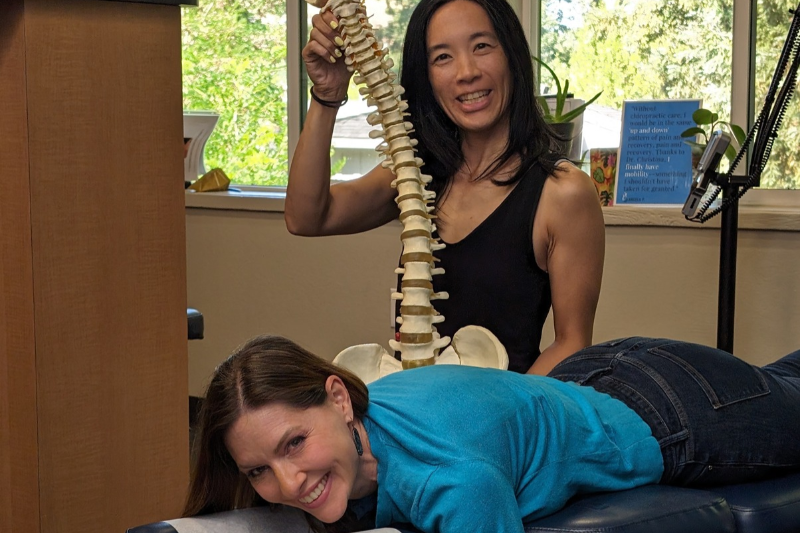
Dr. Christina Alba is the founder of Rivulet Chiropractic in Lafayette, where she has practiced since 2014. Chiropractic is her second career, after years in brand marketing in New York and San Francisco and a life-changing experience as a chiropractic patient herself. Her practice pairs an in-house digital X-ray with gentle techniques for nervous first-timers, and she's a longtime pillar of the Lafayette business community, including a year as Chamber of Commerce Board President.
Chiropractic is your second career. What were you doing before, and what made you trade it for chiropractic school?
I had a desk job in New York City, in brand marketing. It was a creative field, and I worked long hours. I started having neck pain that turned into tingling and numbness down my forearms, wrists, and fingers. I was in my early 30s and thought, is this normal?
One morning, a colleague whose desk was kitty-corner from mine noticed I couldn't turn my head to say hi. He said, "Your neck is not doing well." I said I'd just take some Advil and it should go away. It did not go away. So he referred me to his chiropractor.
It was amazing and life changing. They took X-rays of my spine, explained exactly where the problem areas were, and laid out a plan. I followed it, and I got better. No more tingling or numbness, better range of motion in my neck, and even my hay fever improved. I thought, if I ever have a second career, I could see myself as a Doctor of Chiropractic. So I started out as a patient, believe it or not.
“When you have nerve interference, pain, or discomfort, it keeps you from being your best. I want to empower people to know they don’t have to stay stuck. That mission is what gets me up in the morning, and what grounds me on the hard days, of which there are many as an entrepreneur, especially as a female business owner.”
You didn't inherit a practice. You're the first chiropractor in your family, and you built Rivulet from scratch. What did those early years actually look like?
With my corporate desk job background, I thought, how hard can this be? It was truly, crazy hard. But I was used to hard work from New York and San Francisco, and that discipline got me through a lot of tough days.
My first month in practice, I signed up for the Lafayette Art and Wine Festival, and I did it for about nine years. I had a muscle scanning machine hooked up to a TV and a generator for live demos, as long as the generator didn't go out or it wasn't pouring rain. A lot of people from those early festival days are still my patients. I also joined networking groups and women's groups.
I served on the Lafayette Chamber of Commerce board for years, including as Board President in 2019. I'm still at ribbon cuttings and events, and active in the Chamber's women's group and Health and Wellness Alliance. It's a very community-based area, from Lafayette and Orinda to Walnut Creek, Pleasant Hill, and Concord, and by now most people find me through referrals.
These days I've built a healthier practice with more work-life balance, so I can do more fun things too.
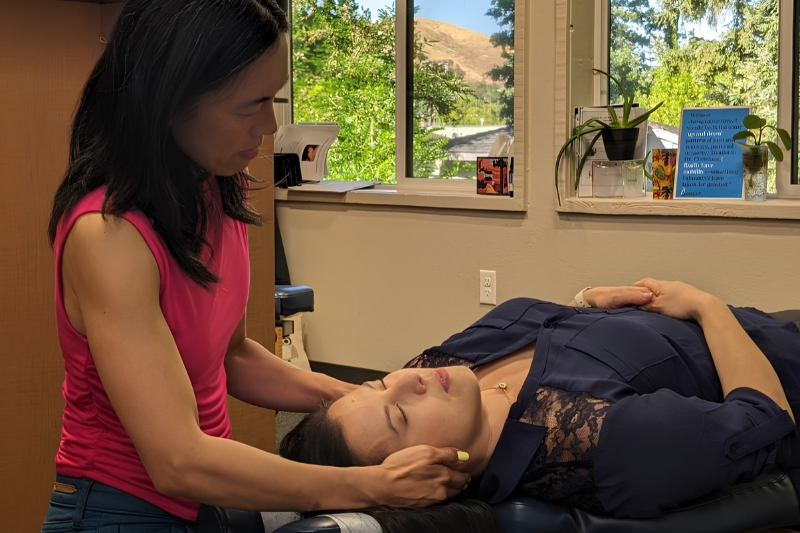
Let's talk about the name. Where does Rivulet come from, and what does "let life flow" mean to you?
Everyone seemed to be "Dr. First Name Last Name" or "Something Family Chiropractic," and I wanted to stand out. The name comes from a quote by B.J. Palmer, one of the early founders of chiropractic, that we studied in school:
"We chiropractors work with the subtle substance of the soul. We release the imprisoned impulse, the tiny rivulet of force that emanates from the mind and flows over the nerves to the cells and stirs them into life."
"Let life flow" became our mantra, and it's in our brand with the water droplet. When you have nerve interference, pain, or discomfort, it keeps you from being your best. I want to empower people to know they don't have to stay stuck. That mission is what gets me up in the morning, and what grounds me on the hard days, of which there are many as an entrepreneur, especially as a female business owner.
Rivulet is blue, like water, and I worked with a chiropractic office designer so the space would match that feeling. I started with one plant in 2020, and now we have about 30. They're living plants that need the right light, food, and attention, just like your body and your spine. And honestly, who wants a chiropractor with dead plants? That's off brand!
There's a whole spectrum of chiropractors out there. Where do you land?
Since day one, I've wanted to be empathetic, warm, and welcoming, and to blend that with the clinical side that gets results. You come in because you're in pain, and you want to get out of pain.
A lot of my patients are women in the sandwich generation, caring for kids and aging parents at the same time. I'm one of them, so I get it.
On the clinical side, I measure. I got my X-ray operator's license from the beginning, and my digital X-ray, so it's a one-stop shop. You have your assessment and consultation, I take your films, and we review them together in the same appointment. No waiting. People are busy, and that respects their time. You also get a starting point you can look back on and say, "Oh, that's the cause of my issues, and it's getting better."
So Rivulet is a blend: clinically results-oriented, empathetic and welcoming, and full of plants and life.
You show people their X-rays at the very first visit. Tell us about the skelfie. Why does seeing your own spine matter so much?
Not every chiropractor wants the responsibility and cost of their own digital X-ray, but I find it so valuable, because people love visual cues. When you see your skelfie, the digital picture of your spine, you're fascinated. "That's me. That's what I look like on the inside!"
Your dentist takes films of your teeth, but people see your teeth every day in your smile. Your skelfie shows what's going on inside. My younger athletes especially love it. They tell their friends, "I got my skelfie at Dr. Christina's. You should get one too." It's become our thing.
A lot of moms have had one bad chiropractic experience and never gone back. How can someone tell real care from a scare tactic?
I think back to my own first experience. I just wanted to be taken care of, not sold things I didn't need. That chiropractor analyzed me, showed me concrete data, was warm and welcoming, and explained every step of the plan. When I built my own processes, I wanted people to feel the way I felt.
After I left New York and moved around, I also had terrible experiences, where they tried to sell me big, scary, expensive plans. Do I really need this? It's frightening, because you're in pain and people can take advantage of that. I never want to do that.
So I explain instead of scaring. The first visit is the longest, because I'm getting to know you and your goals. And it's like finding a great accountant or mechanic. Sometimes you have to shop around. If someone isn't a fit, whether it's personality or something outside my specialty, I'll refer them to a fellow chiropractor or another provider who can help them better.
What about people who are terrified of the crack? Is there room for them on your table?
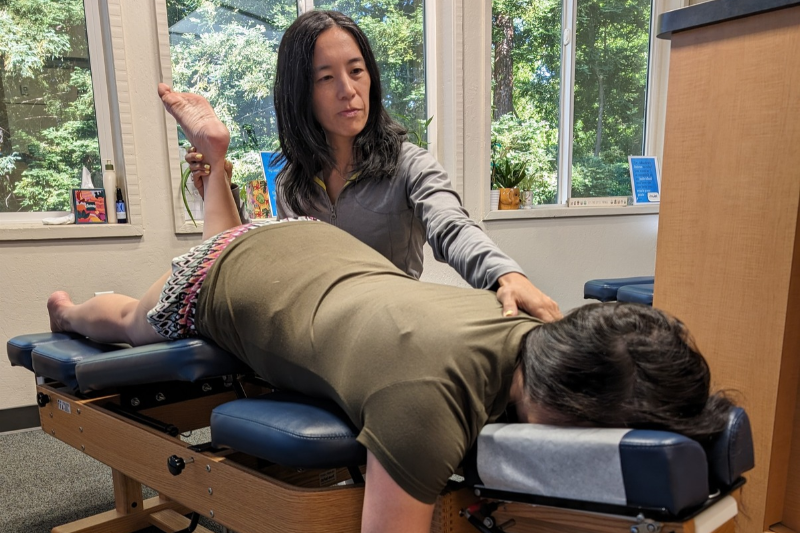
Absolutely. There are people who are terrified of the crack, people who are addicted to it, and everyone in between! That noise is called a cavitation. It's a release of gas from a pressure change, like opening a bottle of wine or sparkling water. For people who are nervous, especially about their neck, I use an Activator, a spring-loaded instrument that doesn't produce those noises. In my intake, I ask about your past chiropractic experiences, and I talk you through everything as we go. "This is going to happen now. You may hear a noise, you may not."
Some of my pregnant moms and car accident patients are so tender that you can't use the more traditional techniques at all. You have to go slow, use the Activator, and sometimes work on releasing the muscles. Every patient and every visit is different, which is why it helps to go back to the X-rays.
Then there are the people who love the noise, often my athletes and long-time wellness patients. I teach them that it's not always about the sound. Sometimes gentle, calming techniques and breathing get you the same result.
And the dramatic neck-twisting you see in movies? That's Hollywood fiction. It's bad PR for chiropractic!
Personal injury is a big part of your practice. What draws you to it?
There are a lot of male chiropractors who do personal injury, whether it's a car accident, a slip and fall, or another injury where an attorney refers you to a chiropractor to start healing. As a female chiropractor, I offer another option.
I also speak Spanish. I studied it in college and spent ten months in Spain. I know a little Tagalog as a Filipina-American. When someone is injured, nervous, and juggling appointments, insurance calls, and the auto shop, it helps so much to welcome them and explain things in their language. When they see that I'm a woman and a person of color, many of them start to relax. It's like choosing a massage therapist or a gynecologist. People have preferences, and that's okay.
Say a mom gets rear-ended on 24 on the way to pickup. What should she do in the first few days?
Go to the ER right away, even if you have no pain, and get evaluated. Half the time they'll say you're fine and to monitor yourself. But even a low-speed impact can cause ligament or tendon damage that can haunt you 24 hours later, or 24 years later.
I say this with conviction because I was rear-ended three times in my early 20s. Those accidents led to the neck issues that caused my carpal tunnel symptoms in my 30s, which brought me to chiropractic in the first place. If I'd known to get evaluated right after each car accident, even though “I felt fine,” I probably would have been referred to a chiropractor, and it would have changed the path of my neck and spine. When you're young, you think you're invincible. It doesn't hurt to check. An X-ray says a lot. Your skelfie will tell you what's up.
What should someone realistically expect when they start care with you? How soon do people usually feel a difference?
It depends on the nature and severity of your condition. Someone recovering from a car accident with a concussion will need more visits than someone who's generally in good shape and coming in for maintenance.
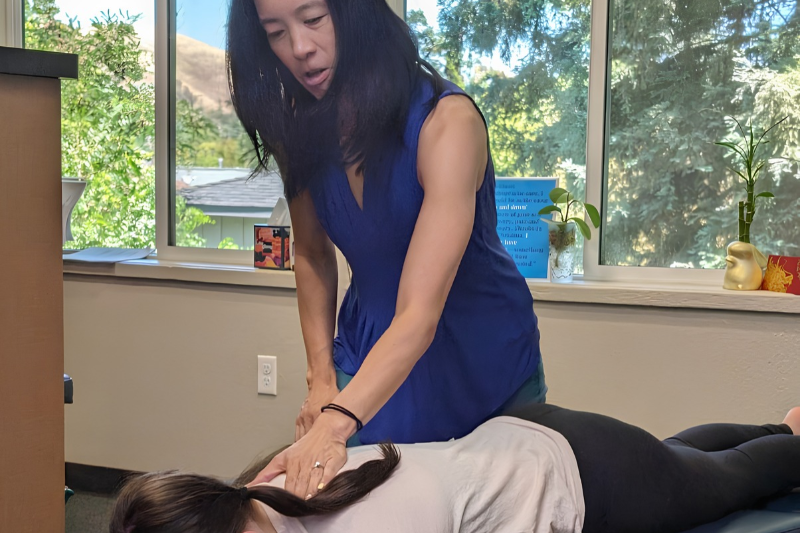
Most people come in with pain, so I put them on a care plan, because I wouldn't recommend it if I didn't think it would work. The key is patience. We're used to one doctor visit and a prescription, and that quick fix can be a Band-Aid. Slow and steady, in the right conditions, is how things heal.
It's like working out once and looking for your six-pack. It took you 30 years of computer work to get that forward head posture and headaches. It took three accidents to get me where I was. It's going to take time. Sometimes people surprise me and get better faster. But any good thing takes time, and it's worth the wait. I know from personal experience.
You've moved toward care that's built around relationships instead of transactions. What does that look like?
I don't take insurance, because I want care to be about me assessing you in person, touching your back, taking films of your spine, and building a comprehensive plan. Insurance runs on algorithms and claims representatives who never meet you. That is transactional to me. If insurance says you get eight visits but you clinically need 12, that cuts you short.
If you're traveling through town and need a one-time adjustment, I'm happy to help. But I love getting to know my patients and watching them reach their goals over time. That only happens with a real care plan, not dropping in and out with the same issue.
I do provide superbills, so you can seek reimbursement, and you can use your FSA or HSA for chiropractic care. I have a back-office billing specialist with decades of insurance experience who makes sure everything is coded properly. I've been doing superbills since 2014. Super duper bills!
Who's walking through your door these days?
Moms and dads, mostly women, and sometimes they literally walk in limping or stooped over. They'll refer their husbands, too. Then I see their kids, often overachieving athletes in ballet, water polo, dance, and field hockey, with shoulder, ankle, low back, or neck issues. Neck pain is so common in young people now with phones.
Since I've been in practice a while, I get to watch those kids grow up. They go off to college and come back to see me on holidays. I still call them our kids. It's so special to see them thrive, sometimes even play sports on a scholarship.
And I see a lot of Spanish-speaking patients after car accidents. It means a lot to give them a safe place to get care, with undivided attention they might not get at a big, only English-speaking clinic.
Rumor has it Rivulet had a four-legged mascot. Tell us about her.
Bella was my golden retriever, and she was part of the healing. She had a dog bed near the front desk, and when people walked in, even people who were afraid of dogs, she made them feel welcome and calm. Sometimes she'd wander over to the adjusting table and rest her head near you, and I'd have to say, "That's Bella's breath on your neck, not mine!"
She made it to almost 15, and we threw her a Bark Day at the practice with dog cupcakes. Friends of patients who'd heard about Bella the chiropractic dog came to celebrate her. When she passed the next year, people cried. She was part of the team. Maybe someday I'll get another furry friend.
Your family roots are in the Philippines. How does that show up in your life and your work?
I'm a first-generation Filipina-American. My parents came here with big hopes and dreams. My dad was a mechanical engineer, and my mom was a chemist, but they had to adapt so quickly to American culture that they couldn't easily pursue those careers. They started from scratch.
Growing up, you're straddling two cultures and creating your own space in between. I've created that space at Rivulet. I'm a solo practitioner, female, and Filipina American. I play Filipino music, and I've mentored Filipina and Filipino interns from chiropractic school, since I'm one of the Bay Area practices where students can train. Diversity matters to me. When someone understands your language and culture, there's a kinship and a trust. No matter your background, you just want to feel welcome.
Who do you love collaborating with?
Acupuncturists, massage therapists, licensed marriage and family therapists, and mental health providers. Those are my partners on the body and mind side. I also refer out to nutritionists on purpose. Nutrition is complex, and I'd rather focus on the spine and send you to the experts. And I know great fitness options, from barre to Pilates, because everyone wants to move differently.
On the other side, I love working with personal injury attorneys, especially women-led firms who still answer their own phones. We're unicorns, so I love connecting with other women in this space. I want relationships, not a revolving door.
If someone's been putting off getting her body checked out, or she's never seen a chiropractor at all, what would you want her to know? What's the easiest way to start with you?
There's a banner on the side of my building in Lafayette that says, "So you thought it would go away by now?" The answer is no. It won't go away until you do something about it. It doesn't disappear when you sweep it under the rug. It usually gets worse.
You can call or book online through my website and complete the intake online ahead of time so I can understand your case. Your first visit includes a consultation, an exam, X-rays (unless you're pregnant or have recent films), including your first adjustment, in about an hour. This isn't a 15-minute in-and-out. I want to understand what's going on with you, stay with you if it's the right fit, and refer you if I can't help.
Call to book: 925-900-8062
You can also find Dr. Christina Alba on The M List, The Mamahood's searchable database of mom-recommended resources, or connect and collaborate with Dr. Christina Alba inside The Club membership for women Founders.