Melissa Chen, Author of Dog Hiking Northern California and Disney Travel Planner, on Taking the Stress Out of Family Adventures
Interview by Heather Anderson
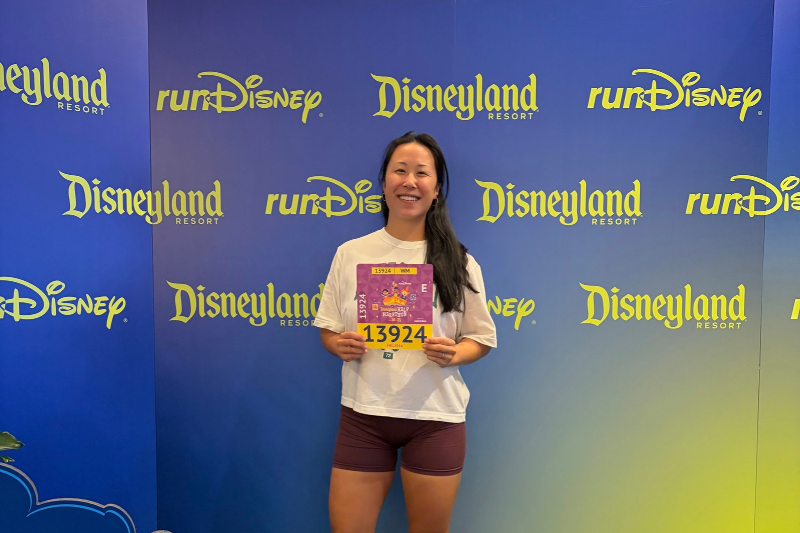
Melissa Chen is the author of Dog Hiking Northern California: 42 Unmissable Dog-Friendly Trails and a Disney travel planner who helps families plan Disneyland, Disney World, Aulani, and Disney Cruise trips without the overwhelm. A former VP of Operations in tech, she stepped away to focus on her two big loves: getting out on the trail with her dogs, Ty and Gus, and helping families make travel feel magical again. Every hike in her book was trail-tested by her pups, and plenty of them by her kids too.
Let's start with your hiking crew. Ty is a chocolate lab and Gus is a basset hound, and basset hounds aren't exactly built for alpine trails. Introduce us. How do those two do out there together?
Ty is a very traditional chocolate lab. He loves being active, running back and forth on the trail, and anything with water. Jumping in a lake, splashing in a creek, that's all Ty. Surprisingly, he can't go as far, because he tires himself out with how excited he is at the beginning. He's the dog running in circles for the first three miles who eventually realizes we're going a little longer than he thought.
Gus came second, so he has very much younger brother vibes, and he's a basset hound. He's slow and steady from the get-go. Ty wants to go faster, and Gus says, "I'm going at my pace, I don't care how fast you're going." His nose takes him everywhere and nowhere. He'll stop and smell the same ten feet for minutes. He loves a snack break and a shade break.
But here's the thing about Gus: he actually goes farther. He can do 13 miles, no problem, because he never goes faster than about a mile an hour. He's got huge paws, probably twice the size of Ty's, even though Ty is 80 pounds and Gus is about 55. When we're heading back down the mountain and pass people huffing and puffing on the way up, they always say, "Oh my gosh, if that basset hound can do it, I can do it!" They're a dynamic duo, total opposites, and they keep each other going.
You were a VP of Operations in tech, and then you stepped away to focus on what you love. What was going on in your life when you decided to make that leap?
I've always had a lot of passion projects. I want to get really great at one thing, and once I feel like I've done it, I'm ready for the next thing I'm passionate about.
In tech, I had a goal for what I wanted to accomplish and the kinds of companies I wanted to work for. Over the last ten years or so, I worked at fast-growing startups, including DoorDash when COVID made it really take off, and ended at a smaller healthcare startup where the work was about how to scale once you have product-market fit. After two years there, I felt like I'd accomplished what I set out to do.
So I asked myself, what's next? I've loved hiking forever. I started a hiking blog back around 2014 and kept it going on weekends. Now that I had dogs, writing a book felt like the perfect way to help people discover hikes with their dogs, here in my hometown, the Bay Area.
At the same time, I'd become a mom. I used to travel all the time, and then I learned firsthand how hard travel gets with little ones. Disney turned out to be the trip that worked for us, and that became my second passion.
When did weekend hikes with the dogs turn into "I'm writing a book"?
The publisher, Helvetiq, actually found me through my hiking blog and social media. They're an international publishing company founded in Switzerland, that's known for beer hiking books, where you hike a trail and then visit a brewery nearby. They were branching out into dog hiking in the U.S., and when they reached out, they asked me about both.
What they didn't know from behind the Zoom screen was that I was seven months pregnant. Beer was not where I wanted to be for the next year or so, but I love my dogs, and I would love to write a dog hiking book. So that's how it started. They found me, but I'd also been keeping up that online presence for years, so I think it was a combination of being visible and being the right fit.
“Hiking is the direct, natural way: trees, trails, exercise. Travel is more of a manufactured experience, but I think it’s really healthy for moms and parents too. One is great for your body, and one is great for your mental health.”
Your book covers 42 hikes, from Santa Cruz to Shasta to Desolation Wilderness, and every one was trail-tested by Ty and Gus. What did that testing actually look like?
The hardest part was the research and trimming it down. I had hundreds of hikes I wanted to include. But if someone travels somewhere with the book, they're probably going for a weekend, not doing ten hikes in one area. So I started with where most readers live, the Bay Area, and made sure the hikes covered a good spread and weren't just the top five you'd find on Google.
I narrowed it to about 60 hikes and did them all with Ty and Gus. That's how I got to 42. Two kinds of hikes didn't make the cut. Some were way too strenuous, with terrain so rough and sharp the whole way that it could cut their paws. I trimmed back some Tahoe hikes for that reason. Others were too dangerous in the heat: lots of exposed open ground that's only really safe in the cooler months. Some East Bay trails are completely flat but get to 100-plus degrees, and the ground gets too hot for paws. I wanted as many year-round hikes as possible.
What actually makes a trail dog-friendly? What do people get wrong when they pick a hike for their dog?
Some people start with safety, then fun. I start with the fun, then layer in the safety.
For fun, I look for history and geography. Northern California has so much rich history, from the Native peoples who were here to the Gold Rush. Then I look for waterfalls, rivers, lakes, wildlife, even banana slugs. Things that make it more than a walk in the park.
Then the dog-friendly layer. The trail doesn't have to be a wide fire road, but it needs to be comfortable for a human and a dog side by side. The surface has to be comfortable for paws. Some hikes have sharp rock the whole way, while others only have a short stretch at the top and gentle switchbacks the rest of the way. I also removed a lot of hikes with ticks. We've done hikes, especially up toward Marin, where the dogs came back with hundreds of ticks. Not fun.
Finally, the small comforts: are there poop bags and trash cans, so you're not carrying a bag for ten miles? Is there a water station, ideally with both a human height and a dog height? It all adds up.
Plenty of moms reading this have a dog, a kid or two, and maybe a stroller. How do you get everybody out on a trail together without it turning into a whole ordeal?
I wanted the book to have hikes for every type of hiker. I had a newborn while I was trail testing, so I did a lot of hikes with the dogs and my baby. I made sure to include shorter trails, two or three miles, on an even path that works with a stroller or a carrier.
The biggest tip is to pack the night before, so getting out the door isn't stressful. Bring lots of snacks and tons of water for the dogs. Handle the diaper changes before you start. And don't rush. Babies and little kids are unpredictable. If they want a break, it's time for a break. It's okay to take a longer snack break. There's the pace you hike as an adult alone, a different pace with dogs, and a third pace with dogs and kids. Lean into it.
If a mom in the Bay Area wants to try one hike from the book this weekend, where should she start?
Pulgas Ridge in Redwood City. It's a wide paved road all the way up to a nice viewpoint, and we've pushed the stroller the whole way. Part of the trail has an off-leash area, so you can push the stroller while the dogs run around. It's easy and accessible, but it still feels like you're getting out into the woods, not just doing a neighborhood park loop.
Let's talk about your other big love. Before kids, you traveled all the time. Then you became a mom. What happened to travel?
We used to travel almost monthly. When our son was three months old, we did a "trial trip" to Portland. Short flight, keep it simple. It was a disaster. The hotel wasn't set up for babies, the pack and play came late, we felt cramped, and we were stressing about washing bottles in the sink. We were pushing the stroller around a city we didn't know well, and I was stopping every two or three hours to nurse on a bench. After that, we said, let's just not travel with an infant.
Then, around six or seven months, he hit some milestones, sitting up more and eating less often, so we tried again. This time we went to Disneyland.
And then Disney, of all places, turned out to be the trip that felt easy. What surprised you, and when did you decide to make it your work?
It was night and day. Everything from the hotel to getting to the park was so much easier. Disneyland has baby care centers right in the park with air conditioning and privacy curtains, so nursing was so much more comfortable. Normally travel was high stress and maybe high fun. This was low stress and high fun. Even my baby seemed to enjoy it, looking at all the colors and listening to the music. Now my son is four and has been to Disney close to ten times. He doesn’t even like rides that much, but loves going to Disney.
What surprised me was how seamless it could be. People think Disney means crowds, chaos, and a ton of planning. But once we figured out the logistics, it was easy. The right flight to Anaheim, a car service that provides car seats so we don't pack ours, the right hotel for our budget. We've stayed across the whole budget spectrum at Disneyland, and each option has its advantages. Then inside the parks, it's about knowing when to do which rides, when they'll be busy, and what seasonal shows and events are happening.
Then friends in the same boat kept telling me how stressful travel had become. I'd say, "You have to try Disneyland. I know it looks chaotic online, but I can help you, and I promise it'll be easy." So I helped a few friends plan their trips, and they couldn't believe how kid-friendly it was. I loved hearing how happy their kids were, and with my operations background, I love the logistics too. That's how it became my work.
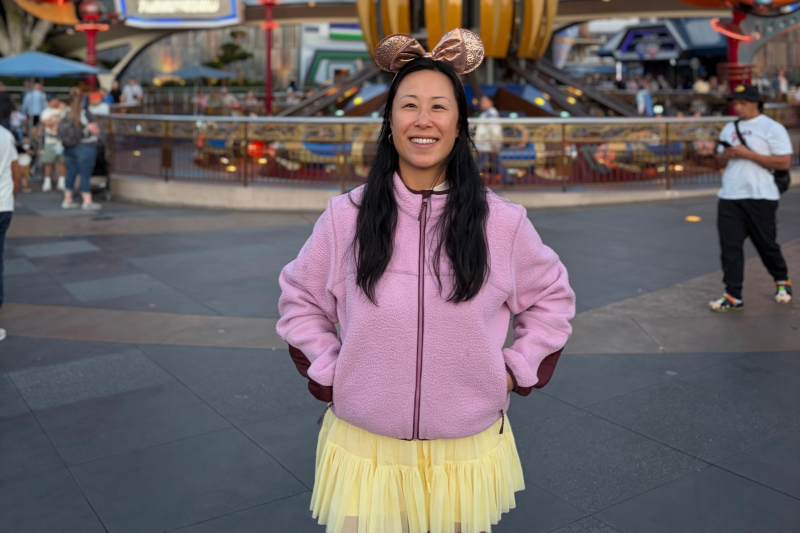
Your operations brain clearly comes along on every trip. Families who book with you can get a custom day-by-day itinerary. What goes into that, and how do you work with families who would rather wing it?
That's my favorite part. I have an operations background, but I'm also pretty flexible, and I love listening to my clients. Some are super Type A like me. Some have told me they're even more Type A than I am. And some say, "I do not want an hourly schedule. I just want tips so I'm not stressed."
I always start by getting to know the family, by email, text, or a call. What's your child like? Do they love big rides or princesses? Do you want sit-down dining? Are you morning people or night people?
For families who want detail, I'll lay out every ride, roughly what time to do it, and in what order, based on wait times and how lines build throughout the day. For example, Fantasyland is busiest in the afternoon, so unless you want to wait in the heat, go in the morning or at night.
I recently worked with a mom who said she'd get stressed seeing an hour-by-hour plan. She just wanted to explore with her princess-loving daughter. So I gave her a flow instead: start in Fantasyland, wander over to Toontown, here are some great lunch spots, and here are the air-conditioned spots for the afternoon so there's less fussing in the heat. She loved having that relaxed version.
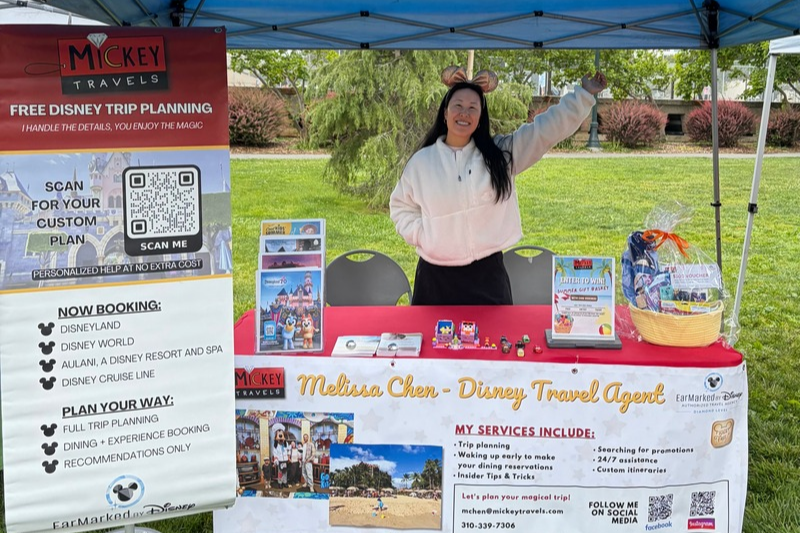
Another perk families love is that I take care of all the reservations that come with Disney. Many people don’t know that if you book Disney World for example, dining reservations open up at 3AM PT, and Lightning Lane reservations open up at 4AM PT. The same thing happens with Aulani dining reservations, which open at 2AM or 3AM PT depending on daylight savings. I have families who reach out to me in panic because they missed dining the last time they traveled.
Can we clear something up? Using a Disney travel agent doesn't cost families anything. How does that work? It sounds too good to be true.
It really is free. The price you pay Disney directly is the same price you'd pay through a travel planner. No extra cost, no extra fees. Disney pays the travel agent once a booking is made.
Disney actually likes it when families use a travel planner. We help with all the logistics and reduce stress, and families who use a planner tend to have a better time and are more likely to come back.
You're also a luxury travel nerd. What does a higher level of service look like at Disney, and who is it for?
I love luxury travel, and I also do budget travel, so I'm kind of that person who's done the whole spectrum. That gives me a good pulse on both ends.
At the parks, it starts with where you stay. The higher your budget, the closer you can stay, which makes it so much easier to go back for naps and breaks. The hotels are more themed, the bedding is nicer, and the dining is better. At Disneyland, the Grand Californian is right inside Disney California Adventure. At Disney World, if you're a Magic Kingdom family, the Grand Floridian and the Contemporary are walking distance. You can also book a VIP tour, with a guide who takes you through the park and the rides. That's for families who really prioritize their time and don't want to wait in lines.
Disney Cruises also have something called concierge level. Disney Cruises are already all-inclusive, with dining and entertainment included. Concierge adds a private lounge and pool area, priority boarding, and priority booking for port adventures and onboard activities. It's especially popular with multigenerational families sailing to Disney's private islands, Castaway Cay and Lookout Cay. Concierge guests have a much better chance of snagging the island cabanas, which book up immediately. It makes the day so comfortable for grandparents who want a fan, a fridge, and some shade, and gives parents a little quiet time too.
If a mom is planning her first Disney trip with toddlers, what's the one thing you'd tell her to do, or skip?
Don't try to do too much. Decide on your must-haves and prioritize those. Everything else is a nice-to-have.
I've seen the dreaded toddler meltdown at the parks a lot, and it usually happens twice: around 3pm, when they skip a nap and power through a hot day, and around 7 or 8pm, when it's been a long, sugary day and they should be heading to bed. So think about what you really want, whether it's princess visits or certain rides, and let the rest go for this trip. Disney has so much to offer that it's hard to do it all in a day, even as an adult without a toddler.
Dog hiking author and Disney planner sound like two very different lanes. What's the thread that connects them for you?
Helping families get outside and get out of their routine. Hiking is the direct, natural way: trees, trails, exercise. Travel is more of a manufactured experience, but I think it's really healthy for moms and parents too. One is great for your body, and one is great for your mental health. Helping people do both is what connects it all for me.
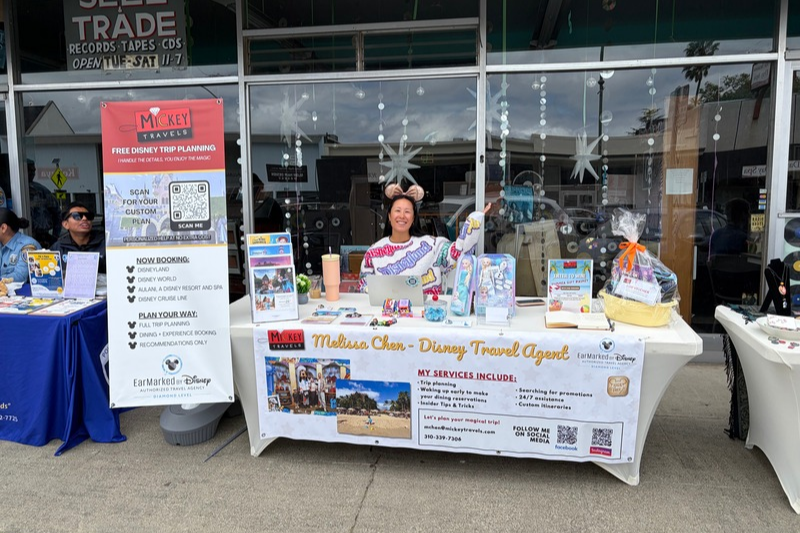
For a mom who wants to get out on the trail with her dog, or finally book that family trip without the stress, how can she find you and work with you?
My book is in many local bookstores across the Bay Area and Northern California, and it's available online too, through a link that supports local bookshops or on Amazon.
For Disney, the best next step is to reach out and start a conversation. Tell me about your family, where you're thinking of going, and your ideas or budget, and we'll go from there. My Linktree has an intake form, my phone number if you'd rather text, and my social media if you just want to follow along for now.
You can also find Melissa Chen on The M List, The Mamahood's searchable database of mom-recommended resources, or connect and collaborate with Melissa Chen inside The Club membership for women Founders.