The Nesting Spot Is the Space Bay Area Parents Didn't Know They Were Missing: A Conversation with Caren Hespeler
Interview by Heather Anderson
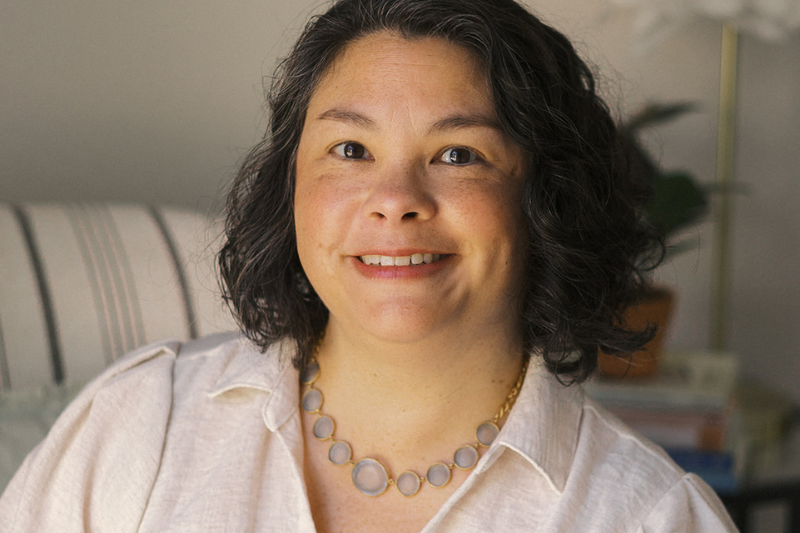
Caren Hespeler is a certified birth doula, childbirth educator, and the founder of The Nesting Spot for Birth and Beyond in San Jose, California. With over a decade in the birth industry and a background in interior design, she built a warm, in-person gathering place where expecting and new parents can learn, land, and actually exhale. The Nesting Spot brings together childbirth education, lactation support, new parent groups, postpartum planning, and community under one roof because Caren knew firsthand what happens when parents don't have that. She also happened to be a surrogate twice, which tells you pretty much everything you need to know about who she is.
Take us to the moment you first realized this kind of space was needed. Not just classes, but a place where expecting and new parents could actually land, exhale, and feel supported. What was happening in your world that led to The Nesting Spot?
It started with two things happening at once. I had a small office space in San Jose that I was renting out to other birth doulas and childbirth educators because I couldn't cover the cost alone. We'd gather, network, swap ideas, and at one of those meetings someone looked around the room and said, 'Caren, you practically have a resource center sitting right here.' That planted something in me.
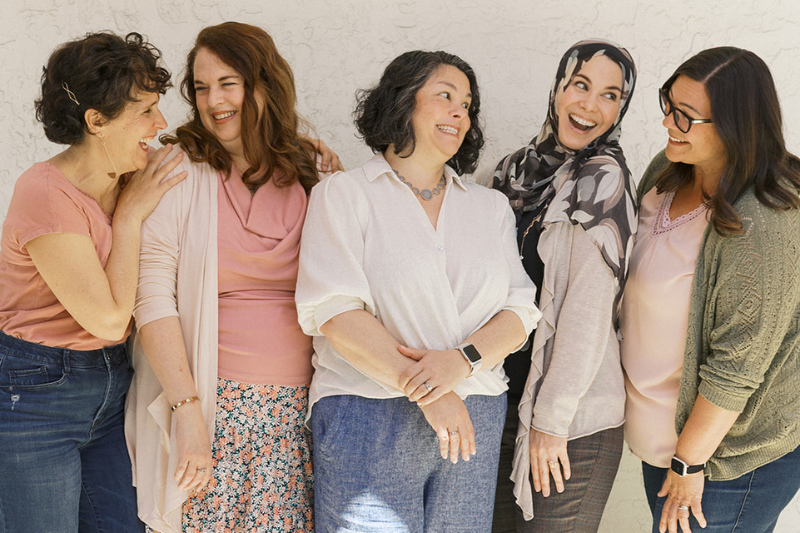
But the deeper seed came from my own early motherhood. I met my closest friends at a hospital lactation group 22 years ago. We called ourselves the Booby Group. We showed up every Thursday for six to eight months until the lactation consultant literally told us we had graduated and needed to stop coming. Those five women are still my people. We still do mom's nights out. And I just kept thinking, I want that for other parents. I want them to have that.
Then came covid, and I watched clients go through labor, birth, and new parenthood completely alone. Parents couldn't come. No nanny. No postpartum doula. Just isolated with a newborn and no community. After teaching childbirth education online for years and knowing how hard that was, I started asking myself: what if there was a real, in-person space in Santa Clara County built around exactly what these families need? I was so convinced this was a terrible idea that before I moved forward, I called my sister Robin on a long drive and made her promise to talk me out of it. She said, 'Oh my gosh, Caren, this is so needed. I'll even invest in it.' And that was that.
For someone hearing about The Nesting Spot for the first time, how would you describe what it is and, more importantly, how it feels to walk through your doors?
What people don't know about me is that I have a degree in interior design. So when I was dreaming up this space, I had a very specific feeling in mind. I wanted people to walk in and feel at home. Not at a clinic. Not at a hospital. At home.
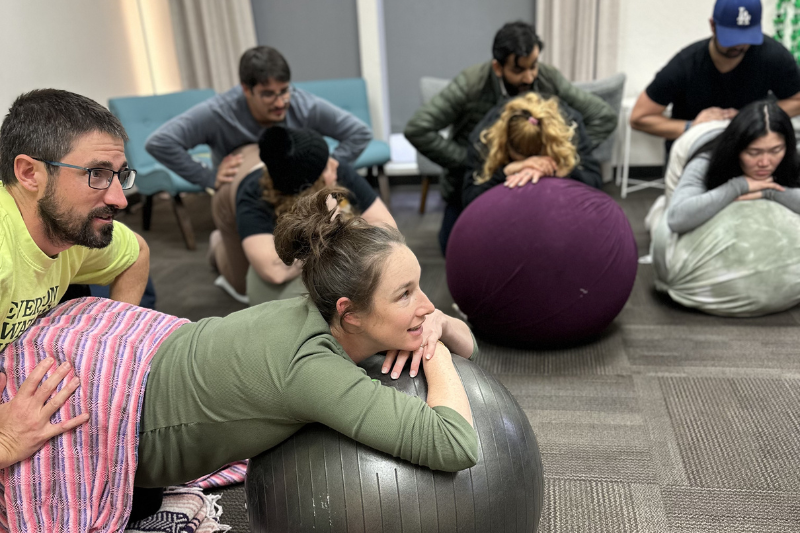
There are mugs for tea, a variety of teas both caffeinated and not, a coffee machine, snacks, chocolate, and ginger chews because obviously. Yoga bolsters and birth balls for anyone who needs to get off a chair. We tell people: if you need to get up and stretch, get up and stretch. If you need to cry, cry. If your baby is screaming, that's fine. Nobody here is going to look at you sideways.
We had a mom call once and say she couldn't come to the new moms group because her baby wouldn't stop crying. She didn't want to be disruptive. I told her: that is exactly why you need to come. You need this right now. She walked through the door and her baby stopped crying almost immediately, just from the change in environment. She later wrote that The Nesting Spot is a magical place. And I mean, we can't take credit for her baby. But we can take credit for the room.
You bring together so many different offerings under one roof. How did you decide what families truly need during this phase?
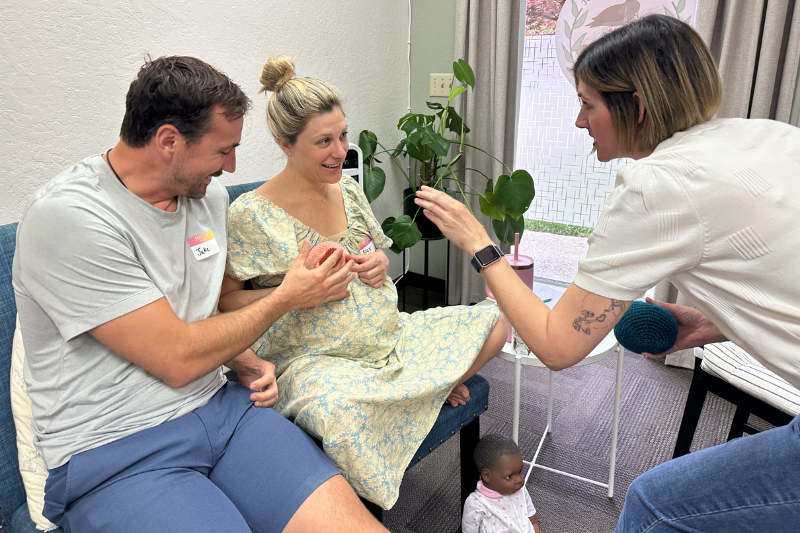
I like to call it our wall of knowledge. When you walk into The Nesting Spot, you see every class we offer right there in the entryway. And everything on that wall came from over a decade of being in the room with families as a doula and knowing what they didn't know.
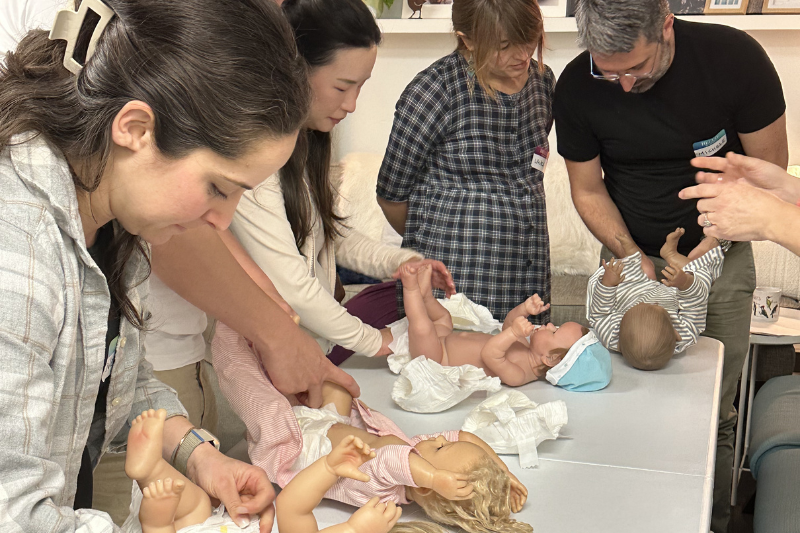
Doulas always say, 'My clients just don't know what they don't know.' We do. We know they need childbirth education, but also lactation support, newborn care, postpartum planning, sleep guidance, infant massage, baby sign language, prenatal yoga. We know they need someone to tell them how to do tummy time with a baby who hates tummy time. We know they need to hear that asking for help is not a failure, it's a strategy.
And we ask our community, too. Someone recently started talking about elimination communication, which I'll be honest I didn't know much about. So now I'm on a mission to find the right person to teach that class. The offerings grow because the parents tell us what they need and we listen.
“Hospital-based classes tend to prepare people to be compliant patients. Community-based classes taught by doulas prepare people to be informed advocates for themselves.”
What sets your approach apart from traditional or hospital-based childbirth education?
The simplest version: hospital-based classes tend to prepare people to be compliant patients. Community-based classes taught by doulas prepare people to be informed advocates for themselves.
I've sat in hospital rooms and watched nurses tell a laboring person they shouldn't eat anymore because they were approaching active labor. That always made me want to scream. A midwife friend of mine put it best: they're teaching patients to be obedient patients. Your body goes through labor the way it goes through labor. You should be following your own cues, not a nurse's script.
What we teach is: here are your options. An IV is not always medically necessary. Continuous monitoring is not always required. You can eat during labor until your body tells you otherwise. You can ask questions. You can decline things. We also get real and specific, like which hospitals in our area have certain tendencies and what you can actually expect if you walk into that room.
And then there's the community piece, which hospital classes almost never build. Our classes are small, never more than seven or eight couples. People introduce themselves. They connect. They make WhatsApp groups. That's not a side benefit. That's the point.
What are some of the most common feelings you see parents carrying when they first come to you?
Overwhelm, mostly. New moms especially come in flustered and apologizing for being twelve minutes late, telling us this is the first time they've taken their baby anywhere alone. And we always say the same thing: you got here. That is a big deal. Breathe. Do you need the restroom? Can I hold your baby? Do you want some tea?
Getting out of the house with a newborn is, and I mean this literally, a logistical operation the scale of a moon mission. There are 800 parts to remember and the baby is probably doing something unspeakable to itself on the way. So when someone walks in, we honor that. We don't rush them to their seat and start the presentation.
For prenatal families, I think the biggest thing is feeling like they don't know what they don't know, and being a little embarrassed about that. We try to normalize it immediately. We've been doing this for years. We know exactly what they need. They just have to show up.
You recently launched a Partners Group. Why does it matter to support the non-birthing partner during this transition?
Partners are so often the forgotten people in this whole experience. I had people tell me upfront, dads are never going to go for this. They're not going to want to talk about their feelings. They want to talk about football.
I pushed back on that, and I'm really glad I did. Our first group was six weeks and it went so well that they asked for two more. Our facilitator offered to extend it at no charge because he was genuinely excited by what was happening in the room. These partners were talking about mental load, about how to show up, about the grief and disorientation of watching the person you love go through something you can't fully share. That's not surface stuff. That's real.
We've also evolved the name to Partners Group, which covers dads and non-birthing parents of all kinds, because the thing they have in common is that they are not carrying the baby and they need their own space to process that. The group is for any non-birthing partner who wants to show up better for their family, full stop.
There's something powerful about being in a room with other parents going through the same stage of life. What shifts do you see happen for people once they find that kind of community?
They relax. That's the most basic version of it. They walk in carrying all this freight, this pressure to do it right, to have it together, and then they look around the room and realize everyone else is also barely holding it together, and something just releases.
Just recently, a mom from our Monday new moms group asked if anyone wanted to walk over to the coffee shop after. They all went. I love that. That's not me building community. That's community building itself in a space that made it possible.
The longer version is that the people from our very first cohort of new moms groups are still together 20 months later. Going to first birthday parties. Doing Easter and Halloween together. That's what I wanted when I opened this place. I wanted what I got from the Booby Group 22 years ago. It turns out other people want it too, they just needed somewhere to start.
You've been in the birth world for over a decade. How has your perspective on what parents need most evolved over time?
The biggest thing I've watched shift is the hunger to be in person again. After years of virtual everything, people are showing up and they are so relieved to be in a room together. There's an energy you simply cannot replicate through a screen. When someone is sitting next to you and you can see their face, feel the room, make eye contact, that's when real connection happens. Parents were starved for that, and they still are.
The thing that surprises me and honestly troubles me a little is the shift away from slower, more mindful prenatal experiences. We offer a prenatal yoga class that's structured to build community and genuine body awareness, not just movement. The first thirty minutes are introductions, sharing what you're feeling that week, talking through fears. It ends with a long savasana. It's closer to group therapy than a workout, and it was exactly that for a lot of us who went through it.
But I'm noticing that more and more people want something faster. Check the box, get the stretch, move on. And I understand the pressure people are under. I just also know what they're leaving on the table. Learning to slow down, to follow your body's cues instead of a schedule, that's not just useful in labor. It's useful for the next twenty years of parenting. We're still committed to offering it. We just keep working on how to help people see why it matters.
For someone overwhelmed by all the 'should' around pregnancy and parenting, how do you help them tune out the noise and find what's right for them?
I remind them that their pregnancy, their labor, and their birth are like a fingerprint. No two are the same. So the story your cousin told you at Thanksgiving, or the horror show your coworker described in detail you did not ask for, those are not your story. Yours hasn't happened yet.
I also explain something that tends to stick: the people who have beautiful, empowering births go home and live their lives. They're not out there telling everyone at a party. The people who had traumatic or difficult experiences are the ones processing out loud, looking for witnesses. So the stories floating around are not a representative sample. They're the ones that needed to be told. That doesn't mean your birth is going to match them.
What's a moment or type of transformation you've witnessed inside The Nesting Spot that validates why you opened it?
Two things come to mind. The first is what happens at the end of childbirth education classes when we ask everyone for their takeaway. Partners will say, again and again, 'Now I know how I can help. I came in here not knowing what I was going to do during labor and now I actually have a role.' Watching that light come on for someone who was dreading feeling useless in that room, that never gets old.
The second is smaller but it might be my favorite. Just recently, after a Monday new moms group wrapped up, one of the moms asked if anyone wanted to walk over to the coffee shop. And they all went. Every single one of them. I didn't organize it. I didn't suggest it. They just did it because they wanted more time together. That's it. That's the whole thing. That's exactly why I opened this place.
If a parent-to-be is reading this and wondering, 'Is this for me?' what would you want them to know?
It really is for everyone, and I mean that in the most specific way. Nobody truly knows what their labor, birth, postpartum, or parenting journey is going to look like. Not one person. I have a 23-year-old and a 19-year-old and I still don't know what parenting is going to throw at me next. So if someone offered me a class for this stage, I would absolutely take it.
Whether you want an epidural or you don't. Whether you end up having the birth you planned or a completely different one. Whether you're a first-time parent or you've done this before and nothing is going the way it did last time. There's something here for you. We also just started working on adding birth story processing sessions, because some people need to talk through what happened, and that deserves a space too. The short answer is: if you're expecting or you're in the thick of early parenthood, you belong here.
When someone is ready to take that next step with The Nesting Spot, where's the best place for them to start?
Reach out to me directly. Every email, every call, every inquiry comes to me. Nobody else. And with over twelve years of experience, I'm going to be able to help you figure out what makes sense for where you are in your journey, whether that's a single class, a series, a support group, or all of the above. I also do a free Q and A call, which I'll be honest goes way longer than the scheduled time because there's always more to talk about. I don't mind that at all.
Visit The Nesting Spot’s website or connect with Caren Hespeler on Facebook or Instagram.
You can also find her on The M List, The Mamahood's searchable database of mom-recommended resources, or connect and collaborate with Caren inside The Club membership for women Founders.
Read More: For more on how The Nesting Spot is transforming local support, check out the featured article by Diane Andrews in The Silicon Valley Voice.