They Built the Dance Studio Their Own Kids Deserved. Now 925 Dance Collective Is Changing What Dance Culture Looks Like in the East Bay.
Interview by Heather Anderson
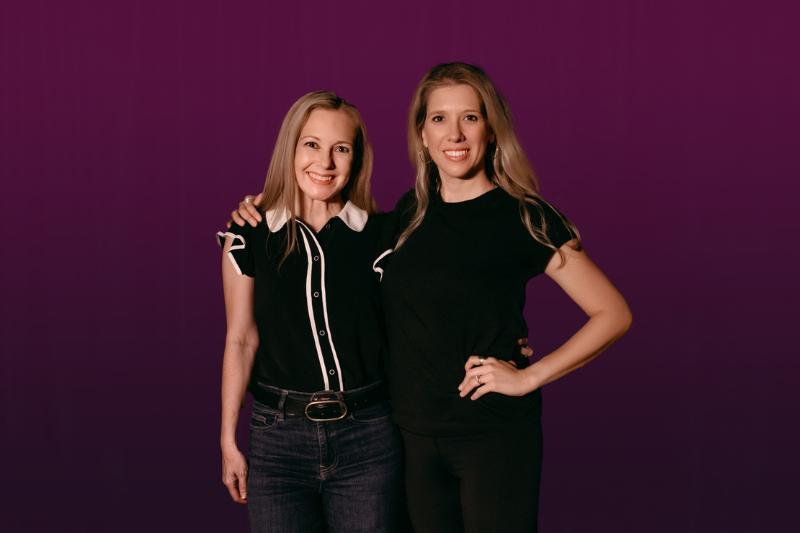
Laura Fegraus spent decades building systems in healthcare, drafting policy, and leading organizations through complexity. Tenaya Garrett spent years creating meaningful experiences, building community, and designing programs that bring people together. When their daughters both fell in love with dance and couldn't find a studio that matched the values they were raising them with, they stopped looking and started building. 925 Dance Collective opened in Lamorinda with a simple but radical premise: You can have rigorous training, real competition, and genuine community without the toxic culture that has defined the competition dance world for far too long. They are the only competition dance studio in Lamorinda, and they are doing it entirely different.
Let's start at the beginning. Not the business. The moment it became personal. What was happening with your own kids that made you think, we need to build something different?
Laura: We basically binge-watched Dance Moms together last summer when Emma was sick. Like, fifty episodes. And the entire time, Emma was glued to it saying, I just want to do that. I want to get on that stage. Look at her choreography. Look at her outfit. She does a backwalkover in the middle of the whole thing. And I'm sitting there thinking, yes, that would be incredible. But is Abby Lee Miller going to be screaming in her face by the end of this?
What you could see watching those kids was that they were in love with what they did. That part was undeniable. But they were also being abused. They were in physical pain. And the consequences for any mistake were completely out of proportion to what these kids were actually doing. The teachers and studio owners were forgetting the kids were human beings.
I kept thinking, can we find a way to have the joy of that? The stage, the choreography, the feeling of working toward something and competing for it? Without the culture of fear that doesn't actually translate to anything real? I have heard anecdotally that dancers are seeking out invasive aesthetic procedures at younger and younger ages - they are seeking a level of perfection in their bodies that has nothing to do with winning or growing or loving their craft. That's not athletic drive. That's something else.
You two come from very different backgrounds. Laura, you built systems in healthcare. Tenaya, you've spent your career creating experiences and building community. How did those two paths end up here?
Laura: At my core, I'm an advocate and a systems builder. My whole career has been about seeing something that isn't working and putting all the pieces in place to fix it. What's the mission? Is everything we're doing lined up with that mission? What are the risks, and what's the plan? That's my strong suit, and it happened to be applied to healthcare for most of my career. But it's the same work here. I'm also someone who has spent a long time thinking about why people do what they do. I have complex PTSD from my family of origin, and that means I come to every situation asking, what is the why behind what's happening here? Especially with kids. Kids are not miniature adults. There are reasons for behavior. There's context. And in dance, like in a lot of sports, there's this tendency to just say, you're not getting it because you're not trying. You're talking because you're lazy. And that kind of thinking never creates real, lasting change in anyone.
Tenaya: When we started, we really started with wellness first. What is the integration between movement and healing that we need to get right? I have personal experience with chronic illness and navigating what that means in your daily life, what modalities actually help, how you prepare your body to do the next level of something without injuring yourself. And we weren't seeing that at other studios. We'd see kids being pushed onto pointe shoes before their foot structures are ready for it, because it's profitable and parents want it, but there's science that says you're causing permanent damage. We wanted someone who would say, I know she wants this, but here's what happens if we do it too soon. That kind of somatic awareness, that real attention to what is safe versus what is just expected, that was missing. And I feel called to be a healer in that way. It's just part of how I move through the world.
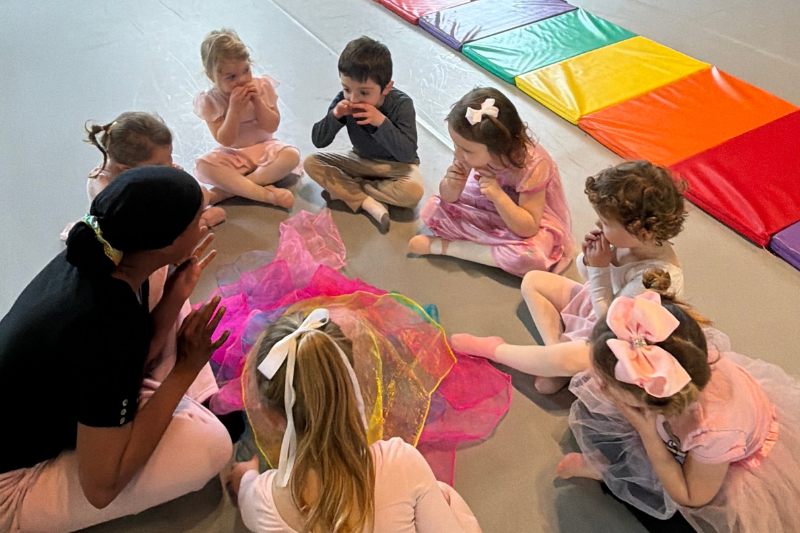
You've described 925 as "all the radness, none of the nastiness." What does that actually look like for a kid walking through your doors?
Tenaya: It looks like a curriculum, a teaching staff, and a whole way of engaging with families that's built around the individual dancer and what their goals are—not around unrealistic standards that don’t actually mean anything.
We were also incredibly intentional about who would lead that culture. That's why we hired our Studio Director, Shelby Holton Espinosa. Shelby has spent years building successful competition programs in this community, but what made her the right fit wasn't just her experience. Like so many people in this industry, she experienced unhealthy studio cultures and abusive situations. Those experiences shaped the educator she became. She sees every child as an individual, leads with empathy, and is deeply committed to creating a place where dancers feel supported enough to grow, take risks, and love what they're doing.
Laura: What we're always looking for is the unlock. What is the thing that makes this particular dancer want to keep trying? "If you don't do this I'll punish you" isn't a culture. "Look what you're capable of" is. Kids can work incredibly hard, laugh a lot, support one another, and still achieve amazing things. That's what "all the radness, none of the nastiness" means to us. Excellence and kindness are not opposites. We refuse to believe families have to choose between elite training and a healthy culture.
A lot of moms reading this have a kid who's curious about dance but feels behind, or intimidated, or like they missed the window. Who is this studio actually built for?
Tenaya: Mostly that kid, honestly. Because that family didn't really have a choice before. It was either a very recreational, low-key studio with limited performance opportunities, or it was the full-pressure competitive world. There wasn't a middle ground that said, come as you are, we'll meet you here, and we'll grow you.
We had a girl competing with us recently, really nervous before she went on. We did breathing work with the whole group first, just to get them grounded and out of their heads. And I said to them, you know that Olympic figure skater from Oakland who won the gold? The reason she got it wasn't only that she's technically elite. It's because when she went out there, every single person in that arena could feel that she loved what she was doing. So I asked the group: if I told you right now you could leave and go get a milkshake or a puppy or do literally anything else in the world, would you? And they all said no. I said why? Because we love this. That's all that matters. You love this. The judges will feel that. The audience will feel that. Go.
That's the studio we built. For the kid who loves it and just needs the right place to do it.
“Movement is a way for us to create and nurture community. For centuries, people have used dance and music together to create connection, to break down barriers, to process pain and heal.”
Can you break down what the actual pathway looks like for a new student coming in?
Tenaya: Right now anyone can come to trial any class for free. From there, we are accepting rolling competition team auditions until our season starts in early August. We call it placement rather than tryouts because everyone who comes will be placed on a team if they want to be. It's just a question of where. A newer dancer with some experience might start in novice with a recommendation for a few private lessons to build foundation. Someone with more training gets placed accordingly.
If you join this summer you come to our team camp in late July to learn choreography and settle into the season. In the fall, everyone develops their competition routines in the styles and formats they choose: solo, duo, group. Then starting around January, competition season begins, typically once a month or so. Kids can compete in as many or as few events as makes sense for them. A soloist might enter one competition or three. Group routines are set collectively.
Running alongside all of that are technique classes, conditioning, strengthening, and different styles throughout the year. The difference between a competition team dancer and a recreational one is really just the additional rehearsals for the routines and the commitment to more classes during the week. And there's a per-class pricing model, plus an unlimited option, so families can calibrate exactly how much they want to invest in any given season.
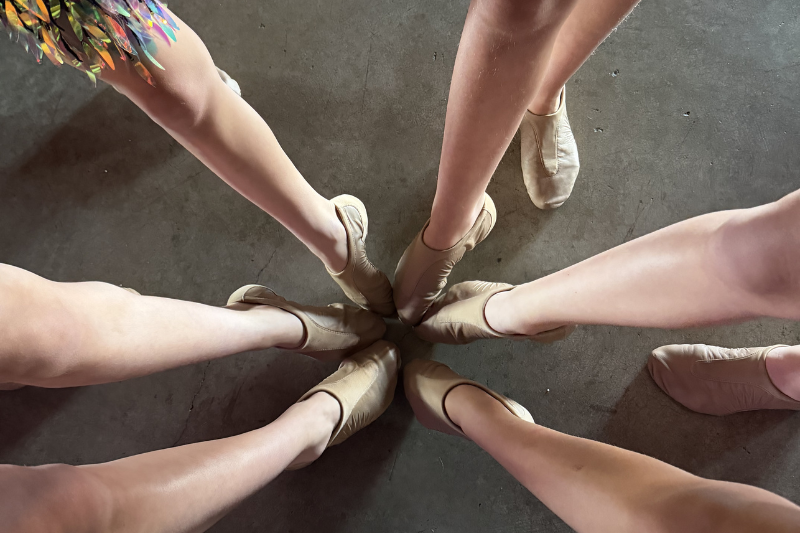
Let's talk about the actual classes, because you've built something here that you genuinely don't find all in one place. Acro, technique, conditioning, spirit team. Why was it important to build it this way?
Tenaya: Acro first, because competition dance has been incorporating more and more acrobatic elements over the last decade, the same way cheerleading did. We wanted kids to have that foundation so they can actually execute those elements safely and well in their routines.
Spirit team opened up because there's a whole population of kids who want to dance, want to perform, want that athletic rigor and the choreography and the energy, but don't want to be on a stage competing in the traditional sense. High school dance teams have become really popular, college dance teams too. We didn't see anyone developing that pathway for younger kids in this area, and we thought that was a real gap.
Laura: Conditioning is something that is almost entirely missing from how dance is taught. You hear "point your toes" endlessly at competitions, and I think that's because there's such a fixation on aesthetic details that nobody's asking whether the body underneath those details is actually prepared. Taylor Swift ran on a treadmill for three hours singing her entire Eras tour in heels to prepare. That is the level of physical conditioning required to perform well and still have your technique and your facial expressions and your energy when you're also managing adrenaline and memorized choreography. Flexibility, strength, cardio. We built conditioning in because it has to be there.
And leaps class. That one has become one of my absolute favorites to watch. The energy in that room when a group of kids is learning how to move through the air and everyone is cheering each other on, that is the culture in action. You got this, come on, let's go. It's loud and it's beautiful.
What are families coming in worried about or frustrated by? What are you hearing at the door?
Laura: It's less frustration and more like, are you sure my kid can do this? Are you going to be the safe place? I'm hearing from parents whose kids have anxiety, learning differences, choreography challenges. Parents whose daughters have been called defiant for not picking up choreography fast enough, when actually there was a real reason that nobody took the time to understand.
My own daughter has real challenges with choreography. When the mirror gets covered, she loses the reference point she depends on. She has been labeled as a problem by teachers when she was actually just a kid who needed something different. So when a family comes in and says, my child loves this but I'm scared to trust it, I can look them in the eye and say, I have that kid. I know exactly what you're describing. And this is the place.
We had a new girl start in acro class recently, a little younger than the others but with experience. I walked her in, everyone said hey, the teacher went right to her, checked what she had, helped her through what she didn't. That is what we are committed to maintaining, no matter how much we grow.
You mentioned private lessons have been a big part of helping kids build confidence fast. Who are they for, and how do they work?
Laura: Privates serve two pretty different populations.
On the more advanced end, they're for a dancer who is close to breaking through on a skill, or wants to work at a level above what the group class is covering. My own daughter takes privates because the choreography takes longer to stick for her. She has the technique. She just needs more drilling time with the teacher, one on one, to own it in her body. That extra half hour makes a real difference.
Tenaya: On the newer end, privates are a confidence bridge. If a thirteen or fourteen year old wants to join but has no experience, the last thing she wants is to be in a class doing basics with five year olds. We have taken kids with zero dance background and in about six weeks of weekly privates essentially taught them the foundational technique for their age group, because they wanted it badly enough to work for it. We have another kid getting ready for a spirit team audition right now. Privates are how we get her there.
It is an investment, but what we see consistently is that kids come out of that process with enough foundation to walk into a class and feel like they belong. And then they're off.
You're in a real build phase right now. What have you learned so far about what actually works when you're creating something from scratch?
Laura: I have a professional background in external affairs. I have been telling stories for organizations my entire career. And I completely underestimated how many messages from how many different places it takes just to get on people's radar. The overwhelm that families are living in with information coming at them from every direction is real. And even if your website resonates with someone, if they have a bad experience signing up at eleven o'clock on their phone while doom-scrolling, you are done. You do not get two shots. I did not understand how much work it takes to make every single step of that process feel easy and trustworthy and like you.
Tenaya: This is a relationship business. We can do all the digital marketing we want, post flyers, run ads, all of it. But what retains people and makes them want to come back and bring their friends is that we give genuinely great customer service. Every single touchpoint. I push for that constantly. It is not just a dance studio. It's the thing that makes families feel like they can count on us.
For the mom who's on the fence, whose kid is interested but she's not sure if it's too late or too serious, what do you want her to know?
Tenaya: That is the exact reason we built this studio. Both of our daughters came to competition dance later than the kids who had been competing since they were five. It felt impossible at first, like how do you walk into a room of thirteen year olds who've been doing this for years? Our answer was: start where you are, grow from there. We are here to give kids the elevated training they need to compete, but we are not a win-at-all-costs studio competing in a subjective arena. We are here to grow the love of the craft from wherever each dancer is when they walk in. If they want it, we will meet them there.
Laura: And by the time you're in seventh or eighth grade, it has to be something they genuinely want. You can put a five year old in ballet and they'll spin in a tutu. At twelve, the kid has to want it.. We will not throw anyone into a big group and let them struggle through it alone.
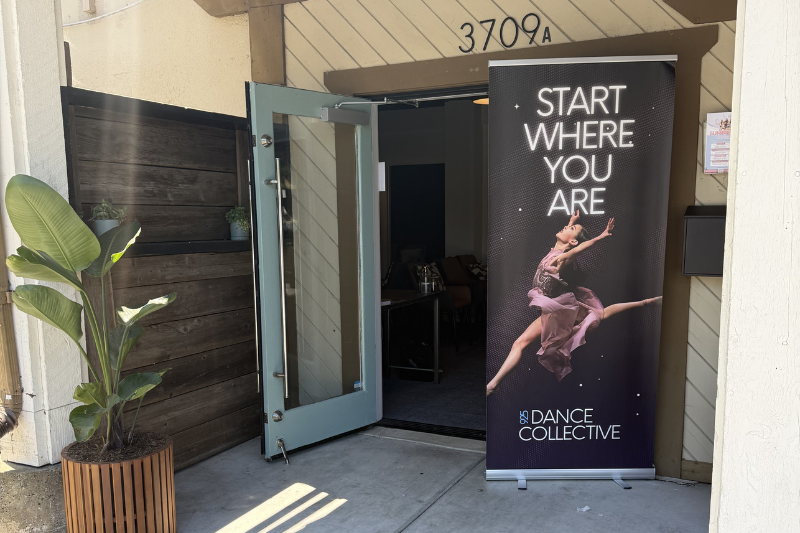
What's the bigger vision? You've talked about this being more than a studio.
Tenaya: Movement is a way for us to create and nurture community. For centuries, people have used dance and music together to create connection, to break down barriers, to process pain and heal. What we have done in the dance world is take that healing modality and turn it into a source of shame and perfectionism and body scrutiny for young girls. That is a terrible thing to do with something that powerful.
The bigger vision is to use dance the way it was intended, as a community connector. As a place where people feel free to express themselves and work toward something and be safe while they do it. We are already in conversation with a sports psychologist who wants to partner with us to bring more mental health support into the athletic space for kids. We just launched an adult dance and fitness program. We want more modalities, more community, more partnerships with people who share our same belief around what movement can do.
Laura: We also made a decision early on that Kalyanna and Emma (our daughters) are going to be in the same competition category - they have already competed against each other several times this season. We will never tell our girls, that's your enemy, that's your competition. We will tell them, you're doing this together. Women do not need any more of that. We have enough. What we need is a gathering space where families connect, where kids lift each other up, where we can work through hard things and come out the other side. We are a team, and a win for one of us is a win for all of us.
At the end of the day, we're not trying to build the biggest competition dance studio.
We're trying to build the competition studio we wished existed when our daughters fell in love with dance.
A place where kids work incredibly hard because they love what they're doing. Where they learn resilience without fear. If we can do that, the trophies will take care of themselves.
Summer is in full swing! For families still figuring out what this season looks like, what does 925 have going on right now?
Laura: We're really excited about this upcoming season. Our Fall season is now open for enrollment, and there's still plenty of time for new families to jump in. We also still have some spots left in our summer camps, and our summer late afternoon/evening classes are a great option for dancers who just want to drop in and try us out.
We’re currently expanding our programming to include adult dance and fitness classes plus new Ballet and Conditioning classes, additional Acrodance offerings and Commercial Dance/Dance For Camera Labs. We’ll be doing KPop intensives, Glow-In-The-Dark Dance Parties for tweens and teens, line dancing for adults, and other fun dancing events throughout the summer.
Tenaya: We're also continuing to grow our youngest dancers with classes for preschoolers and elementary-aged kids, while introducing more performing arts opportunities—including voice classes—starting this fall.
The best part is that you don't have to know exactly where your child fits. We offer free trial classes, and our team will help recommend the right path based on your child's age, experience, and goals.
Laura: If you've been thinking about trying dance, now is a great time. Visit 925dancecollective.com, text us, or stop by the studio. Come trial a class. Bring your kid. Come see what it feels like. We will take it from there.
Connect with Laura and Tenaya on Facebook or Instagram.
You can find also find them at 925 Dance Collective, or reach out directly through their website to ask about classes, placement, privates, or summer camps.
You can also find 925 Dance Collective on The M List, The Mamahood's searchable database of mom-recommended resources, or connect and collaborate with Laura and Tenaya inside The Club membership for women Founders.