Say It With Your Chest: How Jasmin Olvera-Dena Is Giving Families the Birth Preparation They Actually Deserve
Interview by Heather Anderson
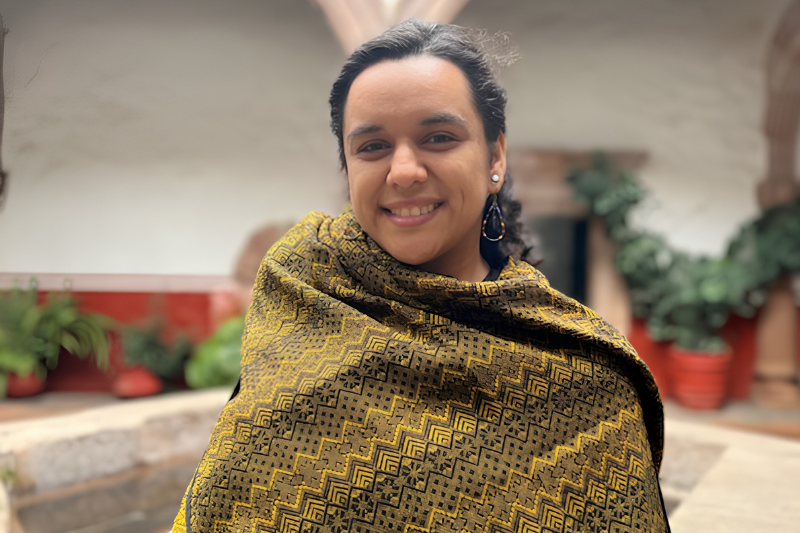
Jasmin Olvera is a Certified Massage Therapist and Full-Spectrum Doula based in the Bay Area. Through Oxomohco (Oh-sho-mo-ko) Birth & Body Work, she brings together Mexican Traditional Medicine, Indigenous healing practices, and deep cultural fluency to help families move through pregnancy, birth, and postpartum feeling grounded, informed, and genuinely prepared. She serves families locally and virtually across the country.
You come from a big family with lots of birth stories, and birth was always around you growing up. But there's a difference between caring about something and building your life around it. What clicked?
It's funny, because it never felt like a big dramatic moment. Birth has just always been part of my world. My family lineage comes from midwives. I grew up surrounded by my aunts and cousins, all of my parents' siblings would come to our house, and there were always children at every stage, always birth stories being told. I had this idea from when I was really little that I wanted to have twelve children like my grandmother, just to keep that big-family feeling going.
But then two things happened with my sisters that really sent me deeper into this work. My oldest sister had her first son, and he was born without a soft spot. He needed surgery almost immediately, and she was this young first-time parent, totally unprepared, navigating the medical system alone. I was seven or eight years old, going with her to appointments, staying at the Ronald McDonald House in San Francisco while my nephew had surgery. I remember her complaining about lower back pain during the pregnancy and me asking, isn't there something you could wear to support your belly? She told me no, it would hurt the baby. That answer never sat right with me. And now that I do this work, I know that I was right at seven years old.
Then years later, my other sister had been trying to get pregnant for a long time. She finally got pregnant, and around month six, the baby stopped developing. I was in school for massage by that point, and I had just finished business school.
When my sister lost her baby, I came back to Salinas and we had a funeral for him, and I just kept thinking, there has to be more I can do. I didn't know what yet. But that moment is where my focus really sharpened into the full picture: fertility, pregnancy, birth, postpartum. All of it.
“Remind yourself that someone else’s story is not your story. Your mom’s birth was not your birth. Your sister’s was not yours. That scary thing you read on Reddit is not yours.”
Your work is rooted in Mexican Traditional Medicine and Indigenous healing practices. What does that actually look like when a family works with you?
The most immediate thing is language. Not just speaking Spanish, but truly comprehending it. In a hospital, people speak fast, they use medical terminology that's hard to follow even in your first language. When you add a language barrier on top of that, families can feel completely lost. I'm not just translating words. I'm translating culture, context, the way meaning shifts between regions and communities. I can also communicate with the whole support team, the partner, a mom in the room who's more comfortable in Spanish. I'm connecting those bridges.
Beyond language, Mexican Traditional Medicine means we're not just looking at the physical. We're considering the body, mind, and spirit together. One of the first things I ask families is: what is your spiritual practice, and how can we bring it into your birth experience? What do your cultural traditions say about this moment in your life? That is almost never a conversation that happens in obstetric care. The spiritual and ancestral dimension of birth gets left outside the hospital room entirely.
I'll give you an example that comes up constantly: belly binding. Almost every OB tells my clients not to do it. They say you don't need it, unless maybe you had a C-section. But in a traditional context, belly binding is not about appearance or bouncing back. It's about supporting your hips, your lower back, your belly as your body transitions from pregnant to postpartum. You're finding your new center of gravity. You have no core strength and you're trying to pick up your baby and get in and out of bed. The idea that you should just walk out of the hospital and carry on without any physical support for your body is, honestly, a little wild to me. And the meaning goes deeper than that. Those first forty days after birth influence the next forty years of your life: your menstrual health, future pregnancies, your experience of menopause. It has nothing to do with vanity. It's whole-body, long-game care.
When I explain this to clients, I'm not asking them to choose between their grandmother and their OB. I'm helping them understand why these traditions exist and how to find a real balance between cultural practices and Western medicine. Because we don't live in our traditional communities anymore. We don't have our aunties next door. So how do we carry those practices into a modern context? That's a lot of what I do.
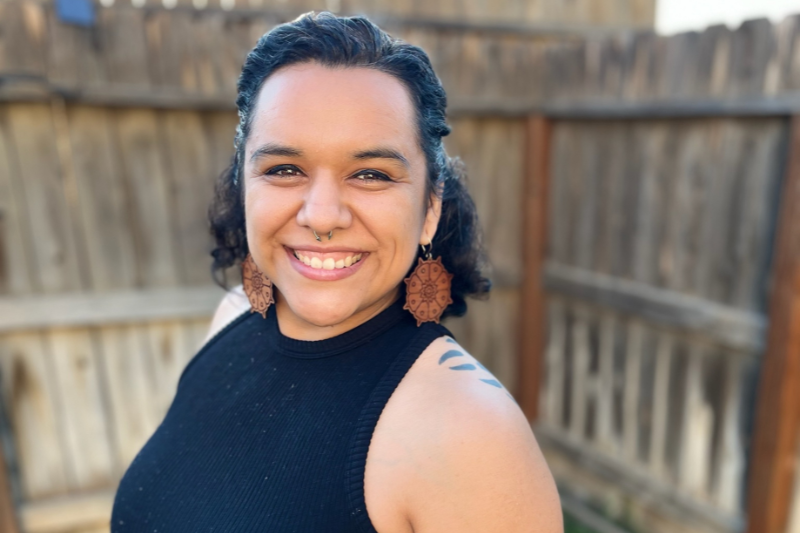
A lot of birth education can feel medicalized and generic. What felt missing, and what were you determined to do differently?
So much of what families encounter starts in a place of fear. Think about sex ed in school. Most of us were either taught to be scared of our bodies, or we were in Catholic households where the body wasn't something to learn about at all. So by the time someone is pregnant, they've had almost no practice actually listening to their body or trusting it.
Then they enter the medical system, and the education available through their clinic is very technical. You're dilating this many centimeters, you're in this phase of labor, here's when you can have an epidural. But there's no deeper layer. There's no: do you feel comfortable asking questions? Do you even know you're allowed to?
I started volunteering at a county hospital before I built my own practice, and that experience shaped everything. I got to witness families who were monolingual, immigrant families, families without higher education, trying to navigate a system that wasn't designed for them. I could hear shift changes between the nurses and the OB. I could see how the medical team talked amongst themselves versus how they talked to the family when everyone was in the room together. I watched people not speak up not because they didn't have needs, but because they didn't know they were allowed to.
So when I built my birth education classes, the foundation wasn't about information delivery. It was about giving people back their own power.
Your classes go far beyond information. What does that actually look like in practice?
I want to give you a specific example, because I think it changes how people understand what I do.
I teach something called embodied consent. Here's what it means: you've ever had to get a blood draw and you didn't want to, but you had to, and the nurse is cleaning your arm and tightening the band, and she asks, are you ready? And you say yes. Your words say yes. But your body is clenched. You're sweating. Your leg is tapping. You're pulling away from her. Your words consented but your body did not.
Embodied consent means paying attention to the full answer, not just the verbal one.
In a birth context, imagine you're in active labor and your care team comes in and says they need to do a vaginal exam. You might automatically say yes because you don't want to inconvenience anyone. But you're mid-contraction. You physically cannot get into position. Your body is doing something completely different. Embodied consent means pausing and saying, actually, I need five minutes. Can we check back in?
That is not confrontational. That is not difficult. That is just you being the most important person in that room for once.
We tend to be people pleasers by default, especially in medical settings where we're trained to believe someone else is the expert on our own experience. My whole practice is about dismantling that. And we start practicing embodied consent during pregnancy, so that by the time you're in labor, it doesn't feel foreign. It's just how you move through the world. Birth is the time and place to be selfish.
You've said that while many families come to you looking for someone to be physically present at the birth, a huge part of what you do is helping them prepare ahead of time. Why does preparation matter so much to you?
Because labor is not the time to learn something new.
When you're in active labor, your entire being is focused on the sensations in your body. You are in a different state of consciousness. People call it labor land, and that's exactly right. The medical team is going to be using terminology, making recommendations, moving fast. You are not going to have the mental capacity to absorb new information in that moment.
But if you came in having already studied your options, having already practiced asking questions, having already understood what your choices are and what your values are around birth: you walk in with a full tool belt. You don't need the care team to hand you tools mid-labor. You already have them.
I get so many calls from families who begin thinking they’d like a third party in the room with them. And what I’ve found through running my birth prep program, is that sometimes, what’s even better than having an advocate in the room, is being educated and empowered to be one’s own advocate. Clients of my program have told me after birth that they felt so prepared and informed, that they didn't need to call me until it was time to push. Not because they were on their own, but because they felt that sure of themselves. That is the most meaningful thing I can hear.
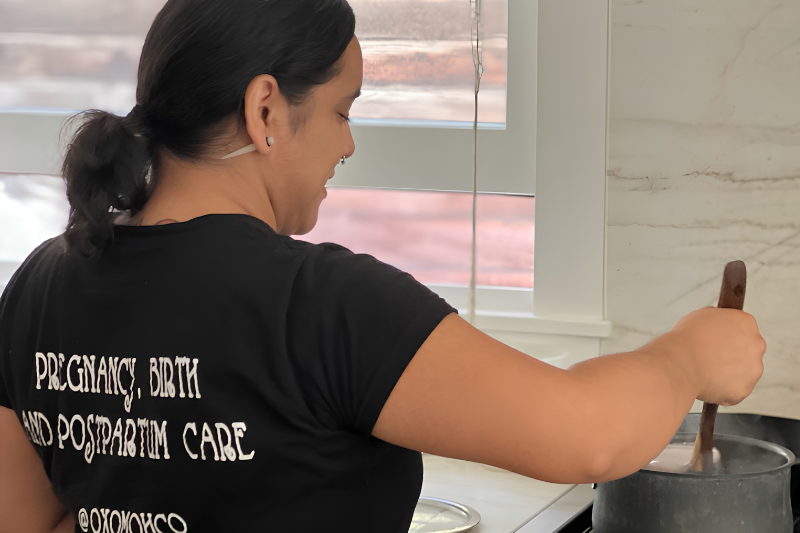
Tell us about the pregnancy journal you created. What's inside, and who is it for?
The journal walks with you through your entire pregnancy and into the immediate postpartum. It has prompts and reflections for each phase of pregnancy, reminders for timing things like when to start looking for a doula or midwife or newborn photographer, a birth plan template, space for writing down your cravings and goals and fears, and a section at the very end where you can document your birth story, add photos, and write a letter to your baby.
That closing section is one of my favorites. I've always loved reading and writing, and I thought about what I wish I had from my own mom, what I want to be able to give my children someday. There's something really meaningful about having a record of what that time felt like.
There's also a section specifically about pregnancy loss. This came directly from my sister's experience. When she lost her baby at six months, we navigated it as a family. And one of the things that struck me is how common that experience is, and how often people go through it completely alone because of the cultural taboo around telling people you're pregnant too early. You don't want to get anyone's hopes up. You don't want to have to walk that back. But what about you? If you do go through a loss, you're already isolated because you followed the rule.
The journal talks about that. You get to decide when and whether you tell people about your pregnancy. But the decision should be yours, based on what you actually need, not based on a fear of inconveniencing others. Community and support are not things to ration.
For families reconnecting with their culture, the journal also includes prompts for that. So many second, third, and fourth-generation families use pregnancy as a moment to come back to their traditions and their language, and they don't know where to start. The journal helps with that.
It works as a standalone resource. You don't need to be a client to use it.
What kinds of families tend to thrive with your virtual birth prep model?
A lot of them already have people they want present at the birth: a partner, a sister, a mom. What they're missing isn't another body in the room. What they're missing is everyone being on the same page. So they bring their whole support team into the classes. I've had sessions with the birthing person, their partner, and their mom all participating together, so that when they're in the room, they're not just hoping their people will know how to help. They actually will.
I've also worked with families who are here without extended family, and they want the birth to be just the two of them. The dynamic doesn't matter. What I keep hearing across all of them is that after going through birth preparation, they felt so ready that in-person support became something they wanted rather than something they needed.
And I should mention: virtual doesn't mean you're alone during labor. If a partner needed reassurance in the moment, or wanted to talk through what was happening, I'm available. I'm not there to make decisions for them. I'm there to remind them of what they already know and help them navigate the next question.
For the mom who's overwhelmed by all the opinions and checklists and apps and voices telling her what to do: what's one thing that actually helps?
Remind yourself that someone else's story is not your story. Your mom's birth was not your birth. Your sister's was not yours. That scary thing you read on Reddit is not yours. The noise is loud, and it can feel like everyone is living proof of what might happen to you. None of them are. Take a breath, drop your shoulders, and come back to what's actually happening in your body right now.
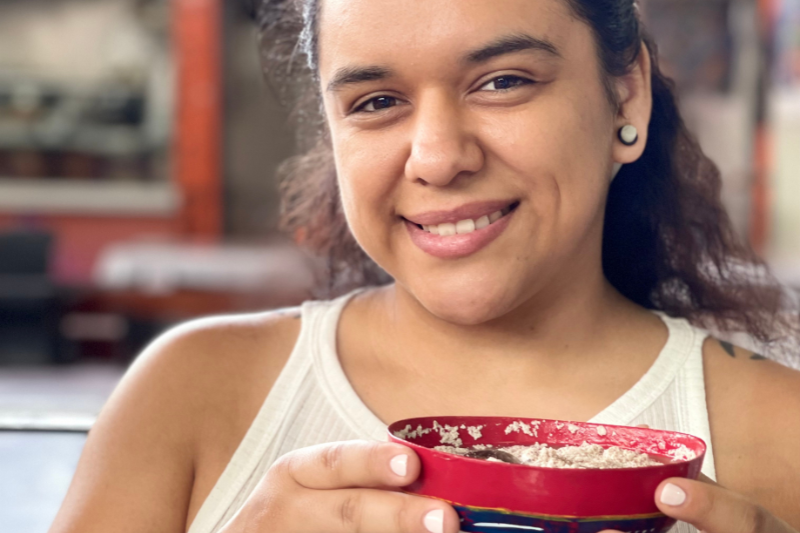
You're expanding your virtual reach and moving toward serving families anywhere. What feels most exciting about this next chapter?
For a long time, when families who weren't local reached out, I had to tell them I couldn't help them. That felt like a loss every single time. Now I can say yes to more people.
And the way the virtual model works has made my work more personal, not less. Instead of delivering the same class to a group, I'm able to say: okay, you've listened to this foundation. Now let's talk about you specifically. What are your concerns? Where do you feel uncertain? How can we adapt this to your birth plan, your care team, your values? The preparation becomes genuinely theirs.
The classes are available in English, Spanish, and Spanglish. Families can listen, watch, repeat things as many times as they need. They can move at their own pace. That feels like what access is actually supposed to mean.
Community is central to everything you do, including how you think about referrals. What does that look like in practice?
My parents were gardeners, and they knew all the other local gardeners. They were friends with their families. When my parents couldn't take a job, they knew exactly who to call. I grew up watching that and I've always done the same thing in my practice.
Not every family is the right fit for me, and not every service they need is something I provide. So I keep a resource list, it's free and it's on my website, primarily local resources so families can keep exploring. And I'll always point someone in a direction that actually serves them, even if it's not toward me.
One thing I want families to know: doula services are covered by insurance now, many of them. Both Medi-Cal and commercial plans. I'm currently accepting Kaiser, Anthem Blue Cross, Partnership Health Plan of California, Santa Clara Family Health Plan (note: cannot be connected to Valley Health Plan), Health Plan of San Mateo, Contra Costa Health Plan, and Health Net. I also have pending contracts with Alameda Alliance, Central California Alliance, and San Francisco Health Plan, and more are on the way. If you've been assuming you can't afford doula care, it's worth a call to your insurance to find out what you actually have access to.And even easier, expecting mothers can simply reach out to me and I can help them understand their insurance benefits and whether or not they qualify for doula assistance.
When someone enters your world, through a class, the journal, a consultation, what do you most hope they walk away with?
My nephews are all athletes, and something they say to each other to mean say it with confidence, say it to my face, mean it is: say it with your chest.
That's what I want for every person who comes to Oxomohco. Whatever they want, whatever they need, whatever decision they're facing in that birth room: I want them to be able to say it with their chest.
Ready to find out if Jasmin Olvera of Oxomohco is the right fit for your family?
Reach out through her website or book a consultation to see how she can best help prepare you.
Connect with Jasmin Olvera on Facebook or Instagram.
You can also find her on The M List, The Mamahood's searchable database of mom-recommended resources, or connect and collaborate with Jasmin inside The Club membership for women Founders.