Ergonomics Before Injury: Marka Health Founder Dr. Lindsay McGraw Wants to Fix Your Desk Before It Hurts You
Interview by Heather Anderson
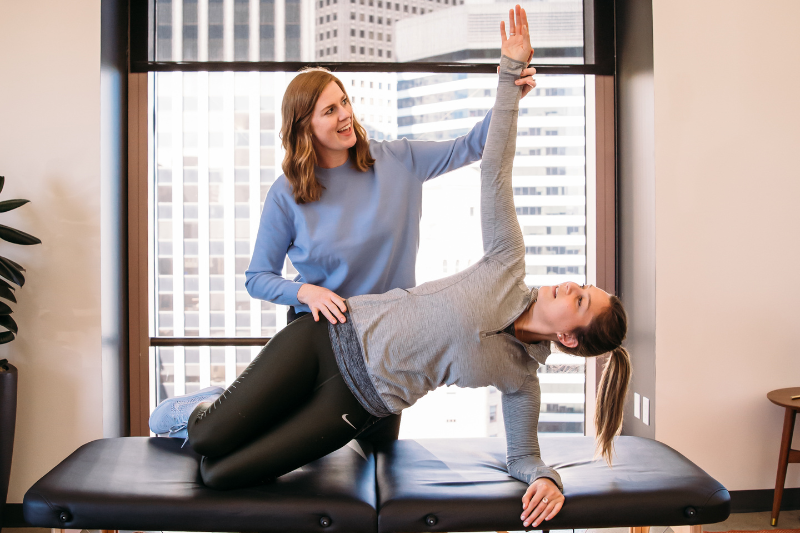
Dr. Lindsay McGraw, PT, DPT, is the founder of Marka Health, a doctor-led ergonomics and physical therapy practice she started in 2016 after a decade of treating injuries that never needed to happen. She is also a third culture kid, a recovering perfectionist, and a self-described gatherer of interesting people. Her clients include teams at Asana, Reddit, Checkr, and Turo. Her philosophy is simple: fit the workstation to the body, not the other way around. She grew up between California, Venezuela, and Kuwait, built her career in San Francisco, and now runs Marka from Chapel Hill, North Carolina, serving companies and individuals everywhere. This is her story.
You grew up between California, Venezuela, and Kuwait, spent time with family in Angola, Scotland, and Indonesia, and built your career in San Francisco before landing in Chapel Hill. How does growing up as a third culture kid shape the way you approach people and your work?
Growing up all over the place was a gift. It was also really hard. But it built a deep curiosity in me — it opened my eyes to how much is out there, and I still love meeting people and learning what they do and who they are.
It also made me very adaptable. Living overseas in so many different situations built an awareness of the environment in a room, a respect for other cultures, and probably fed my natural predilection as an empath. Being interested in people and what they do, , and ongoing passion for learning. Those are the big things.
You spent a decade as a physical therapist treating injuries before founding Marka Health in 2016. What were you seeing in your patients that made you shift your focus entirely toward prevention?
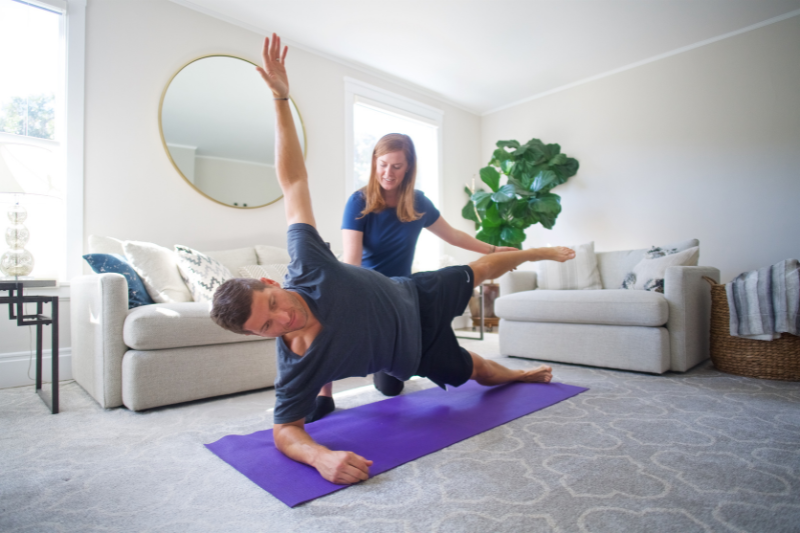
I can spend forever on this soapbox. Traditionally, someone sprains their ankle, sees their primary care doctor, it does not get better, they get sent to an orthopedist, the orthopedist sends them to PT, and by the time they land in front of me the injury is six months old. At the beginning of my career, I was getting those referrals constantly. People who had been in pain for half a year before anyone addressed the actual problem.
Then direct access came along, which lets you see a physical therapist without a doctor's referral, and everything changed. The research behind it is dramatic. In workers' compensation data, people who waited more than a month to start PT for low back pain spent over 50% longer on temporary disability than those who got in within days. Starting early also means fewer MRIs, fewer injections, and far fewer surgeries down the line. And here is the one that gets me: only about 2% of people who get treated early end up with chronic pain, versus 15% of those who delay.
My patients started coming in a week after an injury instead of six months after. Then they started coming in before the injury. They would say, “I’m about to run a half marathon and I’m worried about my knee.” We would do a few visits and get ahead of it.
The longer I treated, the more patterns I saw. Neck pain and a computer job. The same complaints over and over from people who sat all day. I kept thinking, it would be a lot easier if I could talk to these people before they were miserable, in pain, and cranky. So I found myself working further and further up the chain, getting to people earlier in their health story. That is what Marka is. Prevention, before the six months of suffering.
“Employees need to know how to fit a workstation to their body every single morning, at whatever desk they land at. That knowledge has to live with the person, not the furniture.”
Your philosophy is to fit the workstation to the body, not the other way around. That sounds simple. So why do so few companies actually get it right?
A lot of people treat ergonomics as a checkbox. Hand out some equipment, share a PDF, done. But most of us are hunched over our laptops making ourselves fit the workstation, when what you actually want is the opposite. I sometimes call it reverse engineering. You find the position that puts the least strain on the body and takes the least effort to hold — because we are all lazy, and our muscles will always take the path of least resistance — and then you move everything else to fit that.
The other piece people miss is that a proper assessment looks at three things, not one. The environment you work in. The job tasks you actually do. And who you are as a person, because we are all built differently and we all have different medical histories. Most solutions address one of the three. That is why 30 minutes one-on-one with a doctor gets you further, faster, than months of buying gadgets one at a time and hoping the next mouse fixes it. We have seen these injuries. We know where they come from. We work backwards from that.
You work with companies like Asana, Reddit, Checkr, and Turo. What does that relationship typically look like, and what does a company actually get when they bring Marka Health in?
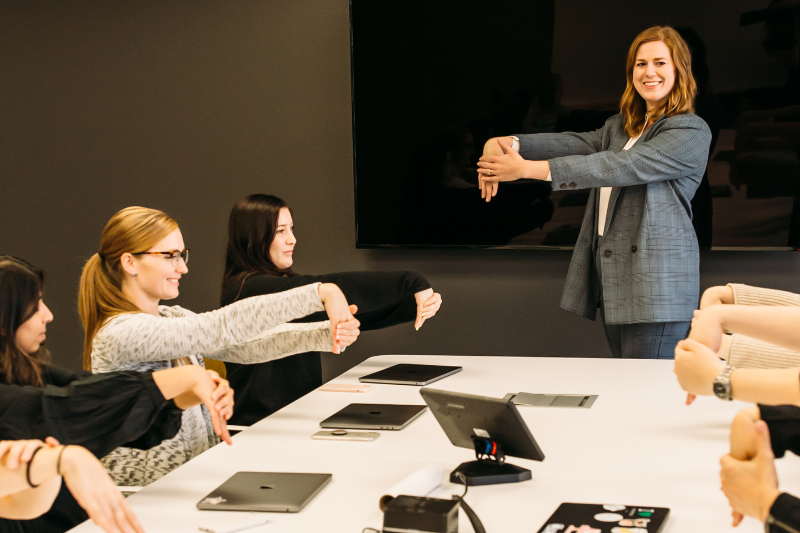
Every client relationship is unique, and that is one of the best things about how we work. Some companies buy packages of desk consults and offer them internally as an employee benefit. Others work with us to build a fully custom program — onsite wellness days, workshops, ergonomic policy. There is a done-for-you option, a build-it-together option, and everything in between.
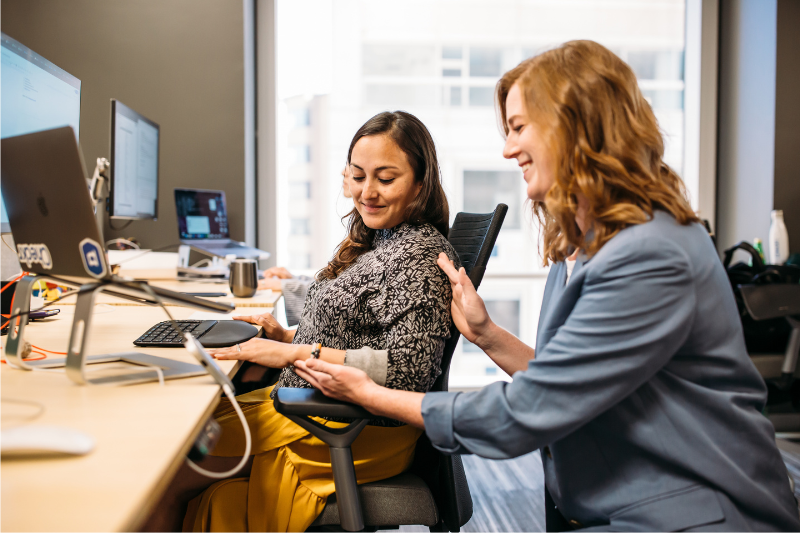
What employees get is real time with a doctor: someone who looks at their setup, their tasks, and their body, and fixes what is actually causing the problem. What the company gets is fewer people quietly hurting, and a benefit their team actually uses.
And on the operations side, we make it easy for whoever our contact is. We provide the booking links, the internal marketing materials, all of it. If you are the decision maker, you sign up, post it internally, and we take care of the rest.
Most companies assume ergonomic injuries are just an inevitable cost of doing business. What does the data actually say?
All good things. Research on workplace ergonomics programs has consistently shown a strong return — studies find that every dollar spent on prevention saves several times that in avoided costs. And a single musculoskeletal injury claim can easily run into the tens of thousands of dollars, often more than an entire prevention program would have cost.
But here is the part the spreadsheets miss: employees suffer in silence. Nobody walks up to their manager and announces they have back pain, even when work is clearly the cause. So companies do not hear about the problem until someone is filing a claim or going out on disability. By then you have lost productivity, you have four other people managing the fallout, and you have an employee who has been quietly miserable for months.
There is also a culture impact that is hard to quantify but very real. When someone takes 30 minutes to look at your setup and listen to what is bothering you, that lands. People do not acknowledge enough what eight hours a day at a desk does to a body — including us, honestly. Giving employees a space where that gets taken seriously does more for retention than most perks.
You offer everything from ongoing virtual ergonomic benefits that employees can book anytime, to onsite wellness days, to custom corporate programming. How do you figure out what a company actually needs?
It starts with a conversation. We want to understand their current benefits, where they are struggling, and what they are actually looking for. Sometimes a company comes in knowing exactly what they want. Sometimes they have a budget and a vague sense that their people are hurting. Either way, we talk it through and present options at different levels of service so they can find the right fit.
No two companies are the same, so there is no one-size-fits-all wellness strategy. We work alongside the benefits and workplace teams and shape ourselves to what they need.
Remote and hybrid work has completely changed the workplace injury picture. What are you seeing now that you were not seeing five years ago?
Two big shifts. First, people have actually invested in their home offices, which was not true before COVID. The equipment is often better now, but every setup is different — we are no longer talking about the same standard desk and monitor across an entire office. We are looking at what room you are in, what furniture you are working around, your job tasks, and your body. That variety makes one-on-one ergonomics more valuable than ever. It also makes it a benefit employees actually use — around two years ago everyone hit a wall on workshops. Nobody wants to log into one more webinar when they already stare at a screen all day. Personalized help is what people show up for now.
Second, hot desking. So many companies moved to open seating with hybrid schedules, and I do not envy the people managing who sits where on which days. But it changes ergonomics fundamentally. It is no longer set up your desk once and forget it. Employees need to know how to fit a workstation to their body every single morning, at whatever desk they land at. That knowledge has to live with the person, not the furniture.
Your corporate clients tend to be mid-size and larger companies. But you also work with smaller firms and solo operators. How do you think about serving both ends of that spectrum?
In some ways we do not differentiate, because our whole approach is personalized. A one-on-one is a one-on-one. It does not matter whether you are one of five employees or five thousand — you get the same care either way.
I will say that working with parents is one of my favorite things. They really need it, they really appreciate it, and the concepts we cover in ergonomics translate directly to parenting — how you carry, lift, feed, and hold matters just as much at home as it does at a desk.
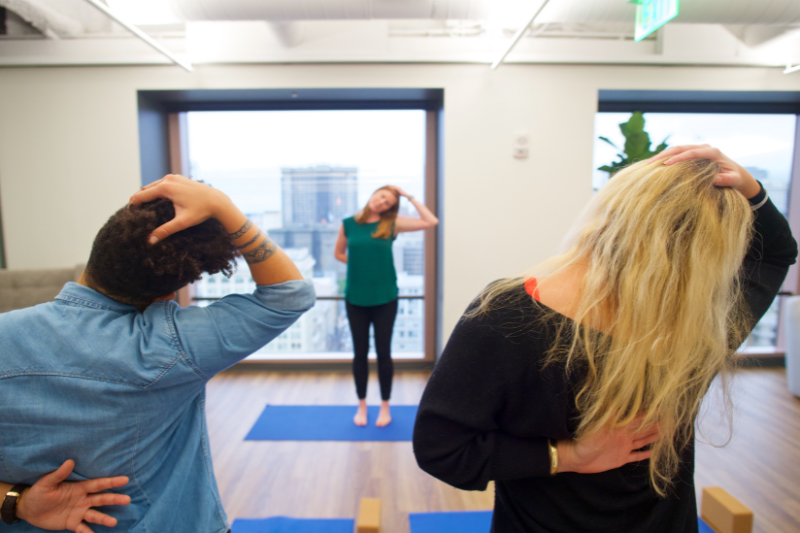
Your services are FSA and HSA eligible. What should people know about that?
Most people have no idea this is covered. A one-on-one session with us is FSA and HSA eligible, so if you have money sitting in one of those accounts at the end of the year, this is one of the smartest ways to spend it. And depending on your situation, ergonomic equipment can qualify too — some purchases just need a letter of medical necessity, which is something we can help with after an assessment. That part surprises people constantly.
You describe yourself as a recovering perfectionist, a problem solver, and a dedicated gatherer of interesting people. What does running a boutique practice for a decade teach you about building something that lasts?
That it is normal, and okay, to change and grow. Checkr was our very first client, and we still work with them today — through their in-office era, the shift to remote, opening new offices, building ergonomic policy. Being nimble enough to evolve alongside your clients is what longevity actually looks like.
But honestly, part of why I started Marka was that I wanted to practice what I preach. I was telling clients to rest, to find balance, and I could not back it up in my own life. I was also thinking about becoming a mom, and I wanted to build something that let me be present with my kids — not working full time, but still doing work that pays and fulfills me. Marka is not exactly what I set out to build, and that is fine. Building a business for a decade means embracing the windy path. In some ways it has helped me work on my own perfectionism more than anything else could have.
If someone is reading this, whether they lead a people team at a growing company, run a smaller firm, or are simply trying to figure out what their team actually needs, what is the best first step?
Whether you lead a people team or just want your own desk to stop hurting you, the first step is the same: a conversation.
Companies: Book a collaboration call to talk through options — custom corporate packages, onsite wellness days, and virtual ergonomic benefits your employees will actually use.
Individuals & small firms: Book a 30-minute virtual ergo session — one-on-one with a doctor, FSA/HSA eligible.
Prefer email? Say hello at [email protected], or explore everything at markahealth.com.
Connect with Lindsay McGraw on Facebook, Instagram, X or LinkedIn.
You can also find her on The M List, The Mamahood's searchable database of mom-recommended resources, or connect with her inside The Club, the membership for women founders.