Kay Hogan on Hellerwork, the Alexander Technique, and Natural Vision Work
Interview by Heather Anderson
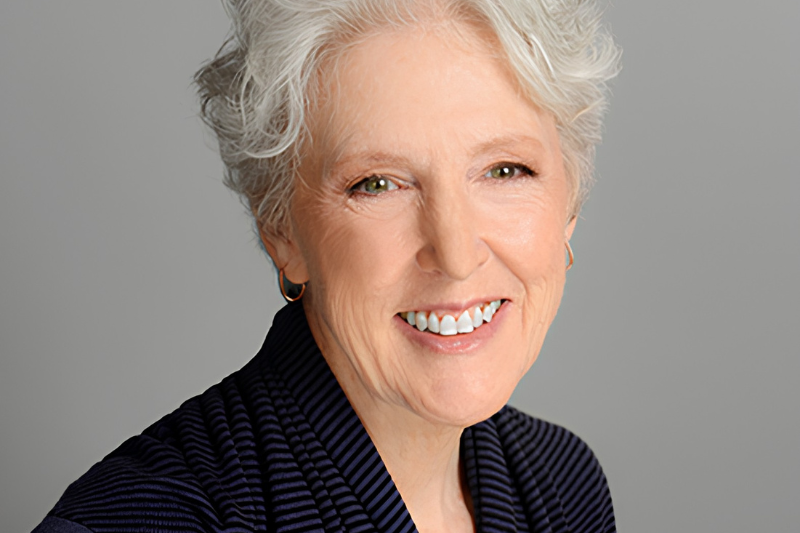
Kay Hogan, M.Ed. has worked in the healing arts for more than 30 years as a certified Hellerworker, Alexander Technique teacher, and natural vision educator. She holds master's degrees in education and counseling, wrote the book Up Right: Changing Our Thinking About How We Stand Up and Move, and sees clients one on one at her home office in Pleasant Hill. She is also the person moms in our community keep finding after a dentist, a doctor, and a physical therapist have all said there's nothing more to do.
You stopped wearing glasses in 2000 after getting your own vision back. How did that happen?
I've always known about natural vision work, probably just because of the field I'm in, and I always wanted to do it and never had time. Then around 48 my vision was going, and I wanted it back. After I graduated from my Alexander training in 1996, I kept hearing about this vision teacher who was also an Alexander teacher, a German teacher who lives in New Zealand. When a colleague called and said he was doing workshops in Oakland and Santa Barbara, I just signed up. I ended up following him around the world for three years. New Zealand, England, Wales, both coasts of the United States. Slowly, I regained all of my vision, and I still have it. I keep waiting for it to go away, but it doesn't.
I do want to be honest that I'm one of the lucky ones. I use the word improvement with my students, because some people get all their vision back and some people improve. Vision doesn't work the way we think it works. It's organic. If you had a wonderful, restful weekend, your eyes might be really good on Monday morning. If nothing went right and you didn't sleep, your vision is going to be different, and it should be. Mine is different in the morning than in the evening. I can always tell when I'm getting sick because my vision starts to go. Natural vision educators don't approach the eyes the way the medical model does, at the front of the eye, what we call 2D vision. We work with the visual cortex, and the body is always sending messages back and forth to it about how things are working.
Let's back up for the mom who has never heard of Hellerwork, the Alexander Technique, or natural vision education. What do you actually do?
Everything I do is structural. It's all about getting you to stand up better and move better. I'm a movement expert, and I use three tools I've blended together over 30 years.
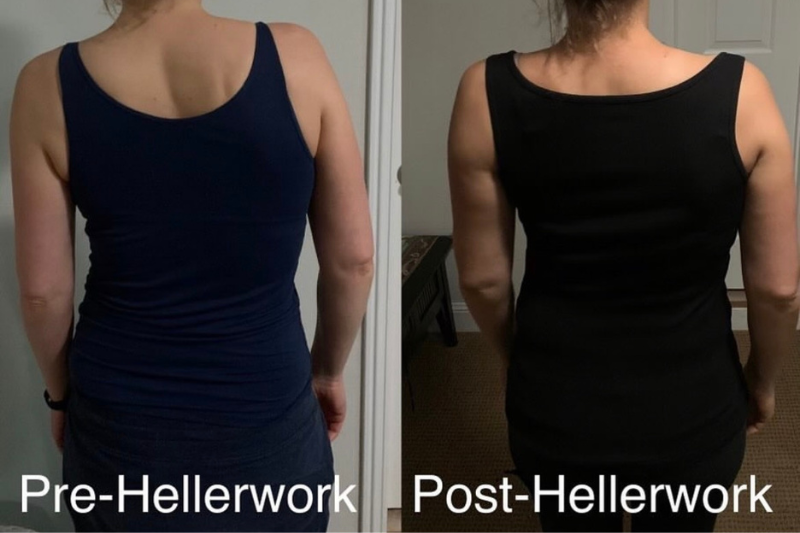
Hellerwork is bodywork, but it is not massage. I work the fascial layers. Fascia has suddenly become a buzzword, but the early osteopaths were working on it a hundred years ago. We have more fascia in the body than red muscle, and when it's damaged it becomes glue. It adheres to itself, to the bone, to the muscles, and that's how you lose your graceful movement. With my hands I can stretch those layers and get you back toward your original movement. It's done as a series of sessions, and I rarely sell the whole series up front. I ask people to come in and try a couple and see if they want to keep going.
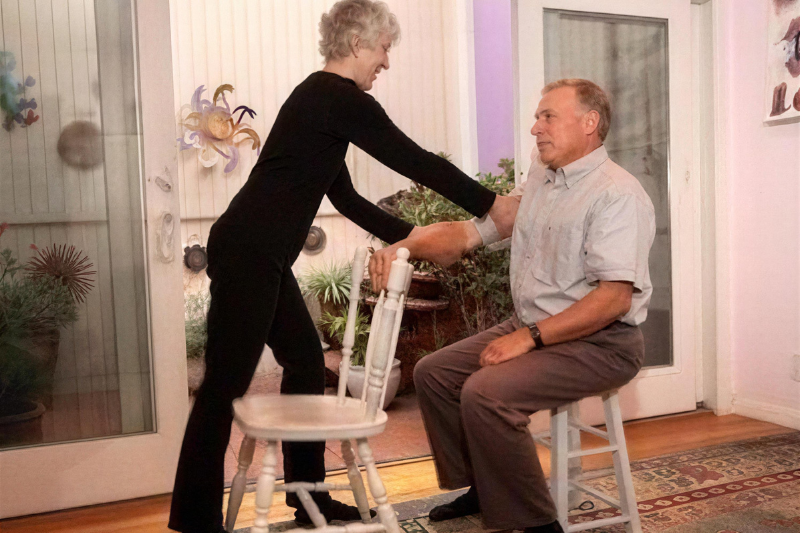
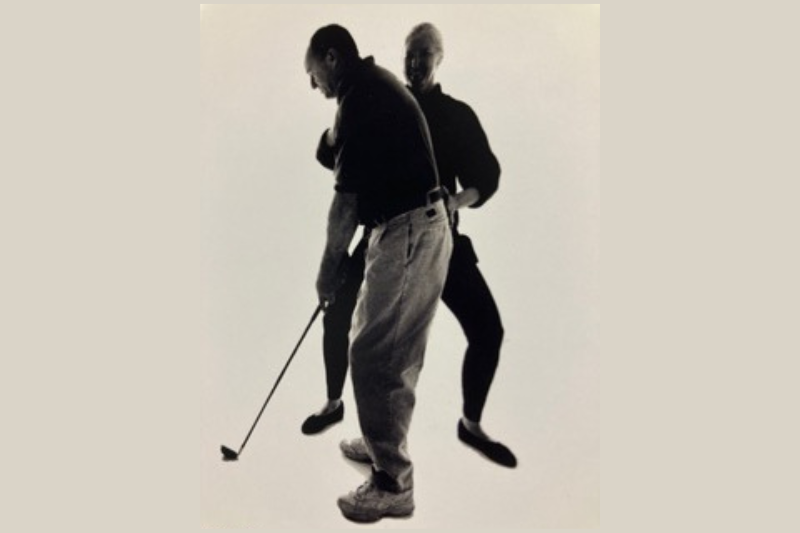
The Alexander Technique is movement lessons. I like the word lessons because this is body movement re-education. Whatever problem we worked out on the table, now I show you what you were doing that created it and teach you how to change it, so you don't end up back where you started.
Natural vision education is the piece almost nobody has heard of. I started it for myself, and over the years I came to understand that you can't separate the structure from the vision. So my students come for one thing and often get something else they really wanted and didn't think to ask for. I had a very tall woman in the other day, and when we finished I turned around and actually jumped back. She was even taller.
“When you wake up the vision, there can be dramatic changes, and you start to understand that by shutting off your vision you’ve shut off a lot of your emotions and your ability to connect with people.”
That idea, that vision and body can't be separated, is the most surprising thing about your work. What does someone's eyesight have to do with their neck, their knees, or their posture?
The brain only knows what the eye tells it. One of the first things I teach in natural vision work is how to go into peripheral vision, because when you cut off your peripheral vision, the head starts to drop forward. When the head drops forward, you put pressure into the front of your body and you begin to collapse. At that point people try to pull themselves up from the lower half of the body, when what actually needs to happen is the eyes need to come up into the horizon. When the eyes go into the horizon, the head comes up, and the flexor muscles in the front come up with it.
That's phone neck. That's the whole thing. We've lost peripheral vision looking into these devices, the head drops, and the body, which is very smart, starts building a patch around the seventh cervical to protect it. We used to call it dowager’s hump. Now it's tech hump. Old ladies used to get it, not young people. I worked with a boy from age 13 to about 17 who is a gamer, and he doesn't have any of it. His mother still tells me how pleased she is.
You named your combined approach the Vestibular Sensing System. What is it, and what does it do that the three pieces on their own don't?
We don't stand up from our muscles. We stand up from our vestibular system. If you say vestibular to a medical person, the first thing that comes to mind is the ear, because we know the ear gives us balance. That's true, and it's such a limited view of how the structure works.
Yes, the ears. Then the eyes. The nerves from the eyes and ears connect behind the brainstem and feed each other information. Then the largest organ in the body, the skin, is a sensing system. Sensors all through your skin tell your brain where you are in space. Right now they're telling you that you're sitting, you're too hot, something is itching. The biggest sensors are on your hands and feet. The sensors on your feet connect directly to the visual cortex, which is why you don't have to look down to walk. The sensors on your hands connect directly to the motor cortex. And then the joints. Most people bypass certain joints, and part of my job is getting them aware of that and getting the joints moving again.
I also use early developmental movement, the movements babies do. Babies are not born seeing. What they see is blurry, and by about three they've hooked up hearing and vision through a series of movements. That's brain development, and it happens through movement. Adding those movements to the vision work changed what I could do.
Eyes, ears, skin, hands, feet, joints. When you put all of them together and teach through all of them, suddenly you have a structure. The body is so smart that if you lose one, it compensates. Blind people still have a visual pathway. If you're deaf, you move differently, but you still stand up. When all the senses are working together, you have a remarkable structure.
You've been at this since the early 1980s and trained with some remarkable teachers. Which experiences changed how you work the most?
It's hard to pull out just two. The Hellerwork training itself, geez. If you ever get the chance to do a Hellerwork training, whether you become a practitioner or not, it's life changing. Meeting Joseph Heller and that whole team was amazing for me. With Alexander, I've had so many teachers, and I've taken something from each of them over time.
Brain Gym was key for putting everything together. Those are movements developed for kids with ADD, ADHD, and autism. And Dr. Raymond Dart, an anthropologist, took early developmental movements and worked with them on his brain-damaged son. It's so interesting to see what happens to how the brain develops when you change movement. I still recommend Brain Gym to parents whose kids need patterning.
And of course my vision teacher was primary. When you wake up the vision, there can be dramatic changes, and you start to understand that by shutting off your vision you've shut off a lot of your emotions and your ability to connect with people. Same with hearing. My business partner and I ran a listening center in Concord for about two years using the Tomatis Method. People understood it so little that I eventually bowed out, but all of those pieces came together for me over time. Brain Gym, Tomatis, natural vision, it's all in my book.
Before any of this, you were on a path to nursing and walked away from it. What did that teach you about the kind of helper you wanted to be?
I saw something in a training school that never should have happened. I could describe it, but I don't think anybody really wants to hear that. It took me away from that model, and I think I wasn't supposed to be in that model anyway. I couldn't get over what had happened, and it changed my direction. After that I kept trying to get back into a helping profession without getting into medical, and it took me a very long time to find this.
Who walks through your door? And who should be, but doesn't know you exist yet?
Everyone should walk through my door. That isn't going to happen, but I'll tell you who does.
I'm seeing a woman tonight who injured her neck, probably exercising. She's had X-rays, been to a chiropractor, tried a bunch of stuff. I love it when people have tried everything. Oh my gosh, that makes me so happy. I'm really good with sciatica. I'm working with a 14-year-old ballet student right now on how she moves, because if the knees drop in and the eyes aren't in the horizon, it lands in the low back, and with repetitive movement you want to be using your body well so you don't injure yourself over time. My violinist was in pain every time she picked up her violin. That's over. I've had two women with arm and hand problems, one of whom was losing a well-paid career. The other never thought she'd be pain free again, and by the time she moved away she was doing karate. A young man with TMJD who couldn't open his mouth wide enough to get a sandwich in. A court reporter who could retire but doesn't, because her hands still work. Lots of tradespeople, and my tradespeople retire when they want to, not because they're injured. Theater people, because Alexander himself was an elocutionist who recited Shakespeare, and a lot of his work is about using your body to project.
Scoliosis, I get a lot of. You're not going to change the scoliosis, but you can change moving up out of those curves instead of pulling down into them and getting shorter and shorter. Hellerwork takes the tightness out of the curves, and then you learn to lengthen and widen up out of the structure. One of my colleagues was told she'd be in a wheelchair by 30. She retired as a Berkeley professor and never ended up in one.
If you're searching by symptom, here's the short list:
TMJD
Sciatica
Carpal tunnel and repetitive stress
Bulging and herniated discs
Chronic neck and back pain
Scoliosis
Phone neck and tech hump
Headaches
Fibromyalgia
Fatigue
Stage fright
Intestinal issues
Emotional blocks
A lot of people find you after being told "there's nothing we can do." What's going on in those cases, and why can you help when others couldn't?
When they say nothing can be done, what they mean is there's nothing they can do. Usually the only thing left at that point is drugs, because they don't understand what they're working with. So a different approach, looking at whatever's going on differently, is a good opportunity to try something else. The woman with the arm and hand problems who'd tried everything, that's exactly how she ended up at my door.
I'm the alternative. Either people don't want to end up in the medical model, so they come to me before they go there, or they go all the way through medical and everything else, and then they try this. Usually it's just that the approach was wrong for what they have.
What's happening with kids' bodies right now, and what does working with kids and teens actually look like?
It's obvious what's happening. Phones. I'm really glad schools are taking them away now, and some of the kids actually like it. Backpacks full of books don't help either. If you're not standing up well, a backpack just pulls you down. But it's not just the young people. It's us. The saddest thing I saw the other day in Safeway was a little toy phone for babies, with little apps on it. You press them and it plays music. We're already training them into the staring and losing peripheral vision.
And since you asked, my pet peeve. Please don't put children in sunglasses. Please. That is a developing retina. You're never going to see the results until they get into gym class and can't do what the other kids can do. Sunglasses are gear. If you're at Tahoe on the beach all day or skiing in glare, put them on. But not all day, every day, and certainly not on small children. It's a billion-dollar business, and boy, are they making out on you.
With kids and teens, the first couple of sessions are just finding out if we like each other, because a teenager has to like me. I usually like them. Then they have to be willing to do the things I ask. That's true with adults too. Get on the floor, that's always my mantra, and one of my trades guys wasn't doing it much until his back seized up on a ladder. He got himself down, got on his back, worked through it, made it to his weekend plans, and all of a sudden he was committed. Often the parent comes first. My 14-year-old's mother had lessons for a long time, and once you understand structure and then look at your husband or your kids, you go, oh my god. By the time the daughter came in, she was willing, because she'd watched her mother change.
You call what you do lessons, not treatments. "You're not going to send your kid for a couple of violin lessons and hope." What does working with you over time look like?
You get something right away. I never want people to leave a lesson without results. But if you're willing to work with this over time, you can completely change how you move.
Here's my unpopular opinion. Strength comes from the coordination of the whole structure. If you're not aligned and lengthening and widening through your movements when you lift, over time you pull the whole structure down. You overbuild the outer muscles, and the fine intrinsic muscles inside collapse. Has no one seen The Karate Kid? He didn't have him doing push-ups. That's a whole different way of becoming strong. And I'll say something even more unpopular: there's no such thing as a core. There's a torso. Once you learn to work through the torso and coordinate movement through the whole structure, you're stronger than you have any right to be. Muscles are supposed to work in synergy, and exercising one set on repeat doesn't get you there. I wish it did.
A young woman keeps coming back to me injured from lifting. She asked me to please stop bringing it up, and I told her I wouldn't. It's always up to you. But I did say that if she took a year of lessons, she could go do anything she wanted. Bruce Lee motto “Be like water, my friend.”
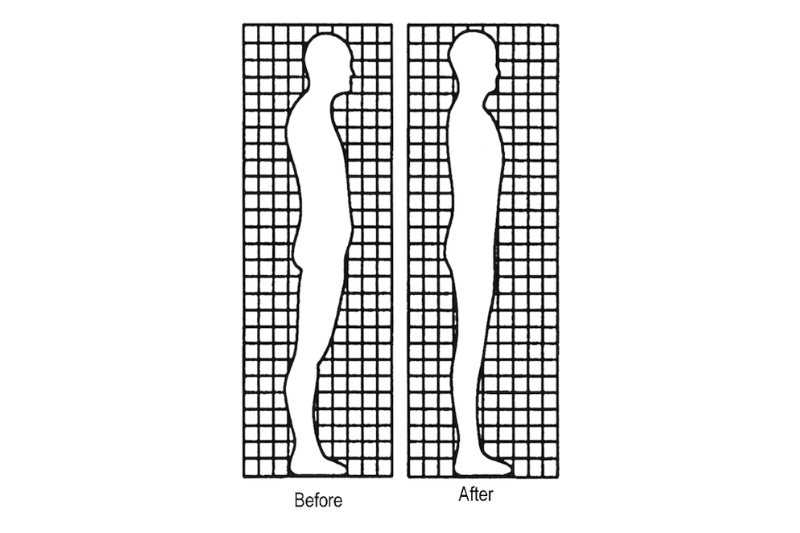
You wrote Up Right: Changing Our Thinking About How We Stand Up and Move. What's the one idea in the book you wish everyone understood?
Reflexes. When my editor asked what I wanted to write about reflexes for, I told her that's the reason I wrote the whole book. Nobody is looking at reflexes. A very small group of occupational therapists understands them, but they're few and far between. We work off of reflexes, and we work through the vestibular system. Eyes, ears, skin, hands, feet, joints.
The reflexes matter so much because of “fight or flight” responses. Once you're in fight or flight, the muscles shorten and tighten, and a lot of people in our culture walk around in fight or flight. So underneath everything, this is about calming the nervous system down. I work with trauma. That's really what all of this is. If you don't know what fascia is, there's a section on that too. But read the part about the vestibular system and the reflexes. That's the part that isn't already out in the culture.
Your second master's is in counseling, focused on addictions and codependency. How does that show up on the table?
The nature of bodywork is to bring things up and out, and Joseph Heller built that in. When I talk to people who've been Rolfed and ask if they liked their Rolfer, they say, I don't know, they never talked to me. How do you do an hour and a half of bodywork and never speak to the person? So Hellerworkers are trained in Voice Dialogue and other techniques, and Joseph gave each session in the series a theme. The first is inspiration. The second is standing on your own two feet. The third is reaching out for what you need and want. Ida Rolf was a scientist and a clinician. People said she didn't believe in the brain, and she said it wasn't that she didn't believe in it, she just couldn't get her hands on it. Joseph Heller, who was the head of the Rolf institute, eventually left Rolfing around her, not being interested in the emotional aspects of bodywork.
Having worked as a therapist, mostly drug and alcohol and codependency, I have more insight than many practitioners into what's coming up. I keep it in mind as I work, and I'm able to be helpful in those areas when it's needed and when it's wanted. The nice thing about Alexander, though, is you don't have to know how something happened in order to get rid of it. It's not like therapy, where you go back and dig. It doesn't matter how it happened. We can change it.
You've said the only reason you can still stand at a table at 76 is the Alexander Technique, and that most bodyworkers burn out in about ten years. What do you wish other hands-on practitioners knew?
I got lucky. During my Hellerwork training, my anatomy teacher was studying the Alexander Technique and his wife was an Alexander teacher. She'd come to the trainings on weekends, and I started taking lessons then.
If you want to walk away from your profession when you feel like it, not because you have to, get a weekly Alexander lesson. It's the best thing you could possibly do. I watched a chiropractor give a talk the other day, and he was all collapsed on himself. It's not about judging him. It's about whether he wants to last at what he does. Dentists, standing over those chairs, have the worst structure of any group I've ever seen. Massage therapists, chiropractors, tradespeople, anyone who works with their body: come learn your trade without hurting yourself over time.
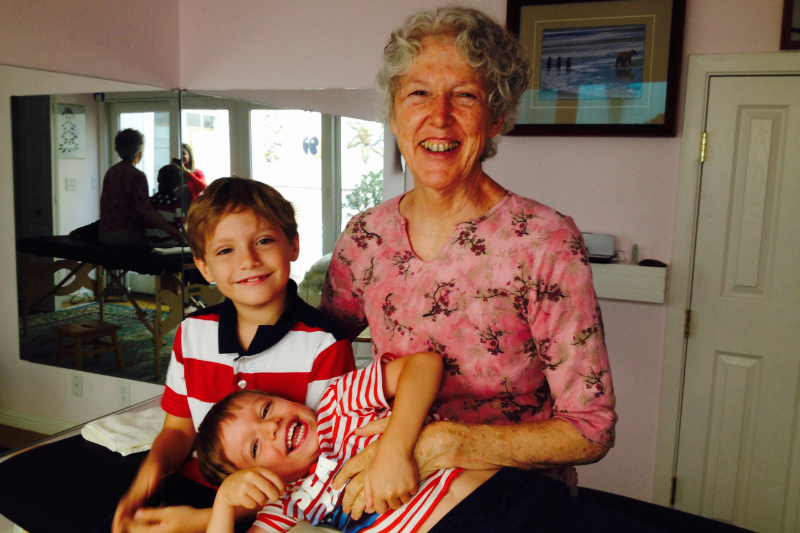
Your office is in your home in Pleasant Hill, a few blocks from DVC. What should someone expect the first time?
We gutted the downstairs of my condo to make a home office, and my Instagram shows it if you want to peek first. When you come in, I show you the client bathroom, and we do a short intake. Not a lot of questions, just enough that I know I'm comfortable working with you. Then I explain how to get on the table and what to wear. For bodywork, you're on the table receiving bodywork most of that hour and a half, and I teach movements at the end.
For an Alexander lesson, you don't undress. You probably just take off your shoes, and I use a different table. You're there for about an hour. I don't ask many questions. I've been taught to look at the structure, and I just start working with what I see. Information comes out as we go. You're waking up the brain, and all of a sudden you remember, oh, this happened, and that happened.
One warning. I used to tell clients, "You go downstairs and I'm going to go wash my hands," until a four-year-old asked me, "Number one or number two?" I told him that was none of his business. I'm a little more careful about how I phrase things now.
What's the best way to get started with you?
Call me. You can email or text if you like, but I really do like a phone call before I work with anyone, so I can hear what's going on and tell you honestly whether I can help. If emails get long, I'm going to want to talk anyway. It's easier on both of us.
Call Kay: 925-676-3696
Email: [email protected]
Read the book: Up Right: Changing Our Thinking About How We Stand Up and Move, available through Reasonable Books in Lafayette
You can also find Kay on The M List, The Mamahood's searchable database of mom-recommended resources, or connect and collaborate with her inside The Club membership for women Founders.