Nobody Told Kelley Jensen About TMS. Now She's Telling Every Mom.
Interview by Heather Anderson
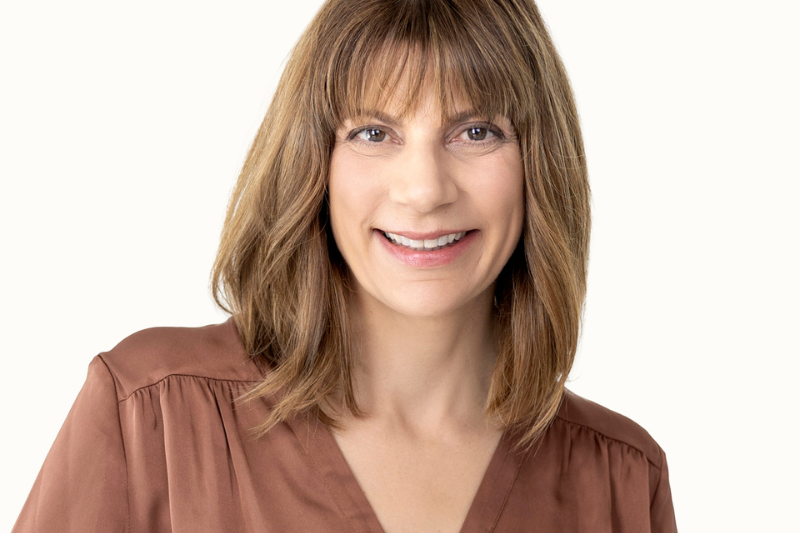
Kelley Jensen is a CPA, a mom of two, and the parent of a 26-year-old son with severe autism. When his anxiety and rigidity tipped into debilitating OCD that a growing cocktail of medications couldn't touch, she went looking for something else and found Transcranial Magnetic Stimulation (TMS), a drug-free, FDA-cleared treatment that not one of his doctors had mentioned. Today she runs Brain Performance Technologies, which supports TMS clinics in San Jose, Sacramento, and Las Vegas, and co-hosts The Refrigerator Moms podcast with her longtime friend and fellow autism mom Julianna Scott. She is here to tell you what nobody told her.
Let's start in the car. There was a stretch when your son couldn't leave the house without the entire contents of his room coming with him. Take us to the day you were just trying to get to the grocery store.
That's what OCD does. It builds. You think you're going to quell the anxiety by bringing all your books, but then all your books doesn't satisfy it, so now you need the books and the toys, and then the toys aren't enough either. It never satisfies the anxiety, and it never will.
So we'd already had a long morning of negotiating what was coming with us to the grocery store. At one point I was saying to him, "We can't take your clothes, buddy, we won't have room for the groceries." He was 22. He was a wreck, and honestly it was probably not a good idea to go, but “life lifes”, and I had no food in the house. I was skittish about leaving him home alone because I wasn't sure what mess we'd come back to, and he didn't want to stay in the car, because he loves the grocery store and he loves being sociable.
We have a system where he picks a couple snacks and a couple healthy things each week. He could not decide between chips, cookies, and crackers. He just kept putting things in the cart, well beyond three, stuff he wasn't even going to eat, and I kept negotiating them back out. I'm pretty seasoned at this. I give him time to process, I agree that it's a bummer you can't have four kinds of cookies. After about an hour he threw six different brands of cookies in the cart and completely fell apart in the store. Everybody felt so bad. I felt terrible. I said, "Hey, buddy, take my keys and go sit in the car, and I'll make your choices for you." He was so exhausted, he went.
I think a lot of moms can relate to that meltdown moment. Target is the scene of many crimes. That night I thought, that's it. Something has got to change. He was on every single class of drug they recommend for autism, and he should not be having that experience in the grocery store on that many medications. What am I doing? What are the doctors doing? So once he went to bed, I got the fingers tapping.
“Psychiatry has the lowest insurance participation of any specialty. Of all the psychiatrists in the country, and there aren’t many, about half don’t take insurance.”
Somewhere in there you stopped asking "what can we do about autism" and started asking "what can we do about OCD." That sounds like a small change in wording. It wasn't. What cracked open when you asked it that way?
I got home and thought, none of this medication is working. Forget about autism. This is the comorbidity of OCD. What am I missing? At that point I was still thinking medication. Is there some OCD drug nobody has tried on him? When you think of OCD you think of two things: medication and exposure therapy, where they slowly acclimate you to the thing that's got you so anxious. I knew about those. But I kept asking, is there anything else?
And there was. TMS is FDA cleared for OCD. Insurance coverage for OCD is spotty, but people who have tried medications do get it covered through what's called a single case agreement with their carrier. So this was a legitimate intervention. My reaction was, what the heck is transcranial magnetic stimulation, and why haven't I heard of this?
You'd been to UCSF, Davis, Stanford. Second, third, fourth opinions. And then you found TMS yourself, by Googling it. What did you do with the anger that came right after that?
Not only had I been to all the fancy places, I had also paid out of pocket. Psychiatry has the lowest insurance participation of any specialty. Of all the psychiatrists in the country, and there aren't many, about half don't take insurance. So I trudged through the covered ones and the private ones, and not one of them ever said, "Hey, have you thought about TMS?" Come on, people. I found it in five minutes.
Then I found a specific version of TMS called MeRT, which is popular in the autism community, and I went looking for a provider who knew autism. My son is quirky. I did not want to have to explain him to somebody who was about to treat him. Every mother knows what I'm talking about. You take your kid to the dentist and you're saying, he's autistic, a verbal command is going to be hard for him, you're going to have to show him with your own mouth. I wanted somebody who already understood that. There was exactly one MeRT provider in my area.
There's a line from your appointments I keep thinking about, when you asked the doctors if the point was to keep him stoned. What did they say, and what did you understand about the system after that?
He was 17. What happens with autistic kids as they hit adolescence is they start to feel their strength, and their frustration shows up physically, and everybody gets scared of them, with good reason. My son shot up to six foot four, 200 pounds, a mountain of a man. If he pounded the desk or kicked a chair, that chair was breaking. We didn't have a lot of that at home, some door slamming, but school was a source of enormous stress. So to keep him calm at school, it was always escalating medication. Put him on one, up the dose, add another. It becomes a cocktail.
Every year I'd get a second opinion from whoever was the autism expert of the moment, hoping someone would let us eliminate something. Nobody ever wanted to eliminate anything. So I finally asked: is the point to keep him stoned? Because if it is, cannabis was becoming legal, and I'd been reading about whether a gummy might be a more natural way to do the same thing. They acquiesced that yes, perhaps we were keeping him stoned, but they didn't recommend cannabis because it wasn't studied. Fair enough.
That was 2016. TMS had been FDA approved since 2008. There was probably a machine down the hall. Nobody thought to mention it. Not happy.
He's 26 now. Walk us through what changed, and where he is today.
The treatment relieved his OCD by about week four. I always caution people that he had a great response and not everybody will, but it is definitely worth looking into.
He is still autistic. He's still a black and white thinker, still rigid, still has to know his routine, and that is never going to change. What's gone is the part where needing to know his schedule became compulsive. Now he keeps a calendar, and if something changes, I tell him, he crosses it out and writes in the new thing. That never worked before. All the behavioral interventions we'd drilled for years, the lists, the zones of regulation, had lost their effectiveness because the anxiety was so big. Once the OCD tamped down, he had access to all of it again.
And then the thing I'm always reluctant to say, because every parent wants their kid to talk and I don't want anyone getting their hopes up: he started speaking more, and with more intention. He liked asking a question and getting an answer, so he'd ask another one. I think the best way to say it is his anxiety got manageable enough that he could process the skills he already had.
We tapered him from four classes of medication down to two, at half the dose. And he moved into a supported living apartment. There was no way he could have left his stuff behind before. He left it behind.
For any mom reading this who has never heard the words transcranial magnetic stimulation, explain it the way you'd explain it to someone sitting across from you.
I heard a neuroscientist give the most illuminating version of this. Think of your brain as a cell phone, and the magnetic pulse as the charger. That's basically what it's doing over a series of treatments.
A session is about 20 minutes. It feels like a light tapping on your scalp, mostly the forehead, sometimes the back of the head depending on the protocol. It doesn't particularly hurt. Some very sensitive people get a little headache, and an over-the-counter remedy takes care of it. A full course is generally 30 to 50 sessions. Depending on the protocol, that's delivered once a day or, in accelerated versions, several times a day.
Your son did MeRT, not standard TMS. What's the difference, and why is that the protocol families in the autism world tend to end up in?
MeRT stands for Magnetic e-Resonance Therapy. It was developed by a company called Wave Neuroscience, originally with hopes of bringing it to the military for PTSD. And it has just received FDA clearance for PTSD. MeRT for PTSD is the first new medical intervention for PTSD in over 25 years. It will be awhile before insurance coverage catches up, but clearance is the first step. MeRT moved into the autism world because one of the founders had a neighbor with an autistic four-year-old, the family was desperate, the doctor offered to treat him, and he got such a good result that it blossomed from there.
The difference is that standard TMS is one standard magnetic pulse. MeRT uses a series of encephalograms (EEGs) as a diagnostic reading of your brainwave patterns, to tweak the speed and placement of the magnet. That matters for autism and for PTSD because some people are very sensitive to stimulation, and going slower is sometimes necessary. The EEG guides that decision throughout a treatment course.
People hear "magnet" and "brain" and assume experimental. It's been FDA approved for depression since 2008. Where does the experimental reputation come from?
It comes from how underutilized it is. People haven't heard of it, so they assume it can't be standard of care. And the doctors aren't bringing it up. I'm the quintessential example, and it keeps happening in our clinic. We have patients who paid for private psychiatrists, got no relief from medication or therapy, found me online the same way I found this for myself, and asked their doctors about it. And the doctors say, "Oh yes, I studied this, it's great, you should do it." Well, why am I asking you? Why aren't you telling me?
Then when it does get news coverage, which isn't often, it's persistently and erroneously described as experimental and needing more study. That is not true. For depression it is standard care, for those who know to ask for it. But they cannot do that if they have never heard of it and if their doctors do not mention it.
Here's the part that made me mad on your behalf. Something this established, this covered, this drug-free, and only a tiny fraction of prescribing psychiatrists ever bring it up. What's going on behind that?
There are roughly 60,000 psychiatrists in the country, and not all of them are practicing. Some are doing research, some are retired. Of the ones seeing patients, about half don't take insurance. So, there are very few prescribing psychiatrists investing in TMS machines. Psychiatric nurse practitioners fill some of the gap of the shortage in psychiatry, but they're rarely trained in TMS because they have to train under psychiatrists, and psychiatrists are rare. I wrote a paper about this called Psych Out. The numbers are hard to come by and pretty well guarded, but I'm not materially off.
If you want TMS, what you're looking for is an interventional psychiatrist. An interventional psychiatrist is trained in brain stimulation therapies such TMS, in addition to training in medications and therapies. There are a few general practitioners that have been trained in TMS, and they can be an excellent resource in your area.
So you called the doctor who treated your son and asked what you could do to help. Now this is your whole life. Tell us about that decision, and why you're specifically coming for the moms.
His treatment was a raging success and I was full of all the feelings about why nobody told me. I understand he's still autistic. I understand it's not a cure. I understand it hasn't been studied specifically for autism. But he had the comorbidities. He was on two SSRIs for anxiety and depression. If he can take an SSRI for depression, why couldn't he have TMS for depression? I should have had that option. I'm happy to make the decision, but somebody should have told me. That's my whole attitude.
The doctor who treated him agrees with me completely. He'd been an emergency room doctor for over 30 years, and ER doctors see more psychosis and suicide attempts than anybody, because unfortunately that's where people go when they are in crisis. He was determined to do something different, so he trained and certified with the manufacturers of the TMS machines. What he didn't have was any training in business. So he asked for help, and what started as me advocating for him and talking to other moms turned into a company.
Tell us what Brain Performance Technologies actually is, because most moms have never heard of a medical service organization.
It's actually a very common setup. Hospitals, medical groups, even concierge doctors in private practice use some kind of administrative service, whether for billing, marketing, or managing staff. Doctors only have so many hours in a day, and every hour they spend on administration is an hour they're not with patients. So doctors hire people to help so they can see more patients.
That's what we do for our doctor's medical corporation, Summit Brain Health, and for the interventional psychiatrists we work with. Marketing, scheduling, payroll, answering inquiries, anything that involves business administration. And there's a very clear line. We never step into any doctor's shoes.

Let's get concrete about where people go. You have clinics in San Jose, Sacramento, and Las Vegas. Do families travel to you if there's nothing near them?
All the time. We get people who travel from all over the world for MeRT for autism.
For adults there's another option. Some of the accelerated protocols are cleared, so if you're paying out of pocket and want to travel somewhere and get the whole thing done in a week or two with multiple sessions a day, that's possible. We never recommend more than two sessions a day for a child. Las Vegas is great for that. Plenty of hotels, plenty of Airbnbs. We've had quite a few executives and quite a few members of the military who want to do this off the radar, and "I'm going to Las Vegas for a conference" is an easier thing to say. Whatever it takes to get the help you need. And honestly, it's fun for the kids too.
Say a mom reads this and thinks it might be her kid. What actually happens next?
Call us. We'll figure it out with you on the phone.
If your child is 15 or older with a depression diagnosis, we'll make an appointment with our interventional psychiatrist, who sees patients by telehealth. He goes through your history, sorts out insurance preauthorization, and helps you through it. A lot of parents say, "I don't want my child on drugs," and that's a conversation to have directly with him. He has discretion.
If you're looking at MeRT for a child, the first step is an EEG, a ten-minute test that reads your child's brainwave patterns. Then you have a consultation with the doctor, and he is honest about whether he thinks your child's pattern is one he can help. All we can ever do is improve function. We don't claim to cure anything. My son is still autistic. He has improved his function.
If you're paying cash, you can start within days. If you're going through insurance, authorization sometimes takes about 30 days.
Let's talk money, plainly. What does a course cost out of pocket, and what are the options for a family that can't write that check in one go?
Out of pocket, a course of MeRT is $12,000, which comes out to about $400 a session, and we collect it in installments every ten sessions rather than all up front.
Here's my number one rule for every parent of an autistic child: never do anything you can't afford. There is no cure for autism. We are not going to cure your child, so do not come see us if it's going to be an unnecessary financial burden. Instead, keep it on your radar. As your child grows, keep detailed notes of what medications they're prescribed and what behaviors those medications are supposed to help. Keep having the conversation with their psychiatrist. And be ready the second TMS becomes available through your insurance. Or, look at large teaching hospitals for clinical trials of TMS for children.
Now the insurance side. Who actually qualifies for coverage?
Every carrier is a little different. Some are downright archaic and some are very proactive. The condition with the most coverage is depression, generally starting at age 15. Though some carriers will not approve anyone under age 18. Most carriers want you to have tried two medications first, and the doctor has discretion over how long you were on them and whether that requirement has been satisfied. He does that at intake.
And "failed" isn't really the right word. The right phrase is "has not made progress." Say you've been on Prozac for a couple years and you're still depressed. You're scared to stop taking it, but you haven't gotten much relief. You're eligible. Whether you stay on the Prozac during treatment is a conversation with the doctor. Plenty of people do. My son did. But, he successfully weaned off much of his medication after treatment, which was awesome.
If the pre-authorization requirements for your teen do not go smoothly, do not give up. Ask the prescribing physician to request a peer review. If denial persists, particularly over age of the patient, tell the insurance carrier that you would like them to file a complaint over the matter, on the grounds that your teen is being denied care based on his age and this denial is forcing them to take medications that do not serve them. A complaint is different than an appeal. There is a great resource called “covermymentalhealth” that helps navigate such issues.
Say a mom's teenager is struggling and nobody has ever said the word depression out loud in an appointment. How does she advocate her way to a proper assessment?
A lot of the time adolescent depression gets written off as a sullen teenager. So start keeping detailed notes. What looks different to you, what your kid is saying, any clue they're giving you that they don't feel like themselves. Then start with your primary care doctor and ask for a depression assessment, and a referral to a psychiatrist if you need one for your plan.
And this is important. If you describe your child's behavior and the doctor suggests a low dose of an SSRI, don't be closed-minded about it. But say, "Sure. And can we do a mental health assessment to go with that prescription?"
You have strong feelings about what nobody tells parents regarding these medications and the experimenting teenagers do.
Ask the prescriber how to monitor drugs and alcohol, and get them to be very clear about how experimentation affects the medication. Don't let them wiggle out of that conversation.
And I don't think it's just kids. These medications get prescribed so frequently that I feel like doctors forget to ask if you have a glass of wine at night. Everybody is taking a gummy to go to sleep. How does that affect the SSRI? It's not a complete conversation. Moms need to be on the lookout for that for themselves, too.
ABLE accounts. Almost no family hears about this at diagnosis. What is it, and why does setting one up early matter?
This is a cute story. I started my career in public accounting and I'm still a CPA, so of course I know all about ABLE accounts. I have one for my son. And I'd been working in the clinic for two years without it ever occurring to me to put a brochure in the lobby. Then we had a patient, a darling young man in his twenties who had found MeRT on his own for rigidities very similar to my son's, and he had figured out that he could pay for treatment from his ABLE account. I thought, oh my God, you've taught me so much.
An ABLE account works like a 529, the college savings account, except it's for any aspect of care for a person diagnosed with a disability in childhood. You get a mountain of information at an autism diagnosis. Be on the lookout for this one. And when grandparents and extended family ask how they can help, this is where the money goes. Grandma doesn't need to buy a fancy toy. She needs to spend time with her grandchild and put the toy money in the ABLE account. They grow pretty quickly.
Military families are a big part of your world. What do you want a military mom, or a Coast Guard spouse, to know that nobody has told her?
That TMS exists, and that TriCare covers it. TriCare has the same preauthorization requirements as everybody else, but it's one of the proactive carriers, and it's a very good benefit. It is also available at VA clinics and hospitals, so ask about it.
People who have seen combat, who've been around blasts and blows to the head and training exercises with really loud bangs and booms, all of that affects brain health. Even the sound of the boom. And it's not just combat. Coast Guard crews spend days in rough seas during rescues, banging and crashing around in dangerous waves, and that's repeated concussions too. They have high rates of suicide, and nobody connected the service to the suicides until one man's daughter did a deep dive into her father's brain health after he died and made the case. Those people need brain care. They need an assessment. And it's hard to access something you don't know about.
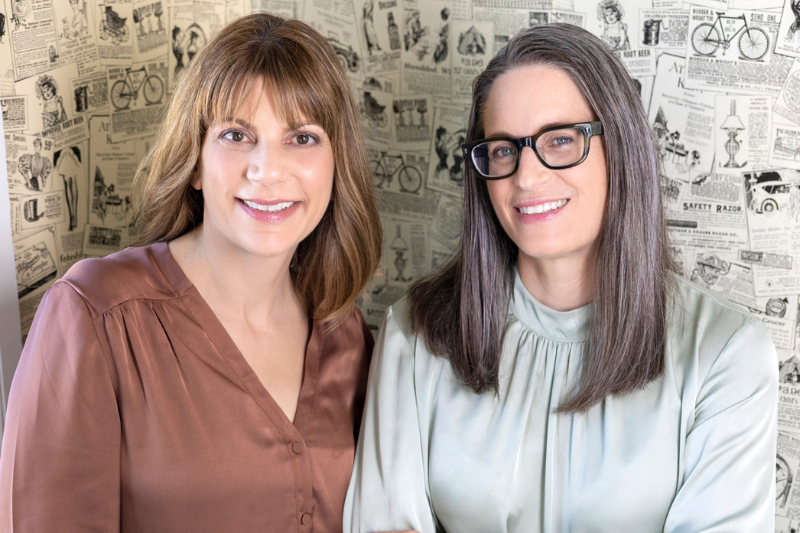
You also co-host a podcast with Julianna called The Refrigerator Moms. Where does that name come from?
In the 1940s and 50s, if a child wasn't speaking and his mother was worried sick, she'd take him to the doctor, and the doctor would tell her his autism was caused by her cold mothering. You are a refrigerator mom. Hug him more, spend more time with him, or he'll be institutionalized. And many children were. So here's a mother going to get her child help, and she's told it's all her fault, and now she's scared she'll lose him, so she has to hide him. Horrible.
We decided to reclaim the name. Be irreverent about it, and give a nod to those women, because the refrigerator mom is a fierce advocate. Always was, always will be. A mom who sat in my office falling apart over her 19-year-old's diagnosis drove that home. What else could I have done? We all feel it every day.
The papers are the part people don't expect. There's a whole library of research behind the show, with real citations and real opinions. Why build that?
It grew out of our conversations. Julianna and I have been friends for over 20 years, and I'd call her and say, what do you think? Should we try TMS? She'd say, is it time and money? Then I'll try it. She'd do some research, I'd do some research, we'd compare notes. We were ruthless about prioritizing what to try and what to say to schools. So we decided to put that same sensibility on paper, so a parent listening to the podcast could download it and see if they agreed with us. They're opinion pieces, but they're cited. Go chase down the references for further reading.
If a mom finishes this article and thinks "this might be my kid, or my husband, or honestly me," what should she do next?
She should call me. And she should learn our two chants. The first is don't compare, don't compete. Say it over and over. Don't compare what you thought you'd be doing to what you're doing. Don't compete with your friends or the other kids in the class. The second is speed to acceptance. It's the last stage of grief, and we'd joke about it on the really bad days. Speed to acceptance. You have to accept what you can't change so you can make the best of it.
Here's where to find me:
Call the clinic: 669-224-8655
Kelley's TMS booklet and the Psych Out paper
Connect with Kelley Jensen on Facebook, LinkedIn, or Instagram.
You can also find Kelley Jensen on The M List, The Mamahood's searchable database of mom-recommended resources, or connect and collaborate with her inside The Club membership for women Founders.