The Wellness Industry Runs on Women's Work. So Why Don't the Tools?
Interview by Heather Anderson
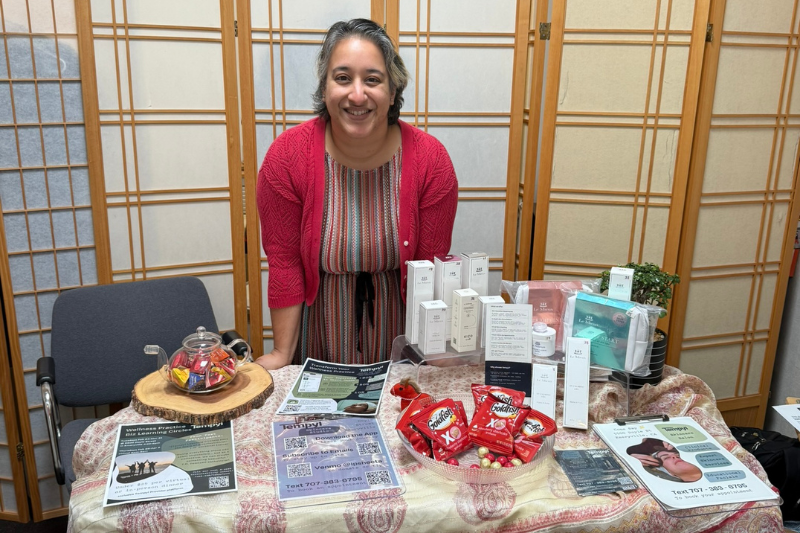
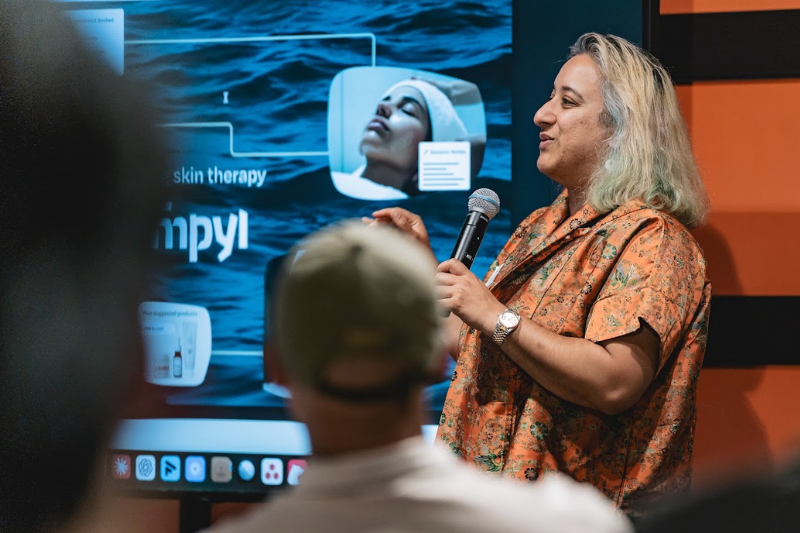
Ipsheeta Furtado is a Bay Area technologist and serial entrepreneur whose third startup, Tempyl, is rethinking what happens after a wellness appointment ends. With a background in fintech, operations, and small business lending, she brings a sharp eye for underserved markets to an industry everyone uses but few have bothered to build for.
You started your career in fintech, not wellness. What were you seeing in small business entrepreneurship that eventually led you here?
I started with a lending startup in 2014. We served small business owners — product agencies, dev shops, accounting firms — and I lent millions of dollars to founders who were trying to grow. That experience made me acutely aware of how much those loans meant to individual businesses. After that, I scaled operations at Divvy Homes, then led the expense card program at Navan through the pandemic. What those years gave me was a deep, almost obsessive interest in the mechanics of small business survival. Not just funding, but the operational systems that either set businesses up to thrive or quietly let them drown.
When I started looking for my next company, I wasn't looking in wellness. I was looking for a trade industry dominated by women owners that had been ignored by the technology economy. Because here's what I kept noticing: trades dominated by men have millions of apps. Your plumber has an app. Your roofer has an app. Your contractor has an app. Trades dominated by women? Booking software. That's about it. And when you look at which wellness tech companies have raised serious capital, you quickly realize the money is going to people who have never had a facial, never booked a massage, never thought deeply about what it means to care for a body over time.
That pattern made me furious in the most productive way possible.
If you had to name one broken norm in the wellness industry, what would it be?
The moment a client walks out the door, the provider's guidance becomes completely inaccessible. It just vanishes. You spend an hour with a licensed professional who knows your skin, your body, your history — and then you go home and you remember almost nothing. You can't recall which product she said to use or which one irritated your skin last time. You definitely can't remember the three things she told you to do for your shoulder. It's not your fault. It's nobody's fault. Nobody retains that information in that environment.
But the result is that providers are burning out answering the same questions over and over. They're being unpaid for texts and calls from clients between appointments. They're watching clients buy every product recommendation on Amazon instead of through them. And meanwhile, the relationship that should be building trust and driving retention is quietly dissolving because there's no infrastructure holding it together after the appointment ends.
Wellness doesn't happen in a one hour appointment. And nobody has built the tools to honor that.
“Our mission at Tempyl is this: lifelong wellness begins with education, strengthens with treatments, and endures with consistency.”
So what exactly is Tempyl, in plain language?
It's the easiest way for a wellness provider to give you your homework after a treatment.
The moment a client leaves, Tempyl puts the provider's individualized guidance on that client's phone. The specific products. The at-home care steps. The reminders timed to their treatment plan. If you're three weeks into a six-week bridal prep package, Tempyl is following up with exactly what you should be doing in week three — not a generic notification, but a protocol built for your journey.
On the provider side, it functions as an ambient layer on top of their practice. Not another dashboard to log into. Not a charting system that adds forty-five minutes to their day. It works in the background so they can stay present with their clients and trust that the follow-through is handled.
We've seen rebooking rates increase over 50 percent. Retail sales go up 10x. Client lifetime value at least doubles. But honestly, the thing providers tell us means the most is that they can finally be present in the room, because they're not mentally running through everything they need to remember to send later.
Who is Tempyl truly built for right now?
Clinical entrepreneurs. Licensed wellness providers who are serious about their craft and ready to build a practice that reflects that. We're talking about people who are seeing around 100 or more active clients, who are watching their schedule fill up while their retention numbers stay flat, and who know something is slipping but can't quite put a finger on it.
These are estheticians, acupuncturists, pain management and recovery specialists, nutritionists. What they have in common is that they have amassed a huge amount of expert knowledge on taking care of our bodies. They're brilliant at what they do in the treatment room. The infrastructure around that room is a different story.
The typical Tempyl user has tried the booking apps. She knows her way around a chart. She has a loyal base she genuinely loves. What she does not have is a system that keeps her clients engaged, educated, and moving toward real wellness outcomes between visits. That's exactly the gap we're built for.
What is that provider struggling with behind the scenes, even if she doesn't always say it out loud?
One-and-done relationships. A client books once, has a great experience, and you never hear from them again. Not because they didn't like you. Because nothing was holding that relationship together after they left.
She's also fielding calls and texts from clients that aren't billable. She's being asked the same questions by every single person who comes through her door. She's watching her clients shop her recommendations on Sephora and Amazon instead of through her, because she doesn't have an easy way to make purchasing part of the care experience. And she's struggling to stay present with the client in front of her because she's mentally running a to-do list for the five clients she saw before.
A lot of providers are also carrying the weight of incomplete charting. They know they should be taking detailed notes. They know the documentation matters. But by the end of a full day of hands-on work, the administrative overhead feels impossible. So things slip. And when a client comes back, there's this uncomfortable scramble to piece together what happened last time.
The real cost isn't just operational. It's the gap between the level of care these providers are capable of delivering and the level of care they're actually able to sustain.
Walk us through how Tempyl works in practice, using a real example.
We just started working with a three-person practice in Moraga — two cousins who do everything from facials to lashes to haircuts. Millennial women, both wear Oura rings, deeply care about their clients and about building something lasting. They had just launched their first bridal package: a multi-visit program in the weeks leading up to a wedding or photo shoot. They knew if they could prove that out, they could build other multi-visit programming.
That's a perfect Tempyl use case, because our platform is built around the arc of a client journey, not just the one-hour appointment. When someone is on a six-week plan, we're sending them reminders that are specific to where they are in the protocol. Not "your next appointment is in two weeks." More like: "You're in week two. Here's what you should be doing with the serum we recommended, and here's how to let us know if anything feels off."
The other thing they love is that Tempyl stays focused on what's relevant. A lot of AI meeting tools capture everything — context, tangents, personal details that have nothing to do with the treatment. We capture the functional information that belongs to that client's care plan. What was used. What was recommended. What the follow-up protocol looks like. Providers can also flag clients who might be good candidates for next steps — a referral to a med spa, specialty services, upgraded programming. All of it built into the journey.
You use the phrase "client journeys" instead of "appointments." Why does that framing matter so much?
Because wellness doesn't happen overnight, and it definitely doesn't happen in a single hour.
There's a real vulnerability involved in walking into a treatment room and telling a provider what's going on with your body. That moment deserves to be honored. It deserves a plan. And a plan requires more than showing up once a year and hoping something changes.
Our mission at Tempyl is this: lifelong wellness begins with education, strengthens with treatments, and endures with consistency. If you don't know what your body needs, you don't know where to start. That's why you find a professional. She gives you treatments that move you toward better outcomes. And then that consistency — whether it's coming back for treatments or following through with what she told you to do at home — is what actually produces results over time.
The mindset shift from "appointment" to "journey" is the shift from transactional care to real care. That's what we're building toward.
You're also running learning circles for providers. What are those, and how do they connect to what Tempyl does?
Most people finish their wellness licensing having learned almost nothing about running a business. They're brilliant technicians. The business side is a whole other education that nobody gave them.
So we started doing learning circles organically — small groups of practitioners coming together to stay accountable to their business goals. That's grown into a six-week cohort format with a built-in digital tools course. Each week we focus on a specific component of your practice: mapping your client journey, refining your menu, rethinking your lead gen. We look at what tools you're using, what could be swapped out, what you can learn from what someone in a completely different wellness discipline is doing.
What's happened naturally is that referrals are starting to form across disciplines. A nutritionist meets a bodyworker. A physical therapist meets an esthetician. They start sending each other clients because they now understand what each other does and who each other serves. That's not something we engineered. That's just what happens when you put smart, service-oriented people in a room together and give them a reason to show up consistently.
If a wellness provider is reading this and thinking, "I want this" — what's the best next step?
Come to a learning circle. If you use a promo code, it costs less than takeout. You get to meet me in person or virtually, hear how I work, and talk with other practitioners who are already using Tempyl. No sales pitch. Just a room full of people who are serious about building better practices.
You can also schedule a demo if you want a direct walkthrough of the platform.
And if there's one thing you can do this week even without Tempyl: add virtual appointments to your menu. I was skeptical too — you can't give a facial online, you can't do bodywork through a screen. But you absolutely can educate your clients. You can add value between visits. You can keep the relationship warm in a way that translates directly into retention. If you're not sure how to get started, come to a learning circle and let's talk about it.
Connect with Ipsheeta Furtado on Facebook, LinkedIn, or Instagram.
You can also find her on The M List, The Mamahood's searchable database of mom-recommended resources, or connect and collaborate with her inside The Club membership for women Founders.