Dr. Claudia Catalán on Pelvic Floor Healing, Frog Medicine, and Running a Studio With Her Dad
Interview by Heather Anderson
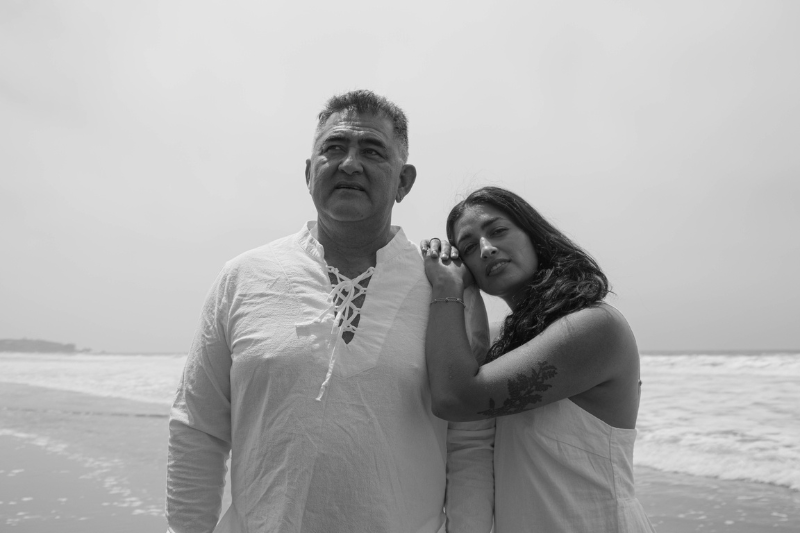
Dr. Claudia Catalán is a chiropractor and pelvic floor specialist who co-runs Soul and Body Healing Studio in San Leandro with her father, Erick Catalán, a medicine man who works with energy, fascia, and Kambo ceremony. She works with women dealing with painful periods, fertility struggles, postpartum recovery, birth trauma, and the kind of exhaustion that comes from taking care of everyone else first. Her practice blends the science of chiropractic care with energy medicine and a family lineage of healing that traces back to El Salvador. She sat down with us to talk about all of it, including the part where you might throw up in a bucket.
Let's start at the beginning. What drew you to chiropractic, and how did you find your way to pelvic floor work?
My own healing, which I think is common in this field. I had terrible migraines as a teen, and I was on a lot of medications that still weren't helping. On top of that I had depression and anxiety, with the meds or without them. A chiropractor is the one who helped me get off all of it. She helped me heal my gut, and then I just didn't have migraines anymore. I was like, wait, this is possible? I had wanted to be an MD, and I switched to chiropractic right there.
The pelvic floor part came after school. I was working in a team practice where we all adjusted in the same open room, except for one chiropractor who took people one on one in the back. I kept watching women walk into that room kind of serious and walk out glowing. I finally asked her, what is going on in there? You're a chiropractor, but you're different than the rest of us. She told me she did pelvic work.
At the time I hadn't had a period in three or four months. I asked if she could help me, and I booked a session. We talked through a lot, and at one point she said, you just finished an intense, very masculine program. It's okay to not know yourself right now. It's okay to be exhausted. It's okay to rest. As a daughter of immigrants, nobody had ever told me to rest. I didn't even know what rest really was. And I got my period that same week. I was like, what is this magic?
She ended up moving back to Portland during Covid. I told her I was curious about her work but I'd just finished school and needed to make money first, so I gave myself a year. That whole year, women kept coming in with fibroids and pelvic tension and everything else, and because I was the only woman in the practice, it was always "go talk to Dr. Claudia." I was doing my best, but I knew there was more here. So I reached back out. She sent me to train with the woman she had trained under for ten years, then did the in-person part with me herself and became my mentor. She has since created Gyno Chiropractic and now trains women chiropractors in pelvic floor work and trauma-informed care.
“The feminine is a force of nature. ”
Your bio talks about walking the sacred path of womb remembrance and feminine restoration. What does that mean to you?
Womb remembrance means remembering our power. I'm the oldest daughter, and I grew up with older boy cousins, so there was always this push to keep up with the boys. I was a soccer player. I didn't like anything feminine at all. I hated pink forever. Somewhere along the line so many of us learn that we have to be tough and compete and push, and that our emotions, or the color pink, or anything soft is a weakness.
This work has helped me remember that I don't need to compete, and that I'm already enough as I am. In the training I took, my mentor calls it your initiation. You get called into this work, and for me the initiation has been reclaiming my womanhood, my cycles, the feminine. We think the feminine is weak. The feminine is a force of nature. The scariest things in nature are a mother bear, an angry mother, the ocean. Those are all feminine. We're different from men by design, and there's so much power in that design we just haven't tapped into yet.
Your bio says you blend the science of chiropractic care with the intuitive art of energy medicine. What does that actually look like in a session?
Chiropractic is already a science, an art, and a philosophy, so the blend is built in. Some techniques lean more energetic, some lean more scientific, and I use all of it. The biggest thing chiropractic gave me as a patient wasn't the adjustment. It was the message that I'm in charge of my own health, that I hold my own medicine, that I'm a healer. A lot of that came from the conversations and from being treated like a human.
I love going deep, so I always meet a woman where she is. Chiropractic can be the starting point. Then, if she has questions, or there's more emotion in the room that day, or I notice a pattern showing up in her body, we go into it. The body holds emotion and energy. That isn't a new idea; it lives in a lot of disciplines and philosophies. I would say about 90 percent of the physical symptoms we feel have an emotional or energetic root, so I keep that in mind for anyone who gets on my table. We aren't machines. There is so much more to us.
Who tends to walk through your door? Paint us a picture of the women you see most.
The whole range. Painful periods, painful sex, incontinence. Women having a hard time conceiving, or heading into IVF. Postpartum moms who want to heal and feel fully connected to their bodies again. Breastfeeding moms who just need extra support and care, because new moms need a lot of it. And perimenopausal women, whose bodies are going through a whole other change.
I love how a hormone researcher I follow describes it. As women, our brains change three big times. The first is at our first period, when the brain shifts toward "I'm ready to be in society," which often looks like people-pleasing. The second is postpartum. Now you have a baby to keep alive, so your brain tunes to your baby's cues, and that's what mom brain actually is. You forget everything else, but you know exactly what that cry means. The third is perimenopause. And that one is the time where you give no fucks. You're not here to people-please anyone anymore. Your kids are older, and it becomes about you and how you feel. Your leadership comes through. Honestly, perimenopausal and menopausal women should be the council of society. They should be the leaders, and the rest of us should be following.
Pelvic floor work can feel vulnerable for a woman who has never tried it. What do you want a nervous first-timer to know?
I completely understand the nerves. We're going internally, into the deepest part of you. I always tell women the pelvic floor is our secret hiding place. Things live there that most people don't know about or see. So going in can be scary, and I think every woman who comes to see me for this is so brave.
I make it as comfortable as I can. You come in, I have tea for you, and we sit on the couch and chat. Then I show you exactly what I'm going to do on my pelvic model and go over the anatomy, the education we all should have gotten in sex ed. When we go to the room, there's a blanket, so it's modest, and a heated table underneath you. I don't want it to feel cold and sterile. I want it to feel warm.
I always ask for permission. And if a woman feels like a no, I applaud it, because we don't say no enough. There is always more we could do, and we can take our time getting there. We can help in other ways first.
You talk about releasing stored emotions and untangling generational patterns held in the pelvis. What does that mean in real life?
The emotions that typically get stuck in the pelvic floor and the womb are shame, grief, rage, and anger, because those are the emotions we're told we can't feel, or that are too much. Grief could be actual womb loss, a pregnancy that ended. It could be grief for who we used to be, or our innocence, or something that happened down the line.
Here is where the generational part comes in. Think of Russian dolls, one inside the other. When your grandmother was pregnant with your mom, your mom already had all of her eggs. You were in there too. We're that connected. Many cultures believe we're linked seven generations back and seven generations forward, so the healing we do now reaches into the future.
Women's stories are different and also very similar. We're often healing injustice, oppression, all the pain women have felt down the line, the feeling of having to do it all alone. Some women come with trauma they want to release, sexual trauma or otherwise, and emotions come. We hold space and let them move through. And sometimes it gets deep. I've had multiple clients remember things like women being burned. I've had multiple clients describe the room turning into an auditorium of ancestors, right there around us. So much lives in our bodies, and it does get passed down. But we also have the ability to change things epigenetically. Our environment, how we think, what we eat, all of it shapes what gets expressed.
You run Soul and Body Healing Studio with your dad. How did the two of you end up in practice together?
While I was in chiropractic school, our family hit a breaking point. My parents were separating, and even so, we started doing plant medicine together as a family unit. My dad got really into it. He changed his career, learned how to serve medicine, and started doing more retreat-style work. Meanwhile I was working in another office, and once I started offering pelvic work I wanted more freedom. We were both at the same point. He was going too and from homes and needed a space. I needed a space. So we said, let's share one.
We literally spent a lot of time walking around on foot, scouting neighborhoods, asking ourselves what city and what block felt right. And that's how we became Soul and Body Healing Studio in San Leandro.
Your work and your dad's work are related but different. How would you describe what Erick does, and how do your two modalities weave together?
He works on the body too, through myofascia, and he helps release the emotions stored there. The difference is the focus. Mine is the pelvis and the pelvic floor. He'll scan and intuitively move through the whole body, going wherever he’s called or wherever it's needed. His long sessions are deep energy clearing and emotional clearing. He also offers a shorter session now that's similar to my chiropractic session, a subtle energy session to create flow.
The pelvic floor is the deepest part of the body we can go, so often people start with him and then come to me. We've been blending our work more and seeing more clients together. One visit with me, the next with him. And the women who see both of us are healing deep, deep stories, the generational ones that have lived in our bodies and our lineages for a long time. The more we talk about it, the more we realize we're doing the same thing from two directions. Both of us are trying to get flow moving so the body can release what it's holding.
Your dad offers Kambo ceremonies, which almost nobody around here does. For readers who have never heard of it, what is Kambo and who is it for?
Kambo is a medicine derived from a frog in South America. The frog's secretion gets applied to the skin, and it's made up of peptides that react with the body and kick off a detoxification process. It's been used for a very long time for a lot of different conditions. It's mostly used for physical symptoms, things like gut healing and inflammation. It's helped my own hormonal healing and given me more regular periods. It can cut cravings and help clear things like parasites, and there's an energetic components too.
Here's what actually happens. You do it fasted. The medicine is on you for about 20 minutes, and during that time it feels like you have the flu. You purge, usually throwing up, sometimes the other end. There's a bucket, and my dad is right there with you the whole time, sometimes singing, making sure you're safe. Some people don't purge at all. Some do it three times in a moon cycle. There are different ways to do it, and some practitioners go very intense, but his approach is gentle. Afterward you rest, he brings you fruit or nuts and tea, and you feel grounded, lighter, more connected to your body. Often your body doesn't even want certain foods anymore. Start to finish it's a two to three hour process. It does take something to show up for it. Every single time I'm like, why am I doing this again? But by the end there's gratitude. It's a letting go of control. My dad and I have sat with Kambo a lot over the years. I've served him, he's served me.
Lineage matters in medicine work. Where does this tradition live in your family?
My parents were born in El Salvador and came here, and we also have Guatemalan roots on my dad's side. What we found out, once my dad started this work and I got pulled toward the shamanic side of mine, is that my great grandmother in El Salvador used to work on people's bellies. She would massage them and do healing work there for whatever people were dealing with back in the day. Maybe my dad knew that. I didn't.
I had a hard time accepting it at first, even though I kind of knew it was there. I always felt I could feel things, but I had my own doubts. Then, in a ceremony, four medicine women came to me and said, come, you're part of us. And I was like, I think you've got the wrong girl. When I opened my eyes, the people in the room knew. They knew this was going to happen. So I finally let it in. Okay, you're right, I do belong here. And then, now what? The answer was: keep digging into your lineage. So I've been learning from other people, and I've also been trusting my intuition and my dreams. So much comes through that way. That's been its own journey.
You and your dad just launched a new membership at the studio. What is it, and why did you build it that way?
We built a membership where you can see both of us. Our work is so similar, and the more we watch people work with both of us, the more benefit we see. You come regularly, and you have freedom with how you use your sessions. Maybe you see me once and him once. Maybe you spend a month with him and the next month with me. There's also a version that adds virtual mentorship time with me, where we talk through what's going on with your health and your healing between sessions.
Consistency is what changes things. We're getting deeper, clients are more open, and we recognize patterns faster. And a lot is shifting in people's lives. New jobs. Leaving things that no longer serve them. Or just, "I'm calm now. I'm not anxious. I'm sleeping through the night." All sorts of good changes.
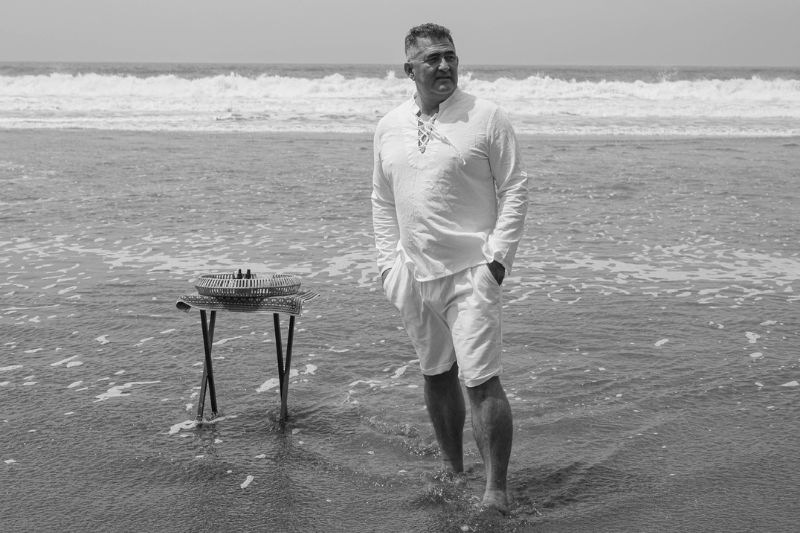
What's the big dream for Soul and Body? Where do you see this going?
Retreats. My dad recently bought a home and land in El Salvador, close to the beach. I helped him set it up, and we've already served each other medicine there. Right now it's a pool house on Airbnb, but we really, really want to host our first retreat there soon, and then more after that.
For a mom reading this who feels like her body has been through it, what's the first step to working with you?
If you have questions and aren't sure where to start, book a free discovery call. We'll figure out what's going on with you and how we can best support you, and guide you into the right first session. And if you already feel called to something specific, like pelvic work, you can go ahead and book that session directly and we'll get started.
Visit in person: Soul and Body Healing Studio, San Leandro, CA
You can also find Dr. Claudia Catalán on The M List, The Mamahood's searchable database of mom-recommended resources, or connect and collaborate with Dr. Claudia Catalán inside The Club membership for women Founders.