What Happens in Your House When Your Kid Comes Home With a B? Ask Dr. Erin Skiffer.
Interview by Heather Anderson
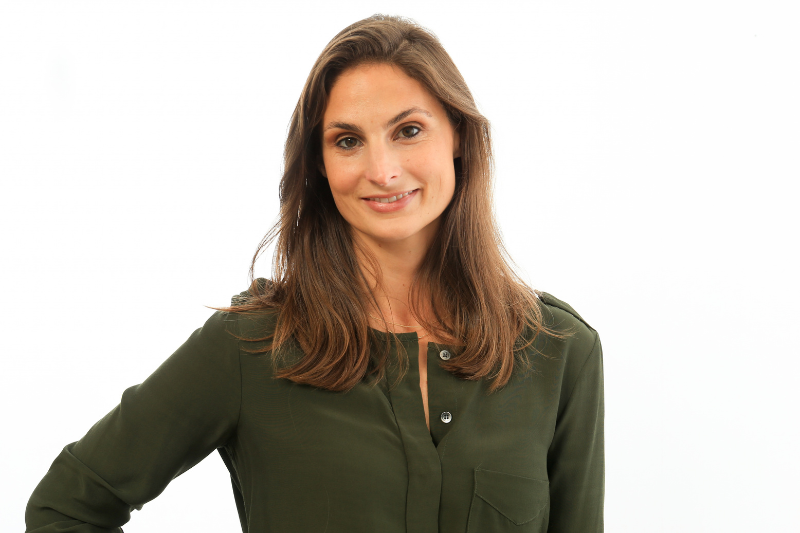
Dr. Erin Skiffer is a clinical psychologist, a Bay Area native, and the co-founder of Bridge to Bridge Psychotherapy Group, which she started with Dr. Nicolas Chu after they both spent years at Kaiser Permanente. Today she co-directs the practice with Dr. Chu and Dr. Brandi Marcaletti. Their team of doctoral-level clinicians sees kids, teens, adults, couples, and whole families in San Francisco, Corte Madera, Petaluma, Oakland, and virtually. Licensed in California and New York, she speaks often on anxiety and performance, and has shared a stage with soccer legend Landon Donovan on that topic. She's also a mom and a former Division I water polo player.
You played Division I water polo, and a big chunk of your speaking calendar is about anxiety and performance. What do you see in kids who are competing hard that the rest of us miss?
Parents will often come to me and say, "Our kiddo is so stressed. They’re putting it all on themselves; we’re telling them everything’s okay." My first question is, what happens in your house when your kid comes home with a B? If they say, "Well, we just have a conversation about it," I point out that as much as they're saying it's fine, the indirect message of talking about a B is that a B is actually unacceptable. If a B were acceptable, we wouldn't have to talk about it. The same goes for how parents are talking about their child’s extra curricular performance (athletic, musical, theatrical, etc).
Kids get a lot of mixed messaging like that. “Mistakes are great!” And then as soon as they make one it's: “What happened? Why did that happen?” In a tone that feels punitive, rather than curious or matter of fact because it is expected and part of the learning process. The parent's anxiety in the context of a child’s mistake, while understandable, is often too palpable for the child in these moments. And ultimately, not every moment should be a “teachable moment;” that’s how your kid learns to tune you out.
I was a competitive swimmer going to 24 hours of practice a week beginning in eighth grade; on my own volition not parent pressure. I still managed to play high school volleyball my freshman and sophomore years but by junior year of high school I was super burnt out on swimming. I picked up water polo as a senior to avoid swim practice and later walked on to the team at Santa Clara University. I worked hard, but just hard enough, and I could get away with being a very mediocre student and a slightly above average athlete. Kids can't now. The pressure to do everything well, all the time, is very different from the “stand out in some way” pressures of my teen years. My husband is an athletic director and a former Division I basketball player. I've got a pulse on these pressures from that lens too.
I wasn’t anxious about performing at high levels, but I’ve always run socially anxious. This often surprises people, because from the outside I appear confident in my capacities. But that’s the thing about anxiety, it’s often not just the obvious shy kid or loud worrier. Very high functioning and high performing individuals go through bouts of intense anxious and perfectionistic internal turmoil. Anxiety is unique in that way. It's helpful until it's not, and treatment often starts with discerning where that line is.
You and Dr. Nicolas Chu both spent years at Kaiser before you started Bridge to Bridge together. What did you keep from that world, and what did you build differently?
As former athletes (Dr. Chu was a D1 rower), it’s probably no surprise that our main goal in founding this company was to protect a sense of collaboration and team work, which is both in service of the client and self-serving for the clinician. So our whole team meets every week to talk through cases, like we did at Kaiser. If we're treating different parts of one family, those different clinical perspectives come together and then go back out to inform each person's care. In these consultation meetings, there's also a lot of permission to push back and say, "I disagree. I think about it [this way]." It’s a parallel process - our clinicians have to sometimes feel uncomfortable just like their clients, because discomfort is an essential part of the change process.
One other aspect of Kaiser’s care that we valued was the ability to coordinate care seamlessly not only with other psychologists and psychiatrists in the same building, but also within the larger system - pediatricians and primary care docs, neurologists and so on. I’m sure you know what I’m going to say here, but that larger treatment team coordination and collaboration is just so useful. It’s a bit harder in private practice to get a hold of the other members of a client’s larger team, but we all regularly make time to connect and collaborate with schools, psychiatrists, physicians, neurologists, and anyone else that may be relevant to the care we are providing.
Another core tenant of our vision and practice for this group is treating our staff with respect, autonomy and appreciation. People working in helping professions (mental health, medical, educational, etc) can easily burn out. Not only because systems are broken, but also because people who want to help often struggle to self-protect in systems that benefit from our generosity. In a system that huge [Kaiser], with that much bureaucracy, you can't support your staff the way we wanted to, and the department managers do try. As employers, we regularly implement practices that prioritize employees feeling valued, respected, and appreciated. And a clinician who feels supported in their work walks into your appointment on solid ground within themselves, which I think has a direct impact on the quality of care the patient will receive from that provider.
Where did the name Bridge to Bridge come from?
We didn't use AI. We actually had a different name first, but another company already had a similar one and we got a cease and desist! So, back to the drawing board.
We always had a vision of being able to serve individuals and families all around the Bay Area. Even when it was just Nic and I on the “team,” we had offices in Marin and SF, so commuting across the Golden Gate was inherently connected to B2B from day one. And then there's the metaphorical meaning of a bridge as facilitating connection, which is very relevant in the therapeutic space. The mind body connection and connecting people to care, but also making internal connections to various parts of oneself, and helping a client build or strengthen outward connections to others and their communities. Ultimately, if we do our job well, we work ourselves out of a job with each client by helping them build internal and external connections that strengthen their mental wellbeing.
And just a random fun fact about the brand - we hired a local high school student and budding artist to make the logos, which we love! Another opportunity for human touch when AI could have easily done that for us.
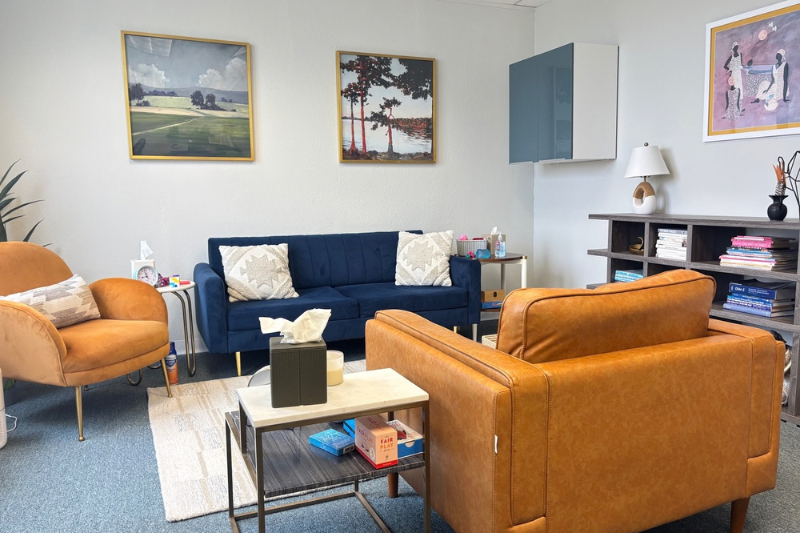
Bridge to Bridge is known for treating kids and teens, but your team also works with young adults and adults of every age, parents or not. Who actually walks through your door?
Everybody. Right now my youngest client is eight and my oldest is 72. Plenty of our clients are simply adults on their own, young adults on up. Really, all parts of a family system walk through our doors. It may start with a child or teen, but even then, we bring caregivers into the treatment in the vast majority of cases, because the goal is not to be in therapy your whole life, especially if you're a kid. The goal is to give your caregivers the knowledge and capacity to take on the supporting roles they couldn't quite fill without some help.
We often have one family member initiate care with us, and then the client or caregiver suggests or requests another of their family members obtain services. In some cases, the clinician may suggest a parent or other family member consider obtaining their own care. But more often than not, this request comes from the client and we then talk through how that might work. For example, it is generally not appropriate for one clinician to work with two siblings for their own individual care. Of course there are exceptions, but the default is to help facilitate a family member getting connected to a different provider. Similarly, meeting with a parent in service of a young person’s care is often essential, but that time needs to center on the young person and spending full parent meetings supporting the parent in their marital distress, while connected to the child’s care, is likely to trigger a recommendation for the parent to seek their own space to properly dedicate time and support to focus on themselves as a whole person. As a result we may have two to three clinicians treating parts of a family system, including for couples therapy - one clinician for the couple, and two other clinicians for each of the individual adults in that couple.
Parents come in for themselves too, without a child in care with us. Therapy for an adult who happens to be a parent is more comprehensive than parent coaching, but of course naturally includes parent coaching because all of our clinicians have that specialty as well. We want people, especially parents, to feel like their whole self is being supported.
“Very high functioning and high performing individuals go through bouts of intense anxious and perfectionistic internal turmoil. Anxiety is unique in that way. It’s helpful until it’s not, and treatment often starts with discerning where that line is.”
Between everyone on your team, what are the specialties a family might not know to ask for?
It's usually easier to start with what we can't offer. Nobody on our team is specialized in treating moderate to severe eating disorders. Similarly, most of us don't treat moderate to severe substance use issues, with the exception of Michelle Rudin M.A. who does have specialized training in this area. Mild levels of these issues, which come up a lot with teenagers, we can all support. Past that threshold, we typically refer out.
Each of our clinicians is able to treat a wide range of issues, but we all also have specific areas of particular expertise, and usually we’re expert in these areas because we really like doing that particular work. Of course I already mentioned that Nic and I have a special interest in supporting athletes. What you might have to fish around our website to find: several of us treat OCD with exposure and response prevention, which is the gold standard approach. Several of us worked with kids on the autism spectrum before we became psychologists, and we have all continued to support individual adults, as well as youth and families in the context of an ASD diagnosis in private practice now too. We are all carrying cases that involve high risk, so self harming and suicidal clients, and a few providers (Drs. Lopez and Marcaletti) are certified in DBT. Trauma is another area of interest for several of our providers. We have at least four clinicians who are highly trained in trauma work, including Dr. Turner who offers EMDR to adults and teens. Everyone on our team supports folks in the LGBTQ+ community, but we have two highly seasoned gender specialists (Drs. Petrakis and Venema) with particular expertise and passion in this area. They both can do evaluations and letters for gender affirming care in the medical setting alongside the mental health support.
A lot of us offer parent coaching, and many of us are parents ourselves. We're not just trained in this. We're living it alongside our clients, and it's really, really hard. Dr. Alissa Vannet does specialized co-parenting work, court mandated or simply desired, and works in collaborative divorce, a very specific model where she's the mental health provider alongside the attorneys and mediators supporting a couple who is splitting. And Dr. Nicolas Chu is a native Spanish speaker who offers care in both English and Spanish. Often he'll work with a younger person in English and then speak directly with the caregivers in Spanish, so everybody gets met where they need to be met.
I could go on and on here, but that’s probably a good summary of the team.
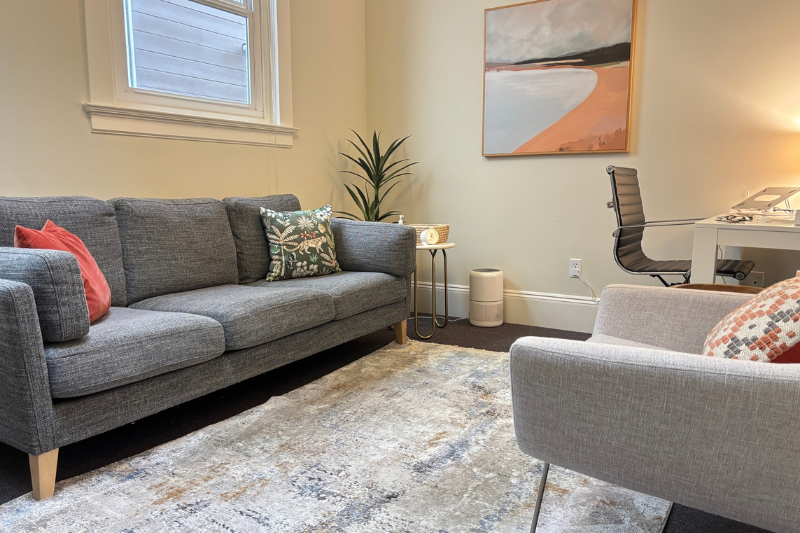
A lot of parents are told their kid needs a full neuropsych evaluation, and plenty of families don't need that much testing or can't afford it. Tell us about the ADHD assessment you offer.
We offer what I call “limited-scope” ADHD evaluations, for adults and for kids. There's a trend of recommending full neuropsych batteries, which are time intensive and expensive. If your concern is ADHD and you have no concerns about learning disabilities or other cognitive impairment, that often isn't necessary. We see a lot of women for this. More and more women are learning that the average age of an ADHD diagnosis for women tends to be in their 20s and 30s, so many have gone unsupported, or never knew an evaluation might help, not until their child is coming in with that concern and then the one or both parents start to notice their own struggles in the same domains.
To be clear, a full neuropsych is wonderful. It's a privilege to learn how your brain or your child's brain works. If you have access to one and it makes sense, please do it. But if one is recommended to you, ask why this and not a more limited battery. The neuropsychologists I trust most don't run a blanket battery. They're discerning about the referral question, they do exactly what's needed, and they modify as they go. And my biggest tip: don't just go for the cheapest one available. It's so time intensive that a quality evaluation is a much better investment in the long run than a bargain in the short run.
Of course, something can also be better than nothing and the financial burden is an important factor most people have to consider when deciding about pursuing testing. If it is recommended by the school, starting with the school’s resources is a very good starting point. Many people don’t realize that if your child is in private school, they may still be able to obtain an evaluation within the school district, but that’s a whole other rabbit hole!

You and your colleagues wrote a workbook on parenting kids and personal devices. What's one thing a parent can do this week that actually helps?
Check your own screen time data. Have some self-awareness first. Then check your kid's.
Ultimately, the best approach is a gradual and graded one. Think about it like riding a bike. People learn at different ages and rates, but everyone should start slow. In my house, I bought a safe to put the devices in, because I don't want to fight those battles. Parent controls are a lot of work, and we're already working too hard. So my default is to delay as long as possible and buy the least accessible device. We bought a landline when our kids were wanting to start calling their friends. My kid who rides public transit on her own has a Bark phone, which has zero internet unless I purchase that level of service. All her contacts must be approved by me, and there is no group texting possible. I even turned off access to the camera on that phone!
There’s a lot of great nuggets in the workbook and we made it in a way that we think will be the easiest for busy parents to consume. The workbook came out of two decades of clinical work. In the last 10-15 years, device use and behaviors have been a topic in the treatment of most, if not all, adolescent cases. So we've been having this conversation much longer than it's been in the popular media. Now we run workshops where parents and their middle schoolers come into a room together and do the activities side by side.
Your bio says you're especially invested in working with people from marginalized communities. How can a family tell when a practice means that, versus one that just says it?
I'll start with my personal investment. I'm a white, cis gender, straight woman married to a Black man, raising multiracial kids in the Bay Area. I was already invested in giving voice to people in a minority experience before I had my family, and even more so now as a mom to kids who are brown in this world. I also have a lot of privilege, and I want to use that power for good.
We've hired providers who are reflective about their own power and privilege and how it influences the way they show up. In case consultation, people are very conscientious about considering a client’s various identities, whether that's gender, sexual orientation, racial, ethnic, socioeconomic status, religious, ability status, etc. And our intake questionnaire has several questions about minority identities and experiences, so it's clear right away that all of this is welcome in the room. If or how it becomes part of your care in the therapy room is a collaborative conversation with the client.
If a clinician isn't taking the lead and initiating some of that discussion, I wouldn't say they aren't invested. They may just not be facilitating the discussion in the way that would be most helpful to you as a client.
A mom decides she's ready and fills out your contact form. What happens next, and what if no one on your team turns out to be the right fit?
We have zero administrative staff, and that's by design - to keep costs low and clinician compensation high. A couple of years after Nic and I started the group, the very amazing Dr. Brandi Marcaletti was excited to join us, and now the three of us split the work of running the business while each keeping a caseload. So your form goes to an inbox that Dr. Marcaletti and I are reading ourselves.
We check with the team about who's a good fit and has availability. If there are a couple of options, we'll send you both, because it's the client's decision. The research says a good fit with your provider is where you get the most out of care, more than their background or training or lens. I encourage people to shop around, and that includes within our own team. And if you've met with one of us a few times and it doesn't feel right, we want you to speak up.
If nobody on our team is the right fit or has room, Brandi and I make a big effort to send you thoughtful resources in your continued search. You'll get an email with providers tailored to what you're dealing with, and whenever possible, also links for books, podcasts, and websites to use in the meantime. Figuring out who to go to is overwhelming, so we also offer a one-time consultation to talk through where we'd point you next. It might be that OT makes more sense for your young child than individual therapy. Or it would be a good idea to be simultaneously advocating at school or doing labs with your medical provider as you continue to search for the right mental health services.
Let's talk about money, because everyone wants to know and nobody wants to ask. How does paying for therapy work at Bridge to Bridge?
It's all private pay for our team. We tried contracting with insurance companies, several of them, and too often we simply weren't paid. Making sure our team is properly compensated for very important work is one of our values, so we stopped trying with insurance.
Generally speaking, clients put a card on file in our system that is automatically charged at the end of the business day. It can be an HSA or FSA card too, which a lot of folks don't know they can use. Every month the system sends you a Superbill to submit to your insurance for reimbursement at whatever rate your plan allows. If there are barriers in that process, we'll also work with you to help you get reimbursed, if at all possible, because we know that's what makes care accessible. The exception is couples therapy, which often isn't reimbursable. That's the nature of insurance plans, not us.
Every provider on our team also offers some sliding scale or pro bono spots to the community, on a need basis. And we get creative. If weekly care isn't affordable, we'll meet every other week assuming it is clinically appropriate. The clinician can see another client on the alternate weeks, and we're meeting you where you are financially while not putting the clinician’s livelihood at stake.
A team of psychologists, four offices, and a group text that presumably never sleeps. What keeps this team a team?
When we're hiring, our clinicians will tell new people that the weekly case consultation isn't just helpful. It's fun. We enjoy each other as people. Nic and I were both college athletes, so we built this company through the lens of a team. You have lots of autonomy as a clinician here, but if participating as a team isn't your vibe, you're not a great fit for us. We respect that. It's just not us.
And as a good but not great athlete, my athletic focus always prioritized the social benefits of being on a team. So yes, karaoke nights. Pickleball. Brunches during the holidays. Birthday shoutouts during case consult, where we also provide lunch. Little things that make it feel professional but warm and safe. That safety matters, because part of being a therapist is being able to say to your colleagues, "I'm having this feeling with a client because of my own experience, and I'm going to put it out there." That takes vulnerability.
If a mom has read this far and is thinking about reaching out, what would you want her to know?
Honestly, the hardest part is sitting down and sending the email. As a parent, it's finding the link and actually following through. I find this a personal struggle too, so don't be upset with yourself if it takes you weeks or months before you finally check that task off the never ending to-do list. And at the same time, make the effort to find the time. Blast out the email or fill out the online form, and then you can sit back and let us take the lead from there. We have multiple locations, we offer virtual care, and we make a big effort to be accessible once somebody reaches out. Try not to wait too long.
Submit and inquiry via the services page to get matched with a clinician
Meet the team and email any clinician directly
Offices in San Francisco, Corte Madera, Petaluma, and Oakland, plus virtual care
Get the workbook on parenting kids and personal devices
Attend the upcoming workshop with your middle schooler
Browse online courses for parents
Invite Dr. Skiffer or her colleagues to speak at your school or organization
You can also find Dr. Erin Skiffer on The M List, The Mamahood's searchable database of mom-recommended resources, or connect and collaborate with Dr. Erin Skiffer inside The Club membership for women Founders.