Growing Butterflies OT's Colleen O'Neill Says the Grownup Regulates First
Interview by Heather Anderson

Colleen O'Neill is a board-certified pediatric occupational therapist, parent coach, and author of How to Lovingly Set a Firm Boundary. After a decade working with children and families in New York, she moved her practice to the Bay Area, where she now runs Growing Butterflies OT. Her specialty is self-regulation, for kids with big feelings and, just as importantly, for the adults who love them.
Your whole approach is that the grownup has to regulate first, before they can help a kid. Did you learn that in your training, or did you learn it the hard way?
The hard way. I was working as a children's therapist, and I hadn't learned any self-regulation skills in my own childhood. Then I was with kids all day. So I went on my own personal journey, honestly just because I wanted to feel better, and I learned different ways to regulate myself.
What surprised me was what happened at work. Once I was taking care of myself first, my work with the children got exponentially better. I could be the loving, steady guide I wanted to be. I did that for years, quietly perfecting my craft without knowing I'd ever share it.
Then parents kept coming to me asking for this kind of support for themselves, and I didn't know where to send them. The more I looked, the more I realized there just weren't many resources for parents like this. So I took the approach that worked for me and turned it into a roadmap parents can choose to follow.
You spent ten years as a pediatric OT in New York working with kids with big feelings. When did you start noticing the kid wasn't the only one in the room who needed support?
I worked with children and families in every kind of setting: schools, clinics, and a lot of home sessions. I specialize in kids with challenging behaviors, so I was around pretty extreme moments almost every day. Over and over, I saw how much the adult's state shaped what happened next.
In homes especially, I could see how hard it was for families. We'd have one hour of therapy a week. Then there are 167 other hours, and the parents are the ones there for all of them.
I'm always careful here, because these parents are already dealing with so much, and I never want anyone to listen to me and feel worse about themselves. But here's what I've learned. I haven't met a single adult who learned regulation skills in childhood. Not one. We didn't learn how to regulate ourselves, and then we're expected to teach it to our kids. And some kids need a parent with an extra toolkit that no one hands you at the hospital. Needing it isn't your fault. It just means you need some new tools.
"Regulation" is everywhere right now, and I think a lot of moms nod along without being totally sure what it means. What is it, really? And why is an OT the right person to help with it?
I like to keep it simple, because we all have bodies, and we all know what it feels like to feel good and to not feel good. Self-regulation is the practice of feeling good as much as possible, and working through the challenges that come up.
That second part matters. Regulation isn't about never having hard moments. Unexpected things happen. It's not the absence of challenges. It's the ability to work through them.
As for OT, occupational therapists support children in their occupations. A child's occupation is going to school, playing, being part of a family, and making friends. OTs also specialize in sensory processing, which is how children experience physical sensations and interact with their environment. So we bring expertise in pediatric development and nervous system regulation, plus experience supporting kids through all their daily activities. Social-emotional support is a growing area in our field, and it's exactly where I live.
“The answer really is love. It seems so simple, but no matter what you’re facing, inside yourself or with someone else, approaching it from love is the best way to a real solution.”
Most people call an OT because they want help for their kid. You bring the parent right into the work. Why does that matter so much to you?
Because the parents are the ones who spend the most time with their children. And most of the hardest, most extreme behaviors happen at home, with primary caregivers, because that's where a child feels safest.
So I bring parents into the sessions. They get to learn in the moment, in real life, how to respond, with coaching right there while it's happening. That's how it sticks.

A lot of moms have heard of OT but aren't totally sure whether their kid needs it. What's usually going on at home when a parent finally reaches out to you?
Usually it's hard to get through the day. Regulation challenges can show up as trouble sleeping, eating, getting dressed, or getting through daily routines and transitions. Often there are social challenges too. I tend to work with kids who are having a hard time expressing themselves safely when they're upset, so there may be hitting, throwing, or trouble with personal space.
By the time parents find me, they're usually burnt out. They've tried a lot of things, and they're looking for a real solution. That's why parent training is such a big part of what I do.
We're all sold this story that having kids is the happy ending. Then you have them, and they find every button you didn't know you had. Why do kids bring that out in us?
So many families I work with did everything in order. They went to school, got the job, found the partner, got married, had a child. Then what they're experiencing isn't what they expected.
People say children are our mirrors, and I've found that to be true. Maybe you've gotten through life pretty well up until now. Then you live with this little person, and something about the pairing shows you parts of yourself that don't come out in other relationships. I think our kids are here to help us learn, too. We're all here to grow.
That can be really frustrating. But it helps to shift the question. Instead of "what is happening with my child's behavior that's so uncomfortable for me," try "what is this child showing me about myself?"
And having an expert in your living room while your kid melts down could feel a lot like being graded. How do you keep a mom from hearing "so this is my fault"?
I don't judge parents, and I don't believe any of this is their fault. That comes from my own experience. Not only did I not learn these skills growing up, I learned the opposite: how to suppress emotions and ignore what I was feeling. So I don't assume anyone learned this. What a challenge, to be asked to teach a child something you were never taught yourself.
That's why I talk so much about self-kindness and self-compassion, in my work, my book, and my course. Some of the relationships with the people closest to us are the hardest to move through. The kinder you can be to yourself while you're in it, the easier it is to move through. Being hard on yourself just makes it harder.
After all these years working with other people's kids, what have you learned about what families actually need?
The more I do this work, the more I come back to the same foundation. The answer really is love. It seems so simple, but no matter what you're facing, inside yourself or with someone else, approaching it from love is the best way to a real solution. Go easy on yourself, go easy on others, and stop resisting the fact that it's happening. Then work through it from there.
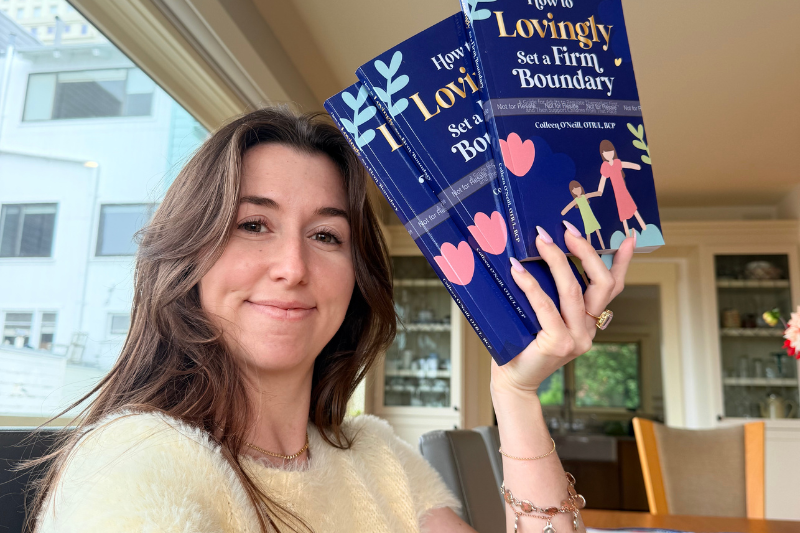
You have a new book out. For those who haven't seen it yet, it's called How to Lovingly Set a Firm Boundary. Most of us feel like we have to pick one, loving or firm. What does doing both actually look like?
That's exactly why I named it that. A lot of today's adults grew up with boundaries that were too harsh. They didn't feel good on the receiving end. So many of us swung to the other end of the spectrum, with boundaries that are too passive, allowing things we probably shouldn't. And that end can be just as dysregulating for kids.
I want the middle ground. "Lovingly" means it comes from a genuine place of supporting and uplifting the other person. "Firm" is where I do a lot of my work, because as adults, we sometimes need to lead. We need to set boundaries to keep everyone safe and regulated. There's a loving way to be firm.
The subtitle says it's a guide for "adults," not "parents." Who else is it for?
Anyone who spends a lot of time with children. I focus on parents because that's where kids spend most of their time. But I consider myself an expert in the adult and child dynamic as a whole, and teachers and caregivers are in the exact same position. When we learn to regulate and take care of ourselves first, we can really support and lead the kids.
When a mom feels herself about to lose it, what does she do in the first ten seconds? And what should she stop doing?
I talk a lot about intentionally responding instead of reacting. In big-feeling moments, we tend to react, often in ways we learned in childhood, for better or worse.
Intentionally responding starts before the moment ever happens. What are your self-care practices? What do you need to feel good before you walk into that experience with someone else?
And if it's a really big moment and you weren't regulated going in, sometimes the best thing you can do is take a breath and slow everything down for a minute, as long as everyone's safe.
What changes in a kid when the parent changes first?
Everything. Kids don't really learn regulation from us labeling happy, sad, and mad, or from reading it in a book. They learn it through life experience, and the best way to teach it is to model it.
I want to help children grow into thriving adults. Adults who are resilient, who can tolerate frustration, and who have real coping skills when hard feelings come up, instead of suppressing or resisting them. When we can manage our inner world a little better, we have a lot less conflict in the world around us.
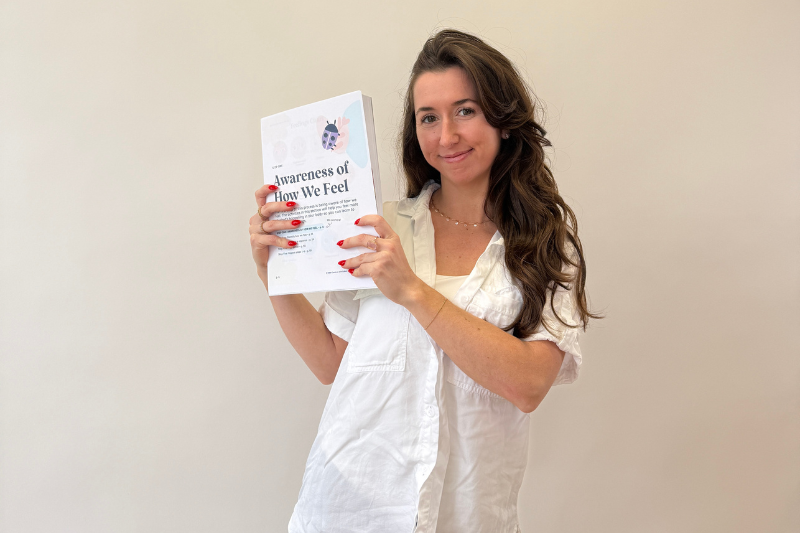
And on a day when you've completely had it, what does your own regulation look like?
Honestly, less is more. When it's been a really hard day, that situation has a lot of momentum behind it, and there isn't much you can do in that moment besides take it easy. So I chill. I do self-care. I try not to solve anything while I'm in that place. I'm just loving toward myself, and the next day I pick my tools back up and try again.
You moved your life and your practice from New York to the Bay Area. How did you decide, and what has starting over been like?
I followed my heart. I lead my whole life that way, and it's been working out really well. There was so much I loved about New York, and I found I could have those things here too, plus more nature. I love an adventure, and I felt called here, personally and professionally. It's been one of the best decisions I've ever made. If it's not number one, it's definitely in the top three.
So walk me through it. What does working with you actually look like?
Fun. I take a really play-based approach to situations that can be pretty intense, because when we bring a little more play and relaxation into it, we find solutions more easily. The most important thing to me is that a child and family feel safe, that they can be themselves, and that we meet them exactly where they are. I bring a positive outlook and really high-quality work to every session, so every minute counts, both in the session and in the resources you take home.
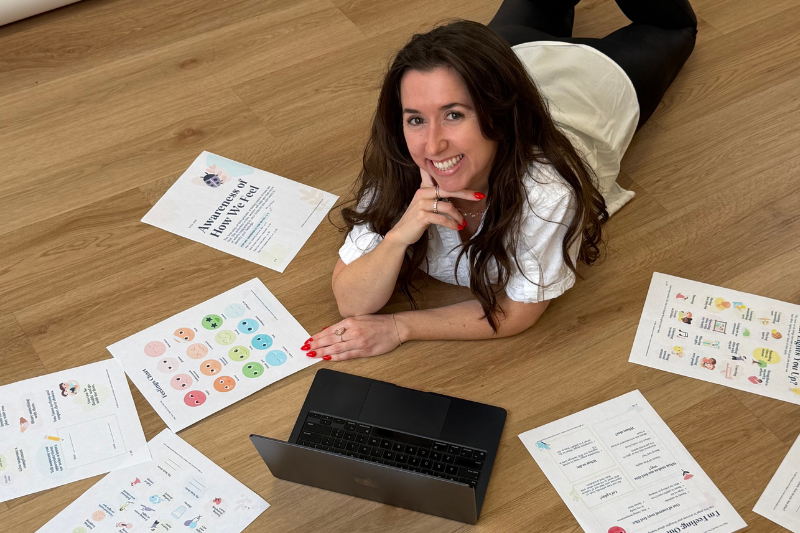
If a mom is reading this and thinking, "this is me, this is my house," what would you want her to know? And where's the best place to start?
That it's perfect where you are, and today is a great day to take the next step in a new direction. Check out my website, and book a free call with me.
Connect with Colleen O'Neill on Facebook, LinkedIn or Instagram.
You can also find her on The M List, The Mamahood's searchable database of mom-recommended resources, or connect and collaborate with Colleen O'Neill inside The Club membership for women Founders.