Child Assessment's Dr. Kristin Gross Says It's Never Really About the Scores
Interview by Heather Anderson
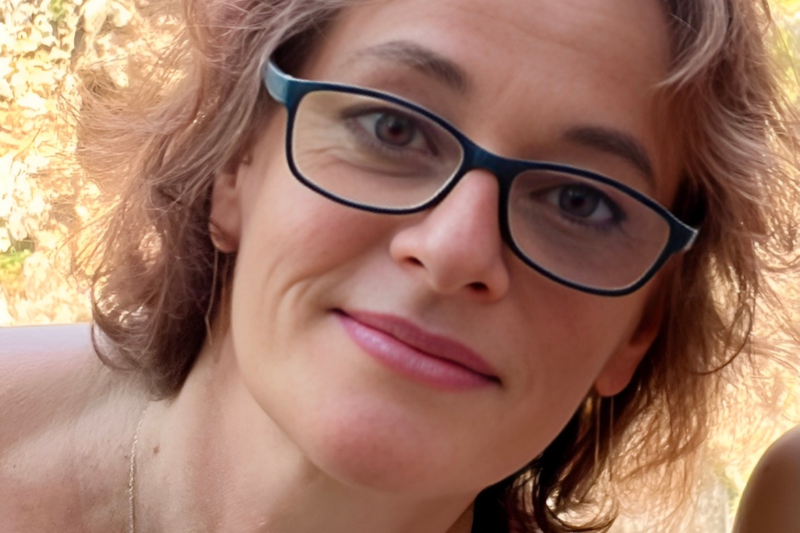
Kristin Gross, Ph.D., ABPdN, is a board-certified pediatric neuropsychologist who has been in private practice in the Bay Area since 2006. She evaluates kids from age three into young adulthood, including the complex medical and psychiatric cases many assessors may choose to refer out, with a goal of helping parents and kids walk away truly understanding how that child's brain works. Kristin grew up in East Germany, began her training in Berlin, earned her Ph.D. in Clinical Psychology at Palo Alto University, and now also supervises the next generation of assessors.
You've written that assessment is exciting because you can't assume you know the answer before you start. After all these years, what kind of case still makes you lean forward in your chair?
Honestly, I can't predict the outcome, and that's what keeps this job interesting. The big question in every assessment is the same: what is going on here? Sometimes the answer is obvious. More often it isn't.
A family might come in with a simple referral question, like "Is this dyslexia?" or "Is this ADHD?" Then it unfolds into something much more complicated. There might be a medical history or a syndrome in the picture. We might need to sort out whether something is coming from substances or from something organic. There might be family factors shaping how the child is functioning. I supervise trainees, and it's a lesson I give them over and over: we start with what sounds like an easy, straightforward question, and it may just become one of your most complex cases of the year.
I recently had parents ask whether their daughter's struggles were OCD or perfectionism that comes with giftedness. She was bright, and she was a perfectionist. But the reason she fell apart when she couldn't do something perfectly had more to do with emotional experiences that had built up over time. Getting to that answer, and then helping the family hear it, is the part I find most meaningful. Some cases present as simple, and then they are not. You just never know.
You grew up in East Germany and studied at Humboldt University in Berlin (for our California readers, not the Humboldt up north!) before making your way to California for your doctorate. How did you get from there to a life spent figuring out kids' brains?
Circumstances, more than anything. In East Germany you had to decide what you wanted to study in higher education by about age 14. I always found it interesting to listen to people's stories and how they saw the world, so I wanted to study psychology. They didn't let me, because I wasn't willing to join the Party. So I worked for a couple of years, and then the Wall came down and a new version of the field opened up that I was finally allowed into.
I came to the States after marrying my husband, a US citizen. In this country you have to go to grad school to do psychotherapy, which is what I thought I wanted. But in my first year, the system scared me off becoming a therapist. It was so driven by managed care and money, and so alien from the psychodynamic background I came from. At the same time, I took a neurobiology class taught by a neuropsychologist. I'd always been interested in medicine, and that's when I got hooked on assessment. I left the therapy path and focused on assessment from then on.

Early in your career you worked at Children's Hospital Oakland and at a residential treatment center for foster kids with some of the hardest histories imaginable. What did those years teach you that you still bring into every assessment?
Breadth. Usually in training you're in one place, one hospital. That wasn't available to me here in the Bay Area, so I put my training together from very different settings, and that turned out to be a gift.
The medical setting at Children's Hospital was completely different from the residential treatment center. Those foster kids were the most challenging, because of the combination of genetic issues and severe trauma. You'd have to ask: is this psychosis, or is this a brain shaped by trauma that looks like psychosis? Nobody teaches you that. It's something I became deeply interested in, and it still informs my work when I see that kind of overlap.
There is never just one answer, not even for something that sounds as simple as ADHD or a learning disability. You have to pull from many different areas to make sense of what's going on for this particular person at this particular time.
“My supervisor taught me to write every report as if the child might find it in the attic ten years from now. You want them to recognize themselves in it. You want a parent to read it and think, yes, that’s my kid!”
Let's demystify this for the mom who's heard "neuropsych eval" but has no idea what it involves. How is it different from a psychoeducational evaluation or a quick ADHD screener, and what actually happens, start to finish?
The name is a bit of a misnomer. We call them neuropsych assessments because we're neuropsychologists. But what you really need is someone with broad, deep training in assessment, and that person doesn't necessarily have to be a neuropsychologist.
A psychoeducational evaluation is more limited, and usually done by a school psychologist. The purpose is to see if a child qualifies for services under an IEP. Sometimes that's enough. If a child is clearly dyslexic and that's the whole story, you don't need more. But if you want to understand the bigger picture, how it all hangs together, how your child processes information, learns, sees themselves in the world, and copes, that requires a comprehensive evaluation.
With a school-age child, I start with the parents. We talk about everything there is to know about the child’s development, from pregnancy to the present. Parents (and sometimes the child) fill out rating scales based on their concerns, and I follow up on anything that needs more context. With parent permission, I talk with the people in the child's life: the pediatrician, psychiatrist, therapist, tutors, and teachers. I usually see the child for three sessions of about two hours each, and sometimes observe at school if that's helpful. Then we wrap up with a feedback session, with the child and parents together or separately, depending on age and what's going on.
You've said two kids can get almost identical test scores for completely different reasons. Can you help us see what that looks like?
Tests are just a vehicle for understanding what's going on. No test measures only what it says it measures.
Say two kids both score low on a receptive language test. On paper it looks the same, and you might assume both have a language issue. But that test may also measure attention. For one child, the low score might really be about language. For the other, it might be attention. The score alone can't tell you. Context tells you, and so do the patterns across everything else we examine. That's why it's never really about the scores alone.

Diagnostic labels are having a moment. Everyone's a little ADHD, a little OCD, a little something. As someone whose job is to make diagnoses carefully, how do you feel about that?
Ask any teenager and they'll come up with all kinds of labels for themselves. The danger is that it diminishes the people who truly suffer with these conditions. If someone has real OCD and hears kids casually saying "that's my OCD," it takes away from what they live with every day.
As a professional field, we also need to be honest and recognize that sometimes whatever is "hot" gets diagnosed more. Decades ago it was ADHD. Now our understanding of autism has widened into a spectrum, which is good, but it means we have to be careful. A diagnosis means something. For some families, it's finally an answer. For others, it means a disability, and with that come needed resources. If we put everyone in a category, how do we allocate those resources to the kids who need them most?
Parents, usually dads, sometimes ask me how many kids walk out of an assessment without a diagnosis. That's a fair question. By the time families come to me (or us) there usually is something significantly going on, even though we don’t know yet what it is, they need help, and services usually require a diagnosis to justify them. So yes, most kids I see do leave with one. But I don’t hand out diagnoses without a substantial basis. I'm careful about what I name, and why.
You see kids with some really complex situations, like brain injuries, seizure disorders, the effects of cancer treatment, and prenatal alcohol exposure. What should parents know about how a medical history and a learning or behavior struggle can be connected?
I try not to scare anyone, but events in a child's history can be something or nothing. That's why I always go back to the beginning. I'll ask, "How was your pregnancy?" and parents say, "Is that important?" Maybe not. But maybe it is.
We're looking for risk factors. Prematurity and low birth weight are risk factors. Early seizures can play a role. Temperament matters too. Parents want to tell me who their child is now, but I need a timeline/trajectory and I say, "I need to know who they were when they came out of you."
Concussions are a big one, because parents often forget. "Oh yeah, he bumped his head a few times." Tell me more. Did you go to the ER? Was there vomiting? How many times? Then, "Oh, there was another one when they headed the ball wrong in a soccer game." Could it be connected to what we're seeing? Maybe, maybe not. But the more I know, the better I can put the pieces together.
What changes when the person you're assessing is a young adult who's sitting in the driver's seat of their own evaluation?
It's so much fun. With an older teen or young adult, the assessment becomes much more collaborative. They can narrate what's happening for them in the moment. When I notice something, I can ask, "What just happened there?" and they can tell me. That gives me so much more information about how and why they're doing what they do.
Young adults who come to me are usually ready and motivated. They've noticed things in themselves they don't understand, and they want to figure it out. We use those observations, see how they show up in our sessions, and work it out together. With younger kids, five to nine, it's more about them. With young adults, it's with them.
You make a point of explaining results to the child, not just the parents. Why does that matter so much to you?
Because it's always about them. It's their process, and it deserves a real explanation and concrete conclusion. Here's what we learned about you. Here's your powerhouse, the ways you're amazing. Here are some things that will help you in these areas, and ways to work around what's hard.
Naming things is so helpful for kids, especially little ones. If it's dyslexia, giving it a name changes everything: “Oh, it's a thing. I'm not dumb.” It has a name, and we can do something about it. That understanding is where confidence comes from, and a confident child has a better chance to become a competent one.
What does a parent walk out of your office with, and how do you hope they're using that report a year or five years from now?
My supervisor taught me to write every report as if the child might find it in the attic ten years from now. You want them to recognize themselves in it. You want a parent to read it and think, yes, that's my kid!
Parents often say, "This is so detailed, this is way more than I expected." But the best feedback I ever got is something a mom told me after a very complicated case: "You captured her so well. It's readable, it resonates, and I can tell that you like my child." That's what I strive for. A report that is about the child, all of their facets, and what they need going forward.
Not every child needs the full, comprehensive evaluation. How can a parent tell whether they need one, something smaller, or nothing at all right now?
If you have a six-year-old who isn't learning to read, with no other risk factors, no anxiety, no attention concerns, and nothing unusual in early development, you probably don't need a comprehensive evaluation. A thorough reading assessment is probably enough. If your toddler has a speech delay, you may start with a speech therapist. If it's all behavior at home and nothing else, a behaviorist or therapist may be the right first step.
It becomes detective work when you have more than one question. Say you have a ten-year-old with emotional outbursts who suddenly can't get work done. Is it anxiety? ADHD? Autism? Something else? That's when a comprehensive evaluation makes sense. Or, if I've already done a comprehensive evaluation for a child, a few years later they may only need a targeted update.
That's what the first phone conversation is for. I ask what's going on, what you're observing, and what your questions are. I'll screen broadly for things like social challenges, anxiety, and mood, and we figure out together what your child actually needs.
When a family and the school see a child very differently, an Independent Educational Evaluation (IEE) can change everything, and a lot of parents have never heard of one. What is an IEE, and what should parents know before they ask for one?
An IEE is an evaluation by an outside assessor (someone like me), independent of the school district. It's an option for families who are already in the IEP process. That includes families whose child has an IEP, and also families who tried to get one and were denied.
That second part is important. A lot of parents get denied and assume that's the end of the road, or that they just wait a few years and try again. It isn't. If you disagree with the district's evaluation, you can ask for an independent one.
In 2013 your family of five packed up and spent more than a year in Berlin so your kids could experience life in a different culture. What was that like, and what did it teach you as a mom?
Don't get me started! It was much harder than I expected. I had visited Berlin almost every year after I got married, but I hadn't experienced or seen all the changes over those years. It wasn't my Berlin anymore. The schools were completely different, the social scene was different, and coming from little Berkeley, it was a big adjustment for my boys. At the same time, my daughter had the time of her life in a beautiful little preschool. Looking back, we're all glad we did it. But we were all pretty happy to come back.
What do you hope a parent feels when they walk out of that final feedback session?
The aha! moment. They finally have some answers to their questions, and things start to make sense. Then we can apply what we learned to other situations: wait, would that explain this other thing too?
The best moment is when a parent says, "Oh my God, I was just like that." Then I ask, "Have you shared that with your child?" Usually they haven't. For a kid who feels like they're the only one, knowing that mom or dad processes things the same way is so validating. It brings them closer, too.
When a parent understands their child better, especially within the family dynamic, the relationship improves. That's ultimately what we want. A child who feels emotionally safe at home has the energy and the mental space to go out into the world, take risks, be open, and learn.

How can a parent start that process with you?
The best way to reach me is either by phone 510-530-1676 or email [email protected]. I usually invite parents to have an initial (free of charge) phone call to talk about their needs and my process. We discuss availability, rates and types of the assessment. I do not take insurance but at the end of the evaluation I provide a superbill that breaks down a flat fee (usually best option for parents) into hourly units, which they can then submit to their insurance for reimbursement. You can read more about her services and background here: Child Assessment website
You can also find Kristin Gross on The M List, The Mamahood's searchable database of mom-recommended resources, or connect and collaborate with Kristin Gross inside The Club membership for women Founders.