Le Blanc Label's Alena Le Blanc Is Done With Beige
Interview by Heather Anderson
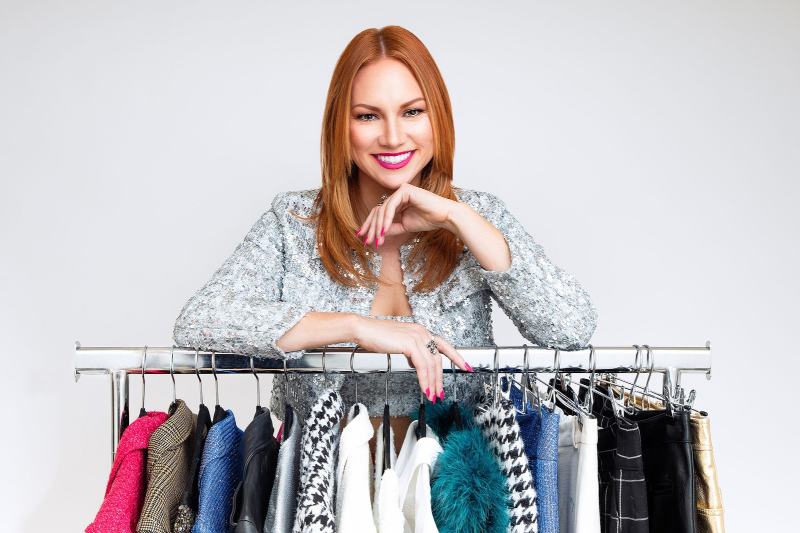
Alena Le Blanc is a personal stylist and the founder of Le Blanc Label. Before launching her business in 2020, she spent years as a womenswear designer, including stints at ThirdLove and Le Tote, and later served as Head of Styling for menswear rental company Taelor. She now works with clients in person around the Bay Area and Los Angeles, and virtually everywhere else.
You launched a personal styling business in 2020, the year the entire world lived in sweatpants. What was going on in your life that made that the moment?
I was a fashion designer, and the pandemic gave me time to reflect on what I actually wanted to do. I got into design because I wanted to help women feel confident. Then 2020 was a whirlwind, and I got laid off.
I did a lot of personal development and self-reflection to figure out what I'm good at and how to align that with what I actually want. I was also thinking about the fashion industry as a whole, which is really bad for the environment. I wanted to help people be more intentional instead of buying cheap stuff: invest in themselves and in what they wear, and learn how to wear it. Working one-on-one with someone and building that connection to help uplift them is so much more impactful to me than just creating a product. It's so rewarding.
My first clients were friends with their own businesses, a hair and makeup artist and a photographer. Helping creative women who are also business owners build a personal style was so much fun, because they really get to express themselves in how they show up.
Let's rewind. You're Bay Area born and raised. Were you always the friend everyone called before a big night out, or did fashion find you later?
I've always liked fashion, but more than that, I've always wanted to be different. Rather than following trends and looking like everybody else, I wanted to stand out. So it wasn't so much people asking me for advice as me saying, I don't want to do what everyone else is doing, I'm going to make it feel unique to me.
Even when I was little, I was cutting up pieces of clothing, layering things, and playing with colors and prints. That's actually how I started helping people too: redesigning pieces they loved but couldn't wear anymore, because of the fit or because they were sentimental, and sewing them into something that felt more like them.
Before styling, you designed every category of women's clothing, including undergarments at ThirdLove. What do you know about how clothes are actually built that the rest of us were never told?
There is no size standardization in the fashion industry. That leads to a lot of issues with fit, and with body image.
You can be one size in one brand and another size in a different brand. You can even be different sizes within the same brand. Depending on the fabric and the fit of a garment, your size is going to fluctuate, yet people make the number on their clothes mean so much more than it should. It's a frustrating experience, and it makes women feel bad about themselves. Honestly, the fashion industry in general makes women feel less than. So I don't consider myself part of the fashion industry as much as part of the service industry, helping women.
ThirdLove and Le Tote were different, because they were very data-driven companies. We met with real customers, talked about fit with them, and altered products to better fit the actual size range of the women buying them. A lot of brands design for one body type in mind. Those companies took real women's bodies into account to create products that actually fit and felt good.
That shows up in styling now. So many women say, I just want to be a size four, and refuse to try a different size. But it should be about how the clothes fit on you. It's going to look so much better.
“Give yourself some grace. You birthed a human. That’s huge. People evolve, and your style should evolve with you and your lifestyle.”
You also designed for a brand made just for tall women. What did that teach you about who the industry forgets?
So many women fall outside the typical size range carried in stores. That includes tall women, which is usually 5'7" or 5'8" and up, petite women (which actually means 5'4" and below, not thin), and plus-size women (size 14/16 and up). The industry doesn't cater enough to any of them. And honestly, the majority of my clients aren't in those average ranges, which is why walking into a store and grabbing something off the rack is so frustrating for them.
So think about tailoring. A lot of women don't consider it, but if you're investing in higher quality pieces, it's worth getting them tailored to your body. Small adjustments make a really big difference.
You worked at ThirdLove and you still send clients there. What should every woman know about bras that she probably doesn't?
Get fitted. Most women never go in to get sized. They assume the size they've worn forever is still their size, and so many women are wearing the wrong one. Your bra is the foundation of your look. It affects how everything fits and looks on you. The general advice is to get fitted about every six months.
I see it all the time: bras gaping, or digging into the chest. Your bra should be comfortable, and a lot of women don't know that. There are so many more options now. ThirdLove offers half-cup sizes, so you don't get that gaping. Your cups should lie flat, and the center should sit flat against you, never digging in or lifting away from your body.
And wear the right bra and underwear when you try on clothes. It's literally in my prep packet before a shopping session: please wear a normal bra.
You see style as personal development. That's a big claim for clothes. What do you mean by it?
Designing taught me so much about fit and fabric, and I use all of it now. I always dreamed of being a fashion designer, and I got to fulfill that dream. But this is important in a different way. I'm building relationships with people and talking with women about how they feel about their bodies.
Someone I was working with recently said this feels like therapy. Styling isn't me saying, oh, this is cute, you should wear it. It's asking: how do you want to show up? How do you want to feel? How do you want to be experienced? Then I pull in visual cues and different aesthetics to help you gain clarity on your style.
Style often gets overlooked, because it feels like an afterthought when you're busy. But it can be time you take for yourself. By giving yourself five minutes in the morning, and putting on something that makes you feel better can shift your energy for your entire day.
You have some feelings about beige. How did so many of us end up dressing the same, and what do you want for us instead?
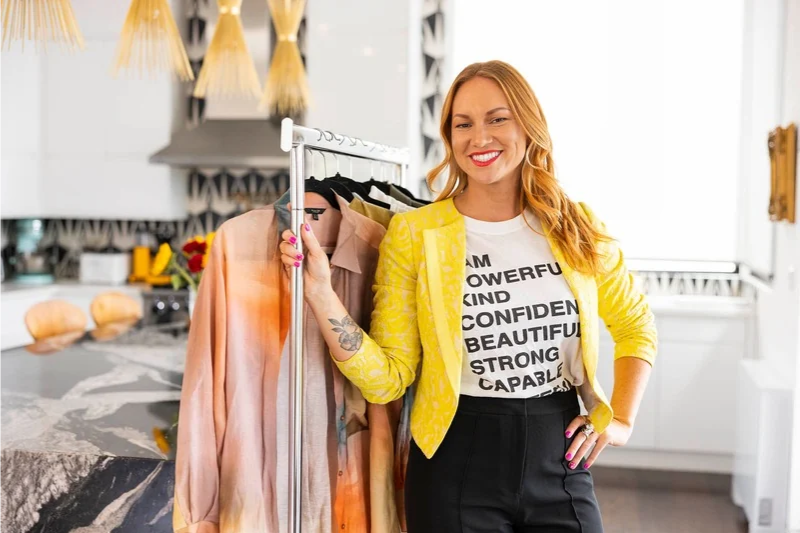
I'll get on my soapbox for a moment! We went through this whole quiet luxury movement, and while I appreciate the emphasis on quality, what I don't love is the lack of personality. You see it in people's homes, too. So much of our lives have become gray, beige, and neutral because we've been told that's what looks elevated, rather than leaning into who we are and how we actually want to feel. Color plays such a big role in that!
With social media constantly pushing new trends, it's easy to feel overwhelmed, and I think people have started treating neutrals as the safe choice. When someone sees another person wearing something bold, they'll say, "Oh, I could never pull that off." But you absolutely could! You just have to be willing to put it on.
I think the Bay Area, especially, has become so watered down when it comes to personal style. A lot of that goes back to tech merch and this overall sense of blandness. This area used to be bursting with creativity, individuality, and vibrancy, especially in San Francisco and Oakland. Somewhere along the way, people started blending in and dressing like everyone else, even when those choices don't necessarily make them feel good. They're wearing what they think they should wear rather than what actually feels like them.
When a woman finally reaches out to you, what's usually going on in her life?
I have two kinds of clients. The first is someone becoming more visible. She's going to a conference or speaking on a panel, and she feels like her style hasn't caught up to where she is in her business. What she's wearing doesn't represent who she is or how she's showing up anymore.
The second is a woman whose body has changed. Maybe she's going through perimenopause or menopause, or she's lost weight. What she's used to wearing doesn't fit her body or her style anymore, and she doesn't know what to do. She's confused and overwhelmed, she's sick of feeling that way, and she's ready for help.
Now the mom version. Post-baby, working from home, a body that changed, a drawer full of the same five things. A lot of us lost our style somewhere in there and didn't notice until it was gone. What do you say to her?
Give yourself some grace. You birthed a human. That's huge. People evolve, and your style should evolve with you and your lifestyle. What you wore before kids, and how you lived, is probably very different from your life now.
So I want to know what your day-to-day actually looks like. Are you working from home? Meeting with clients? Out doing things? Your style should support the life you're living now.
And the clothes we're saving for "when I lose the weight"?
It can feel like you're losing a part of yourself by letting them go. So I don't force anyone to get rid of anything. But I always recommend pulling those pieces out of your everyday closet and putting them somewhere else, like a tub in the garage or a different closet. Looking in your closet shouldn't feel depressing. You shouldn't open it every morning and see things that don't fit your current body and make you feel bad.
I like working with clients over longer periods, so when someone does lose the weight and we pull those pieces back out, they usually say, I don't know why I wanted to keep these. And I say, I know, but you weren't ready to let go then.
Same thing with "I'm saving it for my daughter." Okay, but does she want it? It's not just physical space. It's mental space. Your closet should be things you know fit you and feel good in. Otherwise it's creating chaos every day.
Letting someone into your closet is about as personal as it gets, and honestly, the idea makes me want to hide. You describe yourself as more Queer Eye than What Not to Wear. What does that look like in the room?
I make sure clients feel really comfortable with me first. I know they don't let people into their closets. Some of your best friends probably haven't been in yours in a long time. So I dig deeper to help people open up, and I want them to know I'm not a judgmental person. I just want them to have the best results and feel their best.
It's about really listening and really seeing people. In human design, I'm a projector, which means you can see the best version of someone before they see it. I feel like I have that ability. I can picture exactly how someone can look and what they're capable of, and translate what they're telling me into a creative experience.
It can feel scary, but I see people in their underwear all the time. I'm never going to judge anyone for anything. I just hope they come in with an open mind.
Tell me about a client you still think about. Who was she when you met, and who was she when you were done?
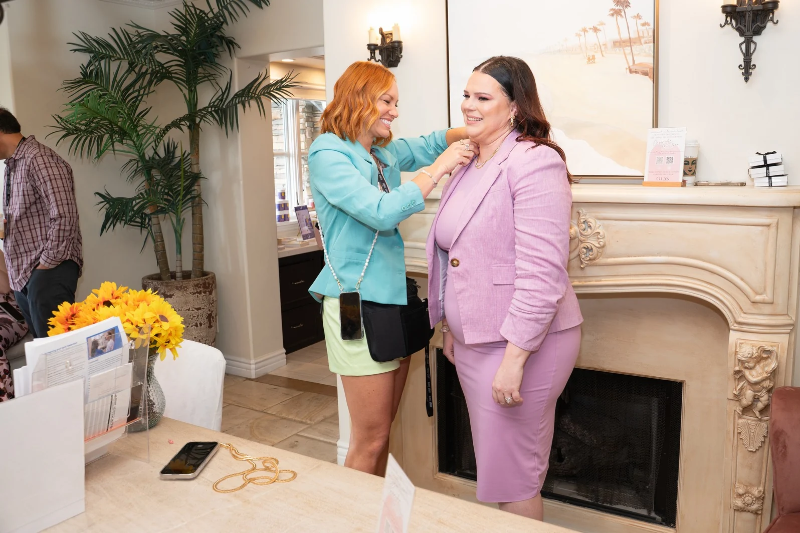
I shouldn't say she's my favorite, but she's my favorite. We've worked together for a few years now, and she's referred so many amazing clients to me. She's an artist with her own business, and she also works in tech. Her body had changed a lot over the years, and she was hiding behind her clothes: really dark colors, very oversized pieces. She wasn't feeling good, and she was sick of it.
She'd been looking for a stylist for a while but wasn't connecting with anyone. She told me every website looked the same, all very neutral. Then she found mine, and it felt bold and colorful and playful and full of joy, which was a huge compliment.
On our first call, I could tell she was lacking so much confidence, even though she's incredibly talented and kind. Together we uncovered her personal style, and it opened up so many opportunities for her. She started putting herself out there in her art career, doing more shows and galleries. She's had multiple promotions, and then a new job that was an even bigger step up. She says she feels so much more confident and more like herself. And the best compliment came from her husband and her sister. They both said that her outside finally reflects who she is on the inside.
A lot of your clients are founders about to be seen: a brand shoot, a stage, a big meeting. Be straight with me. Does what I wear really affect my business?
Completely. How you show up affects how people perceive you. There's real psychology behind it: people associate how you look with the quality of your work. I've seen it happen. I was collaborating on an event once, and someone didn't want a person involved because they didn't look put together and professional. It was sad, because that person was great. But it's the truth.
So shift your mindset from something you have to do to something you get to do. It's a tool you can use to your advantage. For a branding shoot, I like showing a few different looks to show the versatility in you and your business. And in a world where AI is at the forefront, it's all about connection. Your style is one way people connect to you and your authenticity.
Hiring a stylist sounds like a way to spend more money on clothes. You make the opposite case, that intentional style ends up being sustainable style. Walk me through that.
I'm not the stylist telling you it's a new season, here are the trends, go buy this. I'm about finding pieces that feel aligned with you, your personality, and your lifestyle.
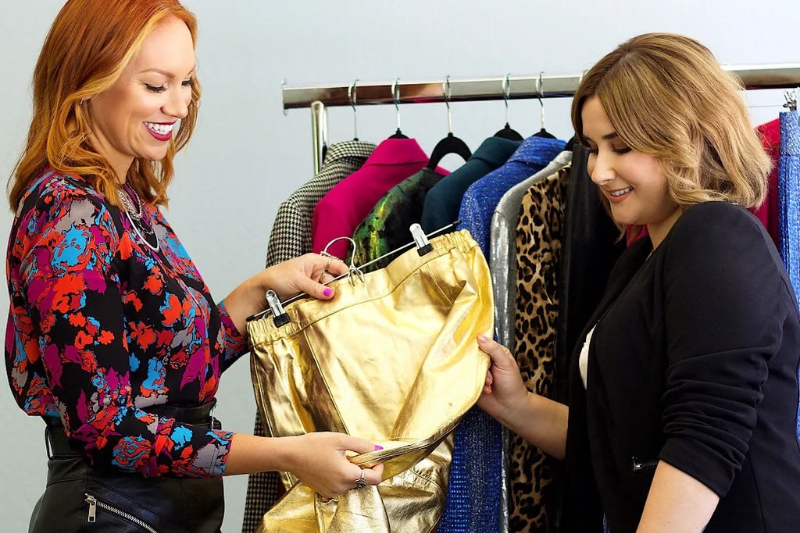
I always go through someone's closet before we shop, because I don't want duplicates. I talk through fit, quality, finishing, and fabric, so you really understand that you're making an investment. We think about cost per wear and what you'll get the most use out of. Quality materials hold up better over time than cheap fast fashion you'll wear a couple times and get sick of. It's not about having so many options. It's about having the right options.
For the mom reading this who's going to go stare at her own closet tonight, what can she do this weekend that would make getting dressed easier?
First, take out the pieces that no longer fit your body or your lifestyle. That's the most important thing.
Second, organize so you actually know what you have. I see this all the time with busy moms. They buy something for an event, never wear it again, and it gets lost in the clutter. When you can see everything, you realize you don't need five of the same black T-shirt, and you stop overbuying.
Third, give yourself a little time to play. Pair something you love wearing with a piece you haven't worn enough, and try something new. We get so wrapped up every day that getting dressed feels overwhelming. But creating a look you feel good in is an art that's been lost.
What do you want a woman reading this to know is possible for her? And if she wants to find you, where should she start?
That it's possible to show up and feel really good in your clothes every day, no matter your size, your shape, or what you're going through right now. Style is a tool you get to use, and you don't have to do it alone.
The best first step is a complimentary style discovery call. We talk about what's going on in your life, how you feel about your style, and what your goals are, and then we create a plan to help you reach them. I work in person around the Bay Area and in Los Angeles, and virtually everywhere else.
Connect with Alena Le Blanc on Facebook, LinkedIn, or Instagram.
You can also find her on The M List, The Mamahood's searchable database of mom-recommended resources, or connect and collaborate with her inside The Club membership for women Founders.