Special Education and Estate Planning Attorney Stephanie Jimenez on IEPs, 504s, and Protecting Your Child's Future
Interview by Heather Anderson
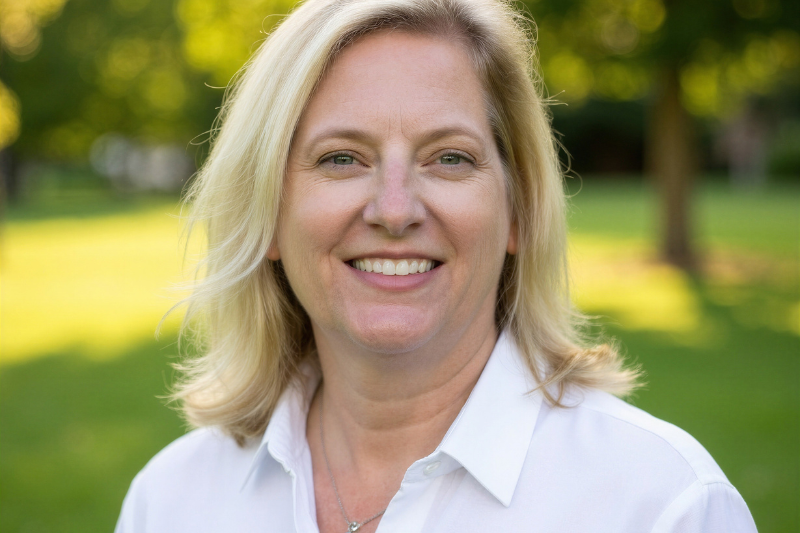
Stephanie Jimenez did not take the obvious path to becoming an attorney. She spent more than two decades as a COO and global operations executive at Fortune 500 companies before a series of deeply personal experiences changed everything. Losing her hearing. Watching her grandson with Autism struggle to access the support he deserved. Years of advocating for her own children inside a system that was not built to make it easy. She realized that the families inside special education needed something she was uniquely built to give them, and she went and built it. Today she runs the Law Office of Stephanie M. Jimenez, a boutique practice dedicated to special education advocacy, estate planning, and special needs planning for families throughout California. She calls herself the calm in the storm. She has been preparing for this work her entire life.
Before you became an attorney, you spent more than two decades as a COO and global operations executive. Then you made a complete pivot. What happened?
In 2023 I lost my hearing. I had already only been able to hear in one ear, and then I lost the hearing in my good ear too. I had to step back from the competitive corporate world, get a cochlear implant, and learn how to hear in an entirely new way. Going through that taught me something I had always known intellectually but had never felt so personally -- that when you are navigating a disability or a sudden crisis without the right support system, even someone who knows how to manage things can struggle enormously.
At the same time, my grandson was born and diagnosed with autism. He was nonverbal. He could not speak, and I could not hear, and I kept thinking -- there has to be support for this in the world. So I decided to become that support.
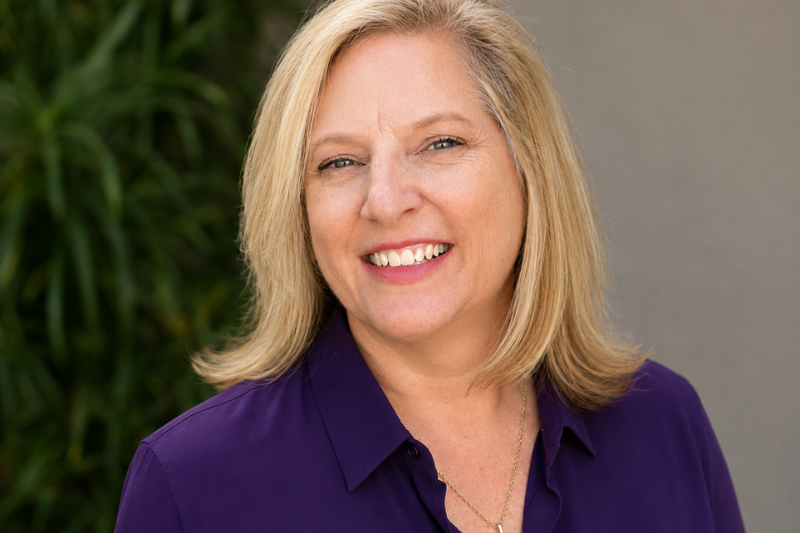
You have been advocating in the special education space for thirty years, long before you ever went to law school. You did it as a CASA volunteer, then as a grandmother fighting for your grandson with Autism, and now as an attorney. What did those thirty years teach you about what families actually need when they are sitting across the table from a school district?
They most need someone to listen to them. To validate their fears. And to speak on their behalf in a way that supports them without ever invalidating what they already know. Because they are the experts on their children. They just need someone to make sure their voice is heard.
I had been a CASA volunteer for seven to nine years, advocating for foster youth. I had also advocated for my own children throughout their entire education. When my grandson arrived, I began advocating in a professional capacity for the first time, and that experience confirmed everything I had come to understand about what families are up against and what they actually need from someone in their corner.
You specialize in IEP advocacy under IDEA, Section 504 and the ADA. For a parent who has never heard those acronyms and is just trying to figure out why their child is not getting the support they need at school, what is actually happening, and what rights do they have?
The IEP is an individualized education program. When a child qualifies for special education, they are legally entitled to what is called a free and appropriate public education -- free to the family, and appropriate to the specific child. The most important word in that entire document is the very first one: individualized. A program built specifically around what that child needs to access their education. Not a one-size-fits-all program for children who happen to be similarly situated.
IDEA is the Individuals with Disabilities Education Act, originally passed in the early 1970s to ensure that children with disabilities could access an education consistent with what their non-disabled peers receive. The ADA, the Americans with Disabilities Act, extends that further, guaranteeing equal access to public spaces, buildings, and classrooms. Finally, Section 504 of the Rehabilitation Act of 1973 is a civil rights law that ensures access to education with reasonable accommodations. Together these laws are the foundation of everything families are entitled to, and most of them have no idea how much protection they actually provide.
“Academic impact is about coursework… But you can have a twice exceptional student, someone genuinely brilliant, who is still struggling profoundly with peer interactions, sensory needs, behavioral regulation, anxiety, or school refusal. That is educational impact.”
You make a distinction I think is going to stop a lot of parents in their tracks. You argue educational impact, not academic impact. What does that mean, and why does it change everything?
Academic impact is about coursework -- math, English, science, social studies. Schools will often say there is no academic impact because a child's grades are fine. But you can have a twice exceptional student, someone genuinely brilliant, who is still struggling profoundly with peer interactions, sensory needs, behavioral regulation, anxiety, or school refusal. That is educational impact. My ability to access the classroom. My ability to connect with my teachers and peers. My ability to pick up on social cues and communicate effectively.
The law actually requires that educational impact be addressed, not just academic performance. Social emotional needs, communication, behavioral regulation, peer interactions -- all of it falls under what schools are required to support. Parents often do not know this. And schools often count on that.
Most families assume that fighting a school district means spending tens of thousands of dollars with no guarantee of winning. What do they not understand about how the process actually works, and when does a district end up paying the attorney fees?
IDEA claims are handled through an administrative law process, which is a completely different track from civil litigation. It comes with procedural safeguards built directly into the law, because lawmakers understood that families were going to struggle to enforce their rights without support. There are also avenues like state complaints filed with the California Department of Education that are entirely separate from due process hearings. A family may ultimately end up in the appellate courts, but many disputes can be handled through the administrative due process.
And in cases with strong claims that are successfully pursued, there are provisions in the law that can require a school district to cover the family's reasonable legal costs. I want to be careful here because legal outcomes are never a guarantee. But families deserve to know this possibility exists. Most of them do not. Not knowing what tools are available means they never even consider using them.
What is the difference between working with an advocate and working with an attorney who also does advocacy? And I want to say upfront that you are very pro-advocate.
I am. I work with advocates regularly and I love the advocacy community. Many advocates are parents who have been there, done that, and that lived experience is invaluable. I am an attorney who has been there, done that as a parent too, so I have enormous respect for what they bring.
The difference is regulation. There is no regulatory body overseeing the advocacy community, which means you could find someone excellent who truly knows what they are doing, or someone who does not, and there is no easy way for a family to tell. Attorneys are licensed and regulated. We have to be in good standing to represent a family in any formal proceeding.
But beyond credentials, what I bring is a litigation lens even when we never go near a courtroom. I know how to build a record. I know that if it is not in writing, it did not happen. I know how to argue a case as though we were headed to due process, and that posture, used collaboratively, is often exactly what stops a situation from escalating to that point.
I also think about this like a long marriage. If your child is in kindergarten, you have thirteen years ahead with that school district. You do not want a war. You want a working relationship where your child's needs get met. I can be in that room caring deeply about your child while staying clear-headed in a way that an understandably emotional parent sometimes cannot. I am the calm in the storm.
Your estate planning practice grew directly out of your advocacy work. You kept seeing the same gap. What are the most common and most preventable mistakes you see families making?
The biggest one is not thinking about guardianship holistically, and specifically not planning for incapacity rather than just death. Most people think of an estate plan as something that kicks in when they die. But what happens if you are hospitalized and your spouse is traveling? Who has the legal authority to pick your child up from school?
For a child with special needs who depends on structure, consistency, and transition support, having someone familiar and legally authorized show up in a crisis is the difference between manageable and devastating. Without the right paperwork in place, a child can end up in the care of a social worker at a hospital, waiting for someone with legal authority to arrive. I have seen this happen. It does not need to happen. It is entirely preventable.
The other major gap is around public benefits. Families fight so hard to get their child the right services, Regional Center support, Medi-Cal coverage, everything that keeps their child's life stable. And then they do not realize that if assets transfer to that child in the wrong way, through an inheritance, through a life insurance payout, those benefits can be disqualified. A special needs trust, structured correctly, protects those benefits while still allowing the child to receive financial support. It is one of the most important things a family can do and one of the most commonly overlooked.
I know a lot of families put off planning because of the cost. You have a really useful way of putting that in perspective.
The cost of not planning is almost always far greater than the cost of planning. Here is a concrete example. If you had a house worth five hundred thousand dollars in your estate with nothing in place, probate fees in California would likely run around twenty thousand dollars. And almost none of us have only a five hundred thousand dollar house in our estate.
Add to that the cost of a child losing access to essential therapies because a special needs trust was never established, or a family member having to go to court to establish emergency guardianship in a crisis. The costs compound fast, and they are paid in money, in time, and in trauma.
Legal Zoom and similar online tools exist, and people use them. But answering questions on a bot is not the same as having someone who knows your family, understands your child's needs, and is asking you the right questions so you make the right decisions. The document is only as good as the thinking behind it.
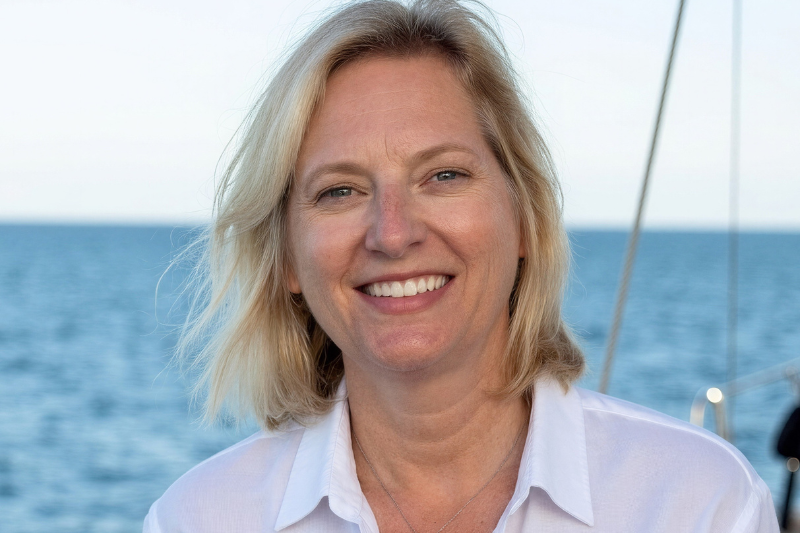
You cap your special education caseload intentionally so that every family gets genuine hands-on support. What does working with you actually look like?
I want my clients to feel like they had lunch with a friend, not a meeting with their attorney. I want to lift the cognitive load off the moms especially, who are already carrying so much. You do not have to worry about asking the right question at the IEP meeting, because I am going to ask it. You do not have to track the next deadline, because I have it. You get to walk into that room as your child's expert and let me handle the legal layer.
Because I build real relationships with my families, the estate planning often flows naturally from the special education work. I am already thinking about your child's long-term future. The legal planning becomes one more way I can make sure you are protected.
You are a mother, a grandmother, and someone who has personally sat in that IEP chair. What do you want Bay Area families to know about who you are and why this work matters to you?
I have had two passions my entire life, since I was a little kid in school: a love of learning and my family. This work lets me take both of those and use them to serve other families. I want every child to have the chance to love learning. And I know that if you are fighting just to access your education, you are not going to love it. You are going to be exhausted by it.
Families are everything to me. Making sure the moms in that IEP room are treated as the experts they are, that their voices are heard, that their love for their child comes through, that their child's future is protected -- that is why I do this.
If a parent is reading this and recognizing themselves, whether they are in the middle of an IEP battle, wondering if their estate plan is actually protecting their child, or not sure where to start, what is the best first step?
Come find me at sjimenez-law.com. On the estate planning side you can book an introductory call or a planning session directly from my calendar. On the special education side, I offer free initial consultations to help families figure out where they are in the process, whether what they need is pre-litigation advocacy, a due process filing, or something else entirely. I also host a monthly webinar on the estate planning side that is a great way to learn more before reaching out.
The most important thing is fit. I want you to feel like I am the trusted guide in your corner. If that is how it feels, we will do great work together. If it does not, that is good information for both of us.
Free initial consultation for special education families: sjimenez-law.com
Estate planning introductory call and planning sessions: sjimenez-law.com
Monthly estate planning webinar -- check the website for dates
Serving families throughout California virtually
Connect with Stephanie on Facebook or Instagram.
You can also find her on The M List, The Mamahood's searchable database of mom-recommended resources, or connect and collaborate with Stephanie inside of The Club membership for women Founders.